Show Notes
The Body Keeps the Score but the Church Keeps the Secrets with Margaret Bronson
Charna Cassell: [00:00:00] Welcome back to LaidOPEN Podcast. I'm your host, Charna Cassell I've just recorded this episode and, I can feel how much and how big this material is, and it's not an easy episode to listen to. So I wanna let people know that there are discussions of domestic violence, child abuse, religious abuse, and what's happening in the world. And, around Project 2025 and highly controlling religious cults and communities. And so there's a lot packed into this episode, so you might wanna listen to it and bite-size pieces. I invite you to ground in your body by breathing into your pelvic floor and out your feet and feeling your butt in your chair and [00:01:00] pressing your back into the seat that you're sitting in while you're listening.
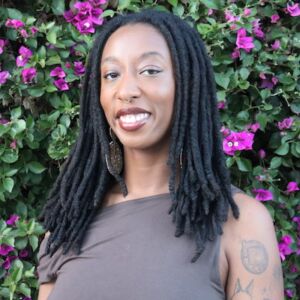
Relax your belly. Get a glass of water. Pet your dog, do all the things. Maybe you take a walk while you're doing this, or I'd like to listen to podcasts while I'm gardening. it's not an easy episode, but I think it's a really important episode. My guest today is a woman named Margaret Bronson that I discovered on Instagram, and she's doing really important work.
She founded Deconstruction Doulas and she helps people who are recovering from religious trauma and she lives with her four children and her husband in Kansas City and I, I really think this is an important episode and I hope you listen through and, share this with people that need this kind of support because she has moved through a tremendous amount and [00:02:00] found the resources to heal and embody herself in a way that is pretty remarkable.
Charna Cassell: Welcome, Margaret.
I'm so glad to finally have you [00:03:00] on and to be having this conversation with you.
Margaret Bronson: I'm so excited to be here. Thank you for having me.
Charna Cassell: So to give, give our listeners some context, how did you start doing what you're doing right now?
Margaret Bronson: Yeah, so I was my family entered a cult when I was eight, eight-ish years old. And this was pretty intense, like. Women always have to wear skirts, keep their heads covered at all times.
You know, the father picks who you marry. My particular pastor was lobbying the state to gain the legal right to stone disobedient children like very out there. And my family just kind of got stuck and it got caught up in it and. So from ages eight to 16, that was my whole world. That was everyone that I knew for the most part.[00:04:00]
And then we got
excommunicated when I was 16
because my parents turned in a pedophile within the church to the state. And that broke the rules with the cult. And so we got excommunicated, but my parents kind of froze at that point and we weren't physically there anymore, but they hadn't. You know, deconstructed any of the ideology yet.
And so at 19, I was still living under cult rules, even though we weren't part of it. And so I managed to get out by marrying my now husband and moving halfway
across the country. He was a Southern Baptist pastor, and at first. That was
really healing, it was, it felt like,
a safe after what I came out of, but the longer that I was in that area, in that SPC Baptist Convention world a lot of the [00:05:00] things that I grew up with.
I started realizing they were here too, and actually increasing. And the leaders of the cult that I had been a part of as a child started being recommended resources within the churches that we are a part of. People started doing a lot of the rituals and practices that had been part of my culty upbringing, so. I fought that as much as I could.
I tried to warn people. I don't think I changed anyone's mind. We ended up getting kicked out of two different churches as a result of that. And at that point I was just in so much pain and had been through essentially three shunnings at this point, and I just started.
I didn't have anywhere else to turn. I'd lost everybody, and so I just started processing. My unwinding of all of the, my questioning, my curiosity, my challenging my grief [00:06:00] online. And so I started connecting with other people who had similar experiences. And from there as I started to realize and, and learn language like cult and authoritarian and control and manipulation and all of these things, "Deconstruction Doulas was kind of born out of that and sharing those resources with other survivors.
Charna Cassell: What do you think made your, your parents
vulnerable to
joining a cult?
Margaret Bronson: Yeah, so my dad was born nine months after the end of World War ii. And so he was raised in a home with a father who had terrible PTSD, very absent abusive.
My mom was the
child of missionaries, so she was raised abroad and they got married fairly late in life. And I think that they both had no idea how to come together as parent and to like, [00:07:00] how do we parent? Like my dad felt like he had no tools to start with. My mom knew that what she was raised with wouldn't work in this context, and so they were just looking for direction and at the
time
really the only place to get direction for parenting was religious.
And so they started listening to Focus on
the Family,
which was a very well-known evangelical radio station. And that actually
is where
they. Got in contact with my cult and kind of went down that pipeline.
Charna Cassell: And it's okay. I mean, if you're okay. Mentioning their names. So I believe that James Dobson was mm-hmm.
Connected to that radio program and that the book, he was the, he was a evangelical psychologist who wrote that book about, had a parent that a lot of Christian families took up. And I guess because of that radio show. And then your leader was Doug Wilson. Yes. Mm-hmm. Yeah. Who has a foot in the door? In a [00:08:00] terrifying way.
I mean, God, did you ever think that you would see him so
much
in public view?
Margaret Bronson: I mean, I was shocked when
he showed
up in my evangelical church in my twenties that people were taking him seriously, because I kind of thought, oh, we all had learned the lesson that I had learned, which was that, he wasn't safe, you know?
'cause most of the kids that I grew up with were deeply struggling and I felt like it was obvious that this stuff wasn't holding up. But yeah, I like to say I had a triple dose of Doug Wilson because I was in a church that followed was teachings, but I also was homeschooled following his classical education.
And so, okay. It's very propagandized like Manifest Destiny, crusades were the best thing ever. The reformation like it focuses on these different moments of like Christian colonizing triumph and [00:09:00] that, I mean, the theology is that God has like passed on Israel and has moved on to
America
as his chosen people, and we're supposed to be this city on the hill.
Everything is perfect and we follow Old
Testament
law. And once that
happens, once
Old Testament law rules in America, Jesus will
return
and will have essentially a new Eden.
Charna Cassell: I, I'm still kind of reeling from the stoning children. Yeah. You know, I mean that, that, that the, that there were things or that, that your family's excommunicated, I mean, which it happens all the time.
It's like, let's keep the institution whole and let's reject the people that speak out against harm towards children. Yeah. Right. It's very, very common. We see that in you know, universities. We obviously see that with the, with the Catholic church, et [00:10:00] cetera. So it's
Margaret Bronson: not surprising
Charna Cassell: but
Margaret Bronson: it's, it's
Charna Cassell: really heartbreaking when I think about two people that just want to know how to do something right and to care for their children.
And then they just kind of swallow the information whole, but they know enough. To go, wait, this is not right. Pedophilia is not right. Let's get our, yeah. Our children, or you know, let's, let's speak out about this. And so I'm glad they were excommunicated. It probably saved you in a certain way. Yeah.
Margaret Bronson: But,
Charna Cassell: but two things I tell Yeah, Two things I tell my parents all the time. One is, you are victims as well. They also became perpetrators, but that they were victims as well. And that the, that it was a good instinct in them to look for
Margaret Bronson: direction
Charna Cassell: in how to parent. That was a good instinct. They wanted to do better for their kids than they had.
But that was exploited. and the second thing is, no one ever joined. These cults, knowing what they're [00:11:00] getting into. there's always the, the marketing message. The marketing message was, you're gonna have a strong nuclear family. You're gonna
Margaret Bronson: spend
Charna Cassell: lots of time with your, like our culture today, families don't spend enough time together.
They're not having meals at the table together. They're not having these big
Margaret Bronson: conversations together.
Charna Cassell: You're gonna have this like
Margaret Bronson: strong
Charna Cassell: marriage. We're not gonna have any infidelity. You know, we're gonna have men who really take responsibility for their family. They're not gonna be absentee,
Margaret Bronson: absentee
Charna Cassell: dads.
They're not gonna be, you know, letting their families just kind of whatever. They're going to really make sure that their kids get not just financially taken care of, but also emotionally and. Like raised to know what's right, you know? Yeah, yeah. And that's what my parents bought into. like by the time the real message starts to ,
Margaret Bronson: Reveal itself, you, there's a sunk cost fallacy that happens where like you've already, you cut all everyone else out of your life, [00:12:00] you've made financial sacrifices, you know, you're in so deep.
It's just a really well laid trap.
Charna Cassell: Right. And I mean, what, basically what you're describing also
is
domestic violence, right? Yeah. So there's, there's the abuse of children, which of course if you're, if you're starting out that way, I mean, there's
also
a blanket training, right? Mm-hmm. This, yep. That starts at six months,
if I, if I understand correctly, a baby is placed on a blanket, and if it crawls off, then
it's hit.
Margaret Bronson: Yeah. And so it's not trying to break the will of this child. And the idea is
that that's
loving because with each passing month, their will is only gonna get stronger. And so you're gonna be able to break their will with the least amount of harm done if you start young..
Charna Cassell: Right. And what's
wild is
the notion, right? So it's set, it's sold to them as this is loving, but everything is fear-based, right? I mean, and
there's a lot of, of course there's, there's,
there's financial fear of like, here you have this community [00:13:00] of support. You, you know, you won't
be
destitute in the way that basically our, our, our country, it's so hard
financially
to survive.
Yeah. Right? And so it's like
leaning on
one another. Yet at the same time, all these people are isolated. And then if women are not allowed to work then they're dependent on the, their potentially abusive husbands. And so there's just these cycles of isolation and
dependency
mm-hmm. That get perpetuated because like literally, if you're that
baby
that's blanket trained and your will is broken, how do you
become
a self-sufficient adult who can leave the
cult?
Margaret Bronson: Well, and I, I mean, the people that I work with, they did leave the cult, but even now, like all of us talk about it frequently, how we still don't feel like adults. It's really hard for us to be in a room with other adults and feel like we're equals like [00:14:00] that. There's just this confidence that other people have.
There's this sureness that like, like they just have a confidence in their own perception of reality there. Whereas we're so used to being gaslit and second guessing our own
perception
of things that we kind of like walk through the world with an extra layer of. I don't know if I'm interpreting things correctly.
I don't
know if
I am reliable, I might actually be bad, I might actually be dangerous kind
of stuff.
And we have to fight that all the time unless I've been out for like, you know, 15, 20 years.
Charna Cassell: That's so heartbreaking. And I, yeah. You know, I just wanna acknowledge how massively courageous the work that you're doing is, you know, you identify as a Deconstructionist Doula and this notion of helping people
rebirth themselves.
And find that liberation and
more self-awareness and find more, you know, like stable ground underneath their feet. Given our political climate in the United States right now, [00:15:00] it is so radical and I'm grateful that you're, that you're doing that work.
Margaret Bronson: Thank you. Sometimes it feels like it too little, too late, but everyone who gets out matters.
Charna Cassell: What, what were your steps to feeling enough given what you, you, the picture you painted, what were your steps to gaining enough confidence to turn towards other people? Like you had to do a certain amount of healing for yourself before you could then offer a lifeboat to others.
Margaret Bronson: So a couple of things. One is I would say that my husband, David, was actually the first deconstruction doula. He has seen the both my value and also the ways that I was broken and that. And kind of the path to help me regain what was lost, my confidence, my voice, my understanding. And so he has just been such a [00:16:00] champion.
And essentially like, like we've worked together to create our own somatic before we had education, right? Our own somatic practices, our own ways of trying to like rebuild what was broken. And then just a lot of personal study and research to the point where and I, and I think also life just got so hard and I basically had nothing left to lose.
So I wouldn't even that it was confidence as
much as
like desperation. That initially started. And then as I've done the work, seeing my thesis as it were. Proven over and over and over and over again
on
both sides. This thing broke us in
these ways.
This is the path to healing and this holds up every time, and this holds up, you know, every time.
I've just gained a lot of confidence through experience.
Charna Cassell: Right. With each, each conversation you have with other survivors. You know, it's, [00:17:00] it blows my mind what a resource I, you know, social media is definitely has, its, it's,
it's
very problematic in certain ways. Mm-hmm. But I love the resource that it has become for people
Margaret Bronson: who
Charna Cassell: would normally be very isolated.
And, and when you're alone or when you, when you perceive you're alone. You, you make it about
yourself and
you, there's a lot of
internalized
shame and a lot of like, I am bad and, and no one else would understand this, and yet when you're in
a large
global community through
social
media, you find your people.
Margaret Bronson: I feel like it cults both increased because of the internet.
That interconnectedness, the message gets out easier. the Internet's also kind of been the antidote to it. It's almost like in nature where, you know, you have the poison and the antidote always grow right
next to
each other. You know, it's one of [00:18:00] those.
Charna Cassell: That's amazing. You mentioned that your husband and you created your own somatic practices, and I'm curious to hear more about that.
What were those?
Margaret Bronson: So, one of the first things that we identified was a very intense level of dissociation,
depersonalization.
I didn't feel like a human. I felt like I was an energy that existed to take care of the real humans. And so first was just, you know, talking about that, raising awareness for it, being able to identify, oh.
That was self abandonment. Like that was me not behaving like a person, you know? That was me, assuming everyone else has rights that I don't have
access
to, that kind of thing. And so just kind of like taking a pause when that would happen and almost rewriting those moments being like, okay, the way I would respond if I believed I was a whole person mm-hmm.
Would be like this. But [00:19:00] also a complete disconnection from my body. I couldn't feel my body from about the chin down. And so, you know, my
husband spent
lots of time with non-sexual
touch,
right. Lots of brushing, massaging trying to bring me into my body. You know, tight squeezes, weighted blankets, all these things.
Movement. I learned that I need really high intensity of movement that helps really bring me into my body. And then specifically sexually realizing that one of the greatest harms done by the culture that I was raised in was the whole too much, too fast, right? I was supposed to essentially not even know what sex really was until
right before my wedding, and then I was supposed to have grow from, I mean, we didn't do this, but a lot of my peers did, and they were the ones who were following the rules. [00:20:00] Mm-hmm. They weren't even supposed to hold hands or kiss, before marriage. But they're, they don't
believe that any consent is needed other than the wedding ceremony.
And so. Even though my husband did not in any way, shape or form pressure me, it was so baked into my brain mm-hmm. That he would leave me if I didn't. That I performed a lot of obligation sex for a long time, and that's something that we had to acknowledge. Grieved, both of us. 'cause like, I mean, that's horrifying for me.
And that's horrifying for him to
realize that
was happening even though he didn't like know that was happening. And then we essentially went celibate for a solid year, just having a relationship with all the other lovely, like romantic touch Without that on the table. So that essentially so much of [00:21:00] coming out of a cult, especially if you're like raised in it.
Having to go back and go through the developmental processes that you weren't allowed to go through. Like retroactively? Yes. Like just, you know, like I didn't get to be a teenager and differentiate and become my own person and experiment and play the expression,
like self-expression.
I still have to go through that stage to become a, a full adult.
Right. Yeah. And so we essentially like restarted the sexual part of our relationship, but we didn't focus on the, our relationship part. We focused just on me, and like I got to go at my speed and tell him when I was ready to take it to the next step. And then like even then still go very slow as if it really was a first time.
And allow myself to actually have like a sexual awakening of my own, on my
own terms. That reflected me and my will [00:22:00] and what I wanted and desire. So yeah, that's, that's, it's a lot of that kind of stuff.
Charna Cassell: No, that's so beautifully
said. So well done. I wanna give your husband a virtual hug. Yeah. I'm so glad you picked Well, and me too, that you both had the
patience and care to, to do that because it's very similar to how I would be walking someone
through the process.
And, you know, we were, we were speaking before we started recording, and I have set up over the, you know, 20 something years that I've sat with clients working with sexual trauma. I have seen how simply being raised in a, in a conservative or fundamentalist religious household.
Or even a Catholic
household lives in
the body like sexual trauma. Yeah. So, so much of the shame and the energetic
constrictions
because our thoughts, you know,
create [00:23:00] physical
and energetic constrictions and and lack of flow in our bodies, which allows for self-expression to occur. And so to take the pressure
of sex
off the table.
And to allow
lots of space
for you to start to pay attention to what your internal
signals
and impulses are versus like if that was beaten out of you
or trained
out of you through brainwashing. You don't
know what is what, like you were saying. You're like, what? What is reality? Can I trust myself? Can I trust my
instinct? So all of that is stuff that happens in when you're. Raised in a family where there's sexual abuse or where you have a narcissistic or borderline parent where like all of your needs and feelings are
disallowed.
Margaret Bronson: Yeah. Right. Very similar. Yeah. And you know, we navigated it intuitively and also just both of us are neurodivergent and just found every book we could possibly [00:24:00] read, but one of those just like... beautiful little, let's call them coincidences, is that my first job after we got married was managing a physical therapy clinic. Mm. Where there was a pelvic floor physical therapist. Yes. Yes. And so working with her and listening to her and she, we had a lot of military women and they all
had
intense pelvic floor dysfunction.
Religious women had intense pelvic floor dysfunction. And she would talk about the patterns she was seeing, and then we started treating my vaginismus. And so that's, that's kind of where some of that
journey started.
Charna Cassell: So for our listeners, I just wanna name and explain what vaginismus is. Right. So there's
this
brilliant thing that our body does when we override what we're feeling.
Our body will have boundaries for us if we don't feel like we have the permission. To have a boundary and to say, no, our body will do it for us. So for men, [00:25:00] they may not be able to get an erection for women, the muscles or walls of their vagina and can close, or they can have vulvodynia, which is pain around the opening.
And so this is your
body's way
of saying, no, go slow, wait. Amazing. What a blessing that you had that resource right there. That's incredible.
Margaret Bronson: There's so many little things like that where like, wow, it was just like a perfect, the literal, perfect storm to get me out to where I am now.
Charna Cassell: And you know, there's, there's so many threads and pieces that I wanna talk about. So regarding the work that you're doing with the women that you're helping,
what are
the different resources that you have?
Are you providing everything or are you connected with different organizations and then you kind of link them up with a bunch of different. that have them. .
Margaret Bronson: Yeah. So I like to [00:26:00] point people in the direction of experts. And a lot of that work is just helping people believe that they're safe enough to work with experts in different fields.
Mm-hmm. You know, there's so much fear around different topics or, I mean, we come from the cult that's telling us all that expertise makes actually people more unreliable.
And
so, you know, telling them their salvation is not gonna be in jeopardy if they seek help from a sex therapist or something like that, you know?
Charna Cassell: Over the years, I have worked with clients that there was generational, there's ancestral sexual trauma in their families. And you know, one of the stories that really stood out to me was somebody who went to their, their pastor or church leader and, and, and saying.[00:27:00]
There's this abuse that's happening in the family and them being encouraged to stay in the marriage and not break up the marriage. Right? And then the abuse continuing or the abuse turning, like the siblings then abusing one another, right?
And so
it becomes this really insular experience that that just keeps continuing.
Margaret Bronson: Yeah, absolutely. We see it all the time in these families. There's so much sibling on sibling abuse and it's horrifying because perpetrators are also victims and it just.
It's heartbreaking and it
destroys families completely.
Charna Cassell: Well, and, and for any of these women. So like if a woman was [00:28:00] wanting to get out and there's no resource inside. Obviously their community and the people who are following the rules all around them, right? It's like if they're
even trying
to seek marital
counseling
or any support, they're being told it's
they're bad for wanting right?
External support.
So what, what, what are the pieces that even allow them to get to the point where they can reach out to someone like you?
Margaret Bronson: They have to have tried through all of the approved methods so many time and gotten desperate, like in my particular cult. If you're having marital issues, you
absolutely do not go anywhere except for to your posture and within that system.
A lot of times the solution to any marital issue will be that you perform sex more often. And you know, we're talking about [00:29:00] women who never gave consent mm-hmm. Or sex ever and have, you know, eight children. And they're just spiraling and exhausted
and triggered all the time. And just, just, you know, so like self-protective and wound tight.
And eventually they have to get to the point of being desperate enough
to
look outside of the cult. And so the internet is actually one of the
safest ways
they can do that. Mm-hmm. You know, it's just going to a different account mm-hmm. On Instagram. Mm-hmm. And setting dms and then deleting them, you know, that kind of thing.
Charna Cassell: What are, what are some x some. So the trad wife movement is a
thing
that's mm-hmm. That's building momentum.
Yeah.
And who are some ex trad [00:30:00] wives that you can point to that are other resources for people?
Margaret Bronson: The first one that I would point to is Tia Levings. She raised her children as a trad wife, and now she
is out and she has written a whole book called The Well-Trained Wife. It's heartbreaking to read, but it's so good and she's so strong and she's helping so many women leave. The trad wife world. Part of the way that I run my account and her as well is, you know, we have to remain safe enough.
For people in the cult to engage with us. So, you know, we can't be completely unvarnished and honest and fully express who we are today. You know what I mean? Because we have to remain safe enough for those women who are just like brave enough to look just outside the circle of safety.
We have to be there to be people right there. And so that's [00:31:00] where I position myself. I would say Tia has also positioned herself in a similar place. Trying to be a safe landing place for those who are brave enough to look outside of that circle. Another one would be Kate West. She wrote a book called Rift.
She actually was a stay-at-home daughter, Uhhuh. This is part of our cult. If you don't get married, you remain under your father's authority. Living in his house, caring for his home forever. Mm. Mm-hmm. Because you have to be, every woman has to be under male headship. That's crazy.
Charna Cassell: It's and it's so common, right?
Yeah. I mean, I think that that's, I think that's one of the things I, I saw a reel that you were, you were speaking to somebody about, and the reality that we think this is like scary sci-fi. Possibilities, but that it's already here and it's, it's, it's a [00:32:00] growing trend. And you know, we have Doug Wilson
whispering in the ear of Pete Hegseth. And that's terrifying, right.
Margaret Bronson: It is. Yeah. I mean, earlier I said I get a triple dose. I got a triple dose of Doug
Wilson,
and I didn't get to The third part. To the third part. Mm-hmm. Is that we were not Republican growing up.
We were a Constitution party, which is a third party that essentially existed to try and bring, bring back theocracy, bring back, because they believed
that America
was initially founded under the Articles of Confederation as a theocracy.
And
so the crazy thing for me is being in these tiny little conference rooms with maybe 13 people.
I was 13 years old, taking
notes
for the meeting while these men, maybe 10, 12 men sitting around planning what's happening now. And it seems [00:33:00] so. Ridiculous and far off and like it was just a thing that they were doing for themselves, but no one ever thought it was actually gonna happen to now see where we're at.
My brain can't make it make sense. It's so intense.
Charna Cassell: Can you speak a little more to that? I mean, the
idea
that Project 2025 mm-hmm. With something that has been being planned for
decades,
Margaret Bronson: If you want to dive deeply into this, what you're gonna wanna search for is Christian Reconstructionists or Christian Reconstructionism.
Gary North
Greg Boson
and RJ Rushy. And essentially they had a dream of America as a city on a hill. America as run by God. And there's just a few men who
get to
deliver what God wants to us essentially. And it's a return to Old [00:34:00] Testament law where you have a few strong men, protect
everybody
else and run the show for everything.
And then you have these hyper-feminine, as Doug Wilson says, essentially people who
exist
to give birth to other people. It's all about, it's all about conquering. It's all about colonizing, not just land and cultures, but individual people. And the truth is that they aren't trying to make a world that
is good for everyone. They only want a world that is good for them and they don't want anyone
else
to be there. And so when you see these policies and you're like, how could anyone be okay with this? It's hurting so many people. Like that's the point. Exactly. Yeah.
Charna Cassell: I can feel my system. I'm, I can track myself well, but I can feel my system wanna dissociate around. Mm-hmm. [00:35:00] Object. I
could,
I feel like I can start getting kind of foggy and spaced out and sometimes that's like, I'm, I'm, I'm feeling the person I'm interviewing and other
times I know it's
like, for me, I'm just like, I just, it's a lot.
I can feel my sense, it's really dark. Stop breathing while we're talking about this. Yeah.
Margaret Bronson: And scary and just their, their proximity to power right now is really alarming. And so I think a lot of people do check out on these conversations. And in my work, that's been one of the hardest things
has been the safe people, the people who could
do something
and who could help having such a hard time engaging with the reality of what we're facing right now.
You know, I never wanted to be the person talking about stoning children. You know, in public, like, I don't want, no one wants to talk about these
things. They're like so, so dark and yucky.
Charna Cassell: And honestly there are [00:36:00] things that are even, that are even dark or, and yuckier \ And I have wanted to talk about them.
Just to, to nor
because
until something is not normalized, as in like, let's make it all normal. But until something get talked about, you
can't
actually have
Margaret Bronson: solutions.
Charna Cassell: You can't, if you don't build the
awareness around
something occurring, the solutions aren't needed. Right, right. And so it's really, really tricky.
'cause I know that some of the things that I've dealt with with clients or, or even in my own history, people don't wanna talk about those things. It's too disturbing to turn towards.
Margaret Bronson: I mean, you see it with racism as well. Yeah. We wanna say racism is dead. We wanna say it's over, over. And that's just honestly cowardly at some point.
You know, like at first it can be naive. But eventually it becomes. Cowardly, like we wanna rest on our laurels and think we've made it when actually [00:37:00] like we're gonna lose it.
Charna Cassell: I was just gonna say the
function
of denial, I
mean,
because you know, I work within family systems, but you're working on a much bigger scale.
You're working with family, but you're working
on a systemic
level. And that is something where I just, that's where I
Margaret Bronson: get stuck
Charna Cassell: of like, how does that change occur?
Change
happens when people want to change, right? Mm-hmm. Like they're coming in and
seeking
out support. Yeah.
Versus when you're holding a system that doesn't wanna change and it's fighting you. Yeah. It's a man mandated therapy on a systemic level, and so yeah, it's, it's a lot.
Margaret Bronson: I think that one of the one, the thing that we're gonna have to any sort of resistance is gonna have to understand
is what
it is that is drawing people to.
Things like Doug Wilson, the trad wife, movement, patriarchy, and cults in general. And there's a lot of systemic issues in our culture. Mm-hmm. [00:38:00] One of them is the breakdown of the family. Right. One of them is the breakdown of the village, right. This interconnectedness cults offer that. They offer you a family, a place to belong, a culture, a heritage,
a mission,
a purpose, and I think that all efforts on the large
scale
of resistance will be futile until we have a counter narrative that also attempts to meet those needs.
They're attempting to meet those needs, but it's a trap. They're not actually trying to meet those needs. They're essentially leveraging those needs to gain control over people. Yes. We need
to
heal as a society. We need to understand what's broken about us, anthropologically, sociologically and, you know, rebuild communities and villages and have reciprocity instead of capitalism and all of these
Charna Cassell: Yes. Well said. [00:39:00] And, and what are, in terms of embodied freedom, like what, what does that mean to you? What does that look like?
Margaret Bronson: So embodied freedom starts with listening. I am trying to become a student of my body. Well, even like little things like, you know, people ask,
what's
your favorite color? I used to have no idea how to answer that question. It was just like, I think everyone just makes it up, you know? But I noticed like my body responds differently to the colored green.
Mm. And there's like an excitement there. And so it, the little things like that as well as larger things, like if my body starts to hurt. I am very good at immediately suppressing that, ignoring that, moving on with my life but instead [00:40:00] letting my body be heard. Mm-hmm. And, you know, I don't always
have
the option slow down and stop, but, but doing little things that I can to honor what my body's telling me. And then just seeking joy in movement in play. At this point, you know, I feel so embodied and free that like my
age
or the fact that, you know, I'm
supposed to
be a woman and a feminine or you know, that I am heavy, right?
None of those things all used to dictate what I could do with my body. You know, I'm too
old
Charna Cassell: for this
Margaret Bronson: or
this isn't feminine enough or. You know, I'm not thin enough for this activity or whatever. None of those things register anymore. They just feel like that, like, I don't know, weird memories from the past life.
Mm. And I just give my body what it wants, when it wants it, and I
listen [00:41:00] to
my body and I, I just feel, I feel so it's not just in my body, it's also in my head because there's so much noise. Fear
and
like limits. I just feel free. I just get to be
me
and you know, do what I want when I want
it,
and care for my body when it needs it, the way my body likes
to be
cared for.
And not just, you are a 34-year-old woman, so you must do these things, you know?
Charna Cassell: Yeah, yeah. Oh my, I am
so
happy for you. I
want that for
everybody. I really, me too. Really want that for everybody.
And
it's one of the things that, you know, I don't take it for granted. And then I also, it's just mind blowing how many people don't have access to that.
Yeah. And, and I would just want anyone who's listening to know that it's possible. If it's possible for you, Margaret, it's, you know. Yeah. Yeah. And it, and then it's also there's [00:42:00] a level of diligence. Self responsiveness that that takes, right? Like you didn't know that your body came alive around green overnight, right?
You can't read a book and discover that. Like that's, it's something you need to put your body into
practices
and to keep that, that key piece of like listening. Feeling. I mean, if some people, they feel everything. I was one of the feel everything people, but people are numb and literally can't feel their bodies unless my hands are on their physical body.
Yeah. Right. And even then there's a level of
denseness
that's taking care of them and protecting them from feeling the amount of terror that they would've felt. But it's just like, yeah. Yeah. I'm so glad that you've come home to yourself in that way and that you had such a good support. Your partner and that you are doing the work that you're doing.
Margaret Bronson: Yeah. Thank you. It's I'll say healing was the most exhausting, painful, [00:43:00] felt like there was never gonna be a light at the end of the tunnel. Like it was just always gonna be awful. And I was just always gonna be. And, and I still, I mean, I definitely still struggle with a lot of the different cult programming things.
I still notice them. I still have to draw attention to them and try and, you know, rewrite the algorithm and the program. Yeah. But on this side where I'm at now, I can say that every ounce of effort and. You know, frustration and all of the things was so worth it.
Charna Cassell: Yeah. Yeah. So good.
Absolutely.
I, yeah,
it's
a, it's as you said, a slog.
It's a lot. It's a lot. Mm-hmm. But on the other side, it's like, think about the amount, the,
the
number of years it took to program you. Well, of course it's gonna take some time to unprogram
Margaret Bronson: and going from being dissociated to not
dissociated.
The most painful switch. Mm. If you're holding trauma in your body and all of a sudden you're aware of it, [00:44:00] you go from, I'm, I'm just
ignoring it and I'm not feeling it to, oh, my body's been keeping the score for 20 years and I'm in pain every day and my knee hurts all the time, and, you know, all these different things.
It's the grief that comes with that. It's just a lot or. But that doesn't mean stop.
Charna Cassell: Yeah,
no.
I have visceral memories of exact
those
exact moments. Doing a physical practice of like not feeling and then feeling searing pain in my body. Just doing an embodiment practice and being like, oh, that's there all the time.
Mm-hmm. But as much
as
your capacity is to feel that grief or pain, it's also you can feel the depth of pleasure and joy. So it's like if you've, if you've chosen to live a life of not chosen, but you've, it's, it's been forced upon you and you don't see that you have a choice.
Margaret Bronson: [00:45:00] It's like
Charna Cassell: the, the path of regaining
access
to choice.
It's not an easy one, but, but
there's so
much more on the other side. Yeah. And how can people find you?
Margaret Bronson: Yeah, yeah. I'm at www.deconstructiondoulas.com at deconstruction doulas on all the social media handle.
Charna Cassell: Thank you. And where, where are you located? We're in Kansas City. In Kansas City.
Okay. Mm-hmm. All right. All right. Well, I hope there are more resources that pop up all over the country in the same vein,
because
we definitely need them and, So, good to get to spend this time with you.
Margaret Bronson: You too. Thank you for having me.
Charna Cassell: So Margaret did list a lot of different resources when she was talking about what embodied freedom means to her. And she also talked about some really excellent resources when she was answering how her and her [00:46:00] husband approach somatics on their own.
So there's a lot of intuitive wisdom and we all have access to it, but there's also something to be said about being guided and feeling held by an external resource. And so, let's see,
this feels like, an important practice to remind everyone of. It's a very simple exercise, but orienting. I know that there are so many conversations that we are in currently that where you might feel yourself be overwhelmed and space out, and so orienting is something that you can do throughout your day.
So first. Look around. Let your eyes, first of all, go ahead and close your eyes. You can put your hands on your belly,
[00:47:00] feel your hands, and also feel your belly.
Take a big breath. You can move your hands if you want. You can feel them moving against your clothing or your skin.
Notice the temperature that your body is, the temperature of the air on your skin
and put your feet on the floor if they're underneath you, if you're let your feet kind of just like move back and forth on the floor. You can press, press firmly into the soles of your feet. Feel how it affects the muscles in your legs, and let it go exhaling. Go ahead and look around your room. Look around [00:48:00] the the space that you're in, and notice what colors you see.
If there's an object that you find interesting, let your eyes rest on it. Notice the curves and the texture, the size. You can even reach out and pick it up and feel it in your hand if it's close enough to grab or small enough to grab.
Notice what time of day it is. Say the time and the date to yourself. Remind yourself of how old you are, what year it is, right? All of these things are ways to orient in space and time, and. It is a useful practice to just have in your back pocket and you can do it when [00:49:00] you don't need it terribly so that you actually have more access to it when you really need it.
Right, when you're really disoriented. So, with that, thank you so much for listening. I hope this episode was informative and just knowing that it's possible to heal after. This kind of programming is a really important thing to remember. Like we, you know, as devastating as whatever path you've been on has been, it is also possible to end up on a completely unexpected and different one.
So if this was an useful episode, please like, rate, review and share it with your friends. If you'd like more information about the work that I'm doing, I have an online course that really helps you begin your path of embodiment and understanding how your belief systems have shaped you, and understanding how different parts of you can be in [00:50:00] conflict and making more peace and accepting all parts of yourself.
And that course is a a a month long daily practice course to really help you step onto a new path that is available at charnacassel.com, as well as passionate life.org. You can read more about my work at passionatelife.org. You can join my newsletter. I have free, monthly meditations that I offer.
And you can follow me on @LaidOPENPodcast on Instagram and Facebook. I look forward to staying connected and be well.