Show Notes
[00:00:00] Charna Cassell: Welcome back to Late Open Podcast. During my hiatus from recording , I've been building an online course on how to live the passionate, pleasure filled, peaceful life you want, reduce self sabotaging behavior, and gain control over your nervous system.
[00:00:14] Charna Cassell: Creating courses for people around the world to understand the impact of trauma on their nervous system and relationships, and how they can heal is something I've wanted to do for over a decade. I'm thrilled it's finally happening. I'll keep you posted as to when it's launching. For now, you can also sign up for my newsletter, read my blog, or send questions to be answered at charnacassell.
[00:00:38] Charna Cassell: com.
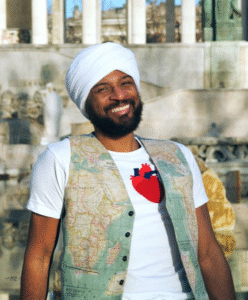
[00:00:39] Charna Cassell: Today's guest is Fareeha Roshin, a multidisciplinary artist and author. Welcome Fareeha.
[00:00:49]
[00:01:35] Fariha Roisin: Thank you for having me. Charna.
[00:01:38] Charna Cassell: I am thrilled. I've really been looking forward to this conversation and I don't know if you have this context, but Aparna, who was my roommate when I was 21 years old, I placed a newspaper ad in, you know, like literal newspaper ad for a roommate in Los Angeles. And she responded,
[00:02:01] Fariha Roisin: Wow.
[00:02:02] Charna Cassell: our, our rent was 250
[00:02:06] Fariha Roisin: Oh my God,
[00:02:08] Charna Cassell: and our answering machine said, You've reached Charna and Aparna, like Charna and Aparna, no, Wonder Twin Powers activate in the form of Charna and Aparna!
[00:02:20] Fariha Roisin: that's amazing.
[00:02:22] Charna Cassell: Isn't that amazing? And she was, I, I had gotten my first tarot deck when I was 18 from a girl I went to college with, and who had, who had dropped out. And I remember sitting with Aparna in that apartment doing, like, my first tarot readings. So it's like,
[00:02:39] Fariha Roisin: sacred.
[00:02:40] Charna Cassell: Yeah, and, and that we reconnected a couple months ago at my, where, I mean, my high school reunion was happening in LA and I happened to be standing on a random corner.
[00:02:54] Charna Cassell: She happened to drive by and see me and I hadn't seen her in a really long time. And then we ended up spending the rest of the day together. And she mentioned your book during our time together and she's like, Oh my God, you have to meet this person. So that is how I came to discover you and your beautiful writing.
[00:03:15] Fariha Roisin: I love how work finds. People have the mystery of it. It's really powerful.
[00:03:23] Charna Cassell: So I've been looking forward to this.
[00:03:26] Fariha Roisin: That's really special. Thank you. Thank you for having me here. I'm excited to talk.
[00:03:31] Charna Cassell: Yeah. Yeah. I've referred, I've referred a lot of clients to your book already. And there's so much, I just want to start by saying to the listeners out there that we're only, it's such a rich, deep book. I mean, there's, you have multiple books, but the one I specifically wanted to dive into is who is wellness for an examination of wellness culture and who it leaves behind.
[00:03:54] Charna Cassell: And there's so much to it. Yeah. I think we're just going to get to skim the surface a little bit and so I really am encouraging people to get the book for themselves,
[00:04:07] Fariha Roisin: Yeah
[00:04:08] Charna Cassell: and, and so this particular book, I'm curious, I know you were writing it during COVID. And so did the pandemic inspire the writing of it or was it in the works for a while?
[00:04:22] Fariha Roisin: it was in the works for a while. It was in the works for like five, five years, not necessarily like as an indictment or of the wellness industrial complex, but just even my own sort of journey with wellness and my own relationship to care. So I was circling around those themes for a while. And then when the pandemic happened.
[00:04:48] Fariha Roisin: It was so clarifying for me what was wrong with the world and what was wrong with sort of our culture, our large, our global culture, sort of a larger American culture and sort of the ways in which we were denying each other ourselves and and the ways in which we were sort of existing in. that became very clear to me.
[00:05:11] Fariha Roisin: And so that relationship to the page changed. I think it became a lot more critical and I was always probably going to be as critical as I was, but I felt a certain rage that even in the pages, when I, when I read it now, like I can feel it, there's like an undercard in the beginning. And that was really, really powerful because as you move through the book, it becomes less that, and it, and you sort of, the potency of the rage moves towards something that's more alive and hopeful.
[00:05:52] Fariha Roisin: And I think that that was my own relationship, the pandemic as well, that, you know, I felt so much rage, but ultimately the more I did the work and the more I saw people around me in my community, in the, in the, you know, in the greater world out there, I felt. Like there was change happening and that excited me and that was something that I felt necessary to sort of hold on to because I think we're such a hopeless society and that's why we're here, you know, we are so darkened.
[00:06:27] Fariha Roisin: By our past, but also our futures. We don't really know where we're heading in any shape or form, ecologically or politically, spiritually. So I think a lot of people are really lost right now. And, you know, it felt necessary to sort of not just be in the And the frustration of it all, but also show how this work can lead to something greater it, you know, we go to those depths in ourselves in order to resuscitate something, you know, and that's, that's, that work is really important.
[00:07:08] Fariha Roisin: And I think that that's what I was trying to sort of focus on like this, this, we can kind of bring all of our collective. Knowledge and collective infrastructure and build something greater than what we've ever had before.
[00:07:25] Charna Cassell: It's one of the things that I, I thought you did so well was, you know, so for people who are listening and I want to kind of touch on all these parts of the book, but one of the things you did so well is, is, it's, I'm picturing it like an accordion, where there's the personal, like, and then it expands out and you give so much context for so many aspects of how we are and why we are where we, where we're at, and ways of thinking.
[00:07:53] Charna Cassell: And yeah. Ways of, of, you know, forms of knowledge have been annihilated or dismissed and why we think the way we think. And, when, when we're in that place, people get out of a place of fear, they can get quite rigid. And while there's this one part of us is expanding and we're expanding beyond binaries. That's why I think even with, with trans stuff, people are so freaking out. It's like they're want a life or a familiar life raft. And so they're like, like fundamentalist ways of thinking, like old rigid ways of thinking. It's like, okay, this is my safety. And you know, and there's just so much polarization occurred during COVID.
[00:08:39] Charna Cassell: It just got intensified and even worse. I mean, from, from Trump onward. Right. And one of the things I found interesting in your book was the relationship between your, you're talking about your sister and your father and your sister's relationship to magic. And. To spirituality and how your dad's way of being was much more academic and linear and argue, you know, argument based and how you found yourself changing over time and aligning more with your sister.
[00:09:10] Charna Cassell: And I was very curious. I wondered how their relationship and how your relationship to them was impacted during that time or has evolved.
[00:09:20] Fariha Roisin: Yeah, my sister. I mean, it's interesting. I have a very tenuous relationship with my sister much more than I haven't. I have actually quite a solid and stable relationship with my dad. And I think it's because I am a lot like him and quite, you know, during the pandemic, we were both living alone. Incomplete isolation. I was in Brooklyn. He was in Abu Dhabi or in a line between Abu Dhabi and Dubai. It's like small village and, you know, we were consuming ourselves with writing and literature and thinking and, and sort of positing. And I realized that we're both philosophers. It was COVID that kind of revealed that to me.
[00:10:06] Fariha Roisin: Because I was writing, and he was very much doing his own writing and his own research. And his research is in the book as well. And it's, it's been so, beautiful because my father really formed my. my political landscape and my sort of radicality. My sister is not a radical person in terms of her politics and, and I think that that's where we sway because she's very much like, I think very much has a new age spirituality and how she, she exists.
[00:10:40] Fariha Roisin: She just like doesn't really want. To live. She's not so invested in this realm. And I think that that's a hard thing when you exist on Earth. You know, to live in a different dimension, but even still so much of my spiritual articulation spiritual knowledge, you know, I've been like practicing a lot of these things for like two decades because of her.
[00:11:10] Fariha Roisin: And so it's given me. a huge scope and understanding in understanding like what a lot of these practices are, you know, I was introduced to Reiki or, you know, auras through her, you know, like Marianne Williamson's work, you know, Martha Beck, like all of these writers I was reading. Like Eric from when I was like, 11, you know, conversations with God, like, it was very much like spirituality and like, yes, spirituality magazine.
[00:11:40] Fariha Roisin: And yeah, I think that my relationship to her kind of goes sort of in, in that nebulous place where, as you said, there's a lot of polarization and I think she's sort of in a different kind of. You know, almost sort of , verging on like, woo woo. And like, I'm trying to get everything that she gave me in a way that I can be practical and
[00:12:13] Charna Cassell: Mm hmm. Mm
[00:12:14] Fariha Roisin: knowledgeable and like, not just, you know, fall into sort of, I don't know, conspiracy theory realms.
[00:12:23] Fariha Roisin: That kind of stuff. So it's a weird time. It's, it's happening in my own family. I think a lot of us
[00:12:29] Charna Cassell: Mm hmm.
[00:12:31] Fariha Roisin: grappling with like family members going different ways, you
[00:12:35] Charna Cassell: Mm hmm. Mm
[00:12:36] Fariha Roisin: you know, whether politically or like, you know, it's, I think a lot of people are having a weird time seeing like, Oh, you're there.
[00:12:45] Fariha Roisin: Okay. I'm here. What does that mean about our relationship? So
[00:12:50] Charna Cassell: Yeah.
[00:12:51] Fariha Roisin: yeah, the pandemic split us. Fractured us way more than I think we're, we're acknowledging.
[00:12:58] Charna Cassell: Mm hmm. Mm hmm. And how to come back from that. I mean, it's one of the topics that I want to explore more and will be exploring more on this podcast is cancel culture and, and how to, how to reintegrate. After someone has been canceled and what does accountability look like and all of that, you know, years ago I worked with, are you familiar with Stacey Haynes?
[00:13:23] Fariha Roisin: Yeah.
[00:13:23] Charna Cassell: Okay. So Stacey was my individual practitioner and my group,
[00:13:28] Fariha Roisin: Wow. That's so cool.
[00:13:29] Charna Cassell: my survivors group leader, as well as became my teacher and trainer in a variety of different ways.
[00:13:37] Fariha Roisin: Hmm,
[00:13:38] Charna Cassell: And I was in a training run by something called, I don't even know if there exists still, but generation five and we were doing community response projects and it was really directed at looking at how we could end child sexual abuse within five generations.
[00:13:54] Fariha Roisin: hmm,
[00:13:55] Charna Cassell: And, and so one of the things that I really got from that training and I was in my twenties, so this is like 20 years ago was instead of vilifying offenders. you know, educating bystanders, how can they respond, creating resources for offenders so that they can actually seek help because so often as you probably know, even with like priests approaching other people, other priests or other therapists to get support around pedophilic tendencies or, or activity, they'll just get moved instead of actually being addressed, they'll get moved to another,
[00:14:34] Fariha Roisin: Right.
[00:14:35] Charna Cassell: So anyway, so reframing and looking at All of this from a really different vantage point. I think that any, any time, any time there's rigidity,
[00:14:49] Fariha Roisin: Yeah.
[00:14:49] Charna Cassell: there's a certain Lack of health. And I don't even like to say that because it feels judgmental, but in a muscle, right, that we want more flexibility in an emotional state or beingness. We want more flexibility, right?
[00:15:07] Charna Cassell: Because something that's changing can actually let something in and it can be changed by it, right? That there's a reciprocal relationship. If we're in one static state, right? Holding breath. fully exhaled. Like we want it to, we want there to be flow in everything, right? And so when I think of post COVID, this idea that like, wow, we don't even know where we're at or how much we've lost or how alien, you know, like how different and how othering, othered.
[00:15:41] Charna Cassell: Someone is from us. It's that's that's heartbreaking. And my my hope is that there's going to be. I mean, of course, things have to fall away break apart before they can come back together in new ways,
[00:15:54] Fariha Roisin: Mm-hmm. . Mm-hmm.
[00:15:55] Charna Cassell: But I think not seeing things in such black and white ways like this person is all bad. , and they need to be shunned and stuck on an island somewhere. It's like, how do we actually look at what's not working and try to heal it?
[00:16:12] Fariha Roisin: Yeah,
[00:16:13] Charna Cassell: You know, I,
[00:16:14] Fariha Roisin: Yeah. That's, that's the only way through. I
[00:16:18] Charna Cassell: the,
[00:16:20] Fariha Roisin: really feel that.
[00:16:22] Charna Cassell: something that I appreciated and I would love for you to break down a little bit, cause I think it's an important concept that was in your book is epistemicide. And if you could, you know, talk a little bit about that and then how you see that being relevant for the larger ecology,
[00:16:40] Fariha Roisin: Yeah. I mean, Epistomocyte, when I first heard of it, it was one of those lightning bolt moments because it was everything that I always Know about knowledge and sort of knowledge keepers and who, you know, like, I think being a non white person growing up in a white society and like what that does to your brain and like, you know, and obviously there's not a monolithic experience like some people are fine and it's totally, you know, like, there's so many ways that we Engage in, in our environment.
[00:17:16] Fariha Roisin: But for me, it was especially I think being South Asian and that identity and what that is is so, so confusing, not only to a South Asian, but like to the rest of the world. Like America literally has no context for like what a Bangladeshi person is. You know, in that sense, it literally is so black and white races, so black and white.
[00:17:38] Fariha Roisin: And it's taught me a lot to kind of, I mean, I guess I was built like this, but to sort of look between the crevices and try and find information there because that's always been the reflection that's actually made sense to me about who I am. So epistemic side is essentially the destruction of knowledge.
[00:17:59] Fariha Roisin: And the four cases of epistemicide that are that have been documented are the destruction of all under loose and the Muslims and the Muslim empire, as well as sort of the Jewish empire within the kind of Muslim world. Both of those knowledge sectors have been destroyed and were destroyed when a lot of Europe was colonized by the, by the Christians.
[00:18:27] Fariha Roisin: And then it's the destruction of indigenous knowledge in the new world. So like, you know, I think. What do they say, like a hundred and fifty million people were murdered to create the new Americas. So, like, just the sheer bounty of that information you know, from, from everywhere, from the Aztecs to the Amazon, you know, it's like all of this.
[00:18:55] Fariha Roisin: Density of information has been destroyed. And then it's the African slave trade and the ways in which slavery and, and, and, and the murder and genocide of many Africans, both in the middle passage, you know, coming to America or the Americas, but also sort of. In America, all of that destruction of knowledge.
[00:19:20] Fariha Roisin: And the last one, which really I think is quite riveting is the is the murder of witches throughout the world. And I think we rarely kind of think about the profundity of. Womanhood and the ways in which you know, just being a woman comes with so much knowledge about the world, about your community, about who you are, about birth, about death, about life.
[00:19:48] Fariha Roisin: Like, the, the ways in which we are equipped for this planet is just absurd and the fact that none of that knowledge is. is acknowledged or, you know, even, even believed or, or seen valuable is, is, is just so painful. But yeah, I mean, those are the four epistemicides. And I think that, that, you know, of course, like that, that, that sheer impact The Anthropocene, and I wrote this in Who Is Wellness before, the Anthropocene, the geological age that we are currently living in, I think that that is absolutely a testament to these epistemicides.
[00:20:29] Fariha Roisin: You know, burning half the planet, destroying and murdering half the planet's population has extreme consequences. And that means Armageddon, that means the end of the world, potentially, you know, for humanity. That's kind of what I'm reckoning with, personally.
[00:20:47] Charna Cassell: right, right. I was reading your book. When I was in Montana, and I was hiking for two days with Members of the Blackfeet tribe and and so I was sitting in stories and history and one of them does a lot of archaeological digs, and it was it was so profound. And
[00:21:10] Charna Cassell: one of the things that you capture in your book is the level of condescension dismissiveness. Of certain ways of knowing
[00:21:19] Fariha Roisin: Mm hmm.
[00:21:20] Charna Cassell: and so there's not only things like knowledge of, of how to plant, how to, how to take care of land, how to burn, how to do things that are going to prevent larger, you know, scale, wildfires, etc.
[00:21:36] Charna Cassell: But so, you know, just, I was in this one moment in time and when this information came in, and I was just really appreciating it in that context. But then I was also hearing it in the context of one of the examples you gave was Dr. Emoto, who does all the experiments with putting words on bottles of water and how they crystallize and, you know, and, and, and that there's this debate around that, like some really saw that it was valid.
[00:22:04] Charna Cassell: And, you know, and, and there are a lot of folks in the Bay Area that Walker, you know, that have words on their water bottles. And, and then there were people that, that minimize and dismiss that knowledge. And so there's all these ways that we uphold information and knowledge and ways that we denigrate it.
[00:22:24] Charna Cassell: And even the knowingness, like the intuition we get in our own bodies, you know, I think is something that it sounds like you've come into, that you've evolved into a deep listening.
[00:22:37] Fariha Roisin: Mm hmm. Mm
[00:22:39] Charna Cassell: and you had to trek through a lot of personal. Trauma, ancestral trauma, in order to get to that quiet place to listen and trust yourself.
[00:22:49] Fariha Roisin: And that severing is so painful, you know, it's like to sit with that sort of generational severing the ways in which our ancestors were ripped from their understanding and awareness, you know, and being because they were being forced to uphold values that weren't theirs, you know, like, it's insane that we've all just have assigned ourselves to just accepting capitalism, accepting white supremacy, accepting these powerful institutional things that denigrate us, that denigrate all of us, that, you know, nothing upholds white supremacy, doesn't uphold white people either, you know, demonizes white people as well.
[00:23:34] Fariha Roisin: That's the conversation we've not yet had. It's like, this is, this doesn't help anyone. It's not good. And it's not in accordance to nature to be Pretty, you know, like even, even the most, you know, you think of a carnivorous animal, they coexist within their, in their, you know, ecosystem, like these are, these are ancient beings, you know, that have come to an understanding of their environment.
[00:24:04] Fariha Roisin: And I think The thing about humans is that we just want it all. We're so hungry we want to consume and our consumption hasn't, I think, been challenged. And I think it's the destruction of the world that then created this, like, you know, this inequality, this vast inequality where people are okay.
[00:24:27] Fariha Roisin: Living in the shadow and accepting that, you know, not the badness didn't exist before this act, but like, it feels like this historic, you know, thing that just sort of shattered morality and shattered kind of the ways in which people existed, you know, like. I feel like indigenous culture, from what I've learned there is so much respect for your neighbor, for, for another person, for, for, for the tree, for the seed, for the stone, for the, for the creek.
[00:25:00] Fariha Roisin: Everything is so sacred. And I feel like that is not only the way that I was supposed to live, but that's the way that we were supposed to all live. And that we've, you know, not, not, it's not our fault, but we've all kind of been thrust into this dream that isn't ours, that we're having to live mechanically in a world that isn't for us, designed for us in mind, but we're all kind of, you know, and so it's like, how do you break out of that?
[00:25:31] Fariha Roisin: But also how do we just. Re envision something new and I think that that was what, out of all of the grief of epistemicide and realizing sort of the impact of it, what came was, well, what's next? You know, this can't just be it. And even if it is, how do we, how do we make this death matter or mean something?
[00:25:54] Charna Cassell: Yeah. So where do you land? Do you land in the, the degrowth movement? It's like, what is, what's the what's next, if you had to answer that?
[00:26:03] Fariha Roisin: Yeah, I mean, I definitely land in the degrowth movement. I land. In in coming back to the land. That's sort of my ethos. And I think that, you know, there's many ways that we can do that. And and also, like, I want to live in a way that's artistic
[00:26:23] Charna Cassell: hmm.
[00:26:24] Fariha Roisin: Creative and interesting. And I'm curious about sort of places where you can be all of that, where you can be with the land that you can also exist in sort of your own making.
[00:26:36] Fariha Roisin: And I know that sounds very utopic, but I think that what we're being forced to do right now is to reimagine and to question and challenge what what can be done, because I think there's a lot of things that we haven't tried that are possible. Hmm,
[00:26:55] Charna Cassell: So one of, one of the things that you talk about in your book is your relationship to your mother, which is like a really primary shaper. And so there's, there's intense abuse there. And there's also one of the things near the end, as you said, like, you know, you get to, to really be on a ride with you.
[00:27:17] Fariha Roisin: hmm,
[00:27:17] Charna Cassell: so your relationship to your mom, you're able to acknowledge what she gave you in this piece of your connection to gardening and your connection to the land. And so it really had me think about Mother Earth and how the mothering, like your mother couldn't nurture you directly, but that there was this indirect way that you access nurturing through your relationship to the earth.
[00:27:41] Fariha Roisin: yeah, it's really profound.
[00:27:46] Charna Cassell: Yeah.
[00:27:47] Fariha Roisin: it's, it's still such an intense relationship to like, sort of be okay with, with what's happened and to also just compost. It's such a process. It doesn't happen linearly. So yeah, I've I've really been humbled by how sort of treacherous the relationships can still be even.
[00:28:15] Fariha Roisin: When you've come to a conclusion of like, well, I'm going to compost this relationship and I've got Mother Earth, like it's still so painful and it's still so profound. I think it's both at the same time all of the time.
[00:28:28] Charna Cassell: It's interesting. So I, I often will guide people through a meditation and I may even do this at the, at the end, I'll add it on, but, it. it's like energetically doing a clear out of the, of your energy centers. And I usually say like, you know, what's not yours, what no longer nourishes you or serves you like allow it to move out and be composted.
[00:28:51] Charna Cassell: You know, and so there's the double meaning of composting in your book, like when we're moving through our own and our and our parents and our ancestors trauma, and it needs to get composted to even create room inside our physical bodies for us to exist and re embody. And then there was also the literal composting that your mother taught you how to do.
[00:29:15] Charna Cassell: And so you're creating out of. You know, seeming what someone else would call garbage for your, your fertilizing and creating new growth. Right. So it's, it's really profound metaphor.
[00:29:31] Fariha Roisin: And I feel it every day. I feel it every day.
[00:29:36] Charna Cassell: No doubt.
[00:29:37] Fariha Roisin: It's a lot of work.
[00:29:39] Charna Cassell: Well, you're, I mean, you know, I'm just really, one of the things that I so appreciated about your book is there's the beauty of your, of your personal story and narrative, but your voice moves seamlessly through the intellect, like very intellectual, rigorous. Um, You know, you've taken this, you've pulled that in, but then there's also your personal narrative and there's also your connection to spirit, it's in there and, you know, some may call it woo woo, but it's also really served you in unwinding this trauma and, you know, just the, the range of who you are shows up in the book and you're a freakin warrior to move through it and to keep doing it, you know,
[00:30:27] Fariha Roisin: Thank you. Yeah, I mean, you are too. We, we all are warriors. It's just absurd how much we can live through and how much we can do with the work. I mean, knowing that the work is important. , even just the rehabilitation that you were talking earlier about, you know, people that had harmed that you know, exhibited pedophilic tendencies, you know, like to, to find compassion in that.
[00:30:56] Fariha Roisin: Like, I mean, I saw transformative justice happen in, in real time
[00:31:02] Charna Cassell: Mm hmm.
[00:31:03] Fariha Roisin: with survivors, you know, when I, and I, and I'm not even talking about within that context, I'm talking about, like, in medicine work, you know, when they're releasing, you know, these, these, centuries worth of grief and like, that's just, you know, trapped in, in, you know, the 20 year rape that their father, you know, imposed on them.
[00:31:27] Fariha Roisin: Like that, that is like that when I see people survive that I, it's, it changed my life. It changed my entire capacity to be human, to understand. my mother, but to also understand pain and to understand like how these things live in our bodies and how it's so important to. acknowledge that harm so you don't continue that harm.
[00:31:58] Fariha Roisin: You know, the five generations thing is so real because, you know, like I don't know if I could ever have children. I don't really want to. And I think it's important to talk about why it's because I don't, I don't feel safe with children. You know, and I don't feel good. No, sometimes it's fine, but I can't look at a child without thinking who's harming them.
[00:32:21] Fariha Roisin: And that is sick. You know, it's a sick feeling. It's a weird feeling. It's an uncomfortable feeling to kind of always be scanning and to always to never fully trust a familial situation.
[00:32:35] Charna Cassell: Hmm.
[00:32:37] Fariha Roisin: I mean, that's my trauma, but that's also, I think, you know, they're also sadly the realities of what we're facing here.
[00:32:45] Charna Cassell: so I've, I've done this work. I specialize in working with sexuality and trauma, and I've done this work for 20 years. And I was thinking today when I was sitting with a client, so I had just like clients all day right up until this call. And
[00:33:01] Fariha Roisin: Hmm.
[00:33:02] Charna Cassell: like, I wonder how much. Just because this is what I, I marinate in, you know, like, if there's as much of this as, as I perceive, if it's this commonplace and I just see that.
[00:33:19] Charna Cassell: More clearly, or if, you know, like when I encounter someone who is in Montana or and thinks things are much more simple and much happier and that, you know, psychotherapy complicates things like it's, it was this moment I had a conversation with someone and I was like, what is reality? Whose reality is true?
[00:33:41] Charna Cassell: Because I unfortunately do believe that even to infants, child sexual abuse is, is It's ridiculously
[00:33:51] Fariha Roisin: Yes. Oh my god,
[00:33:52] Charna Cassell: like, like much more than we even realize, because so much, especially when it's pre verbal, isn't able to be reported.
[00:34:00] Charna Cassell: But I, what I feel compelled to say is As much as I believe in, not just five, I believe it's even more, it's like science has shown five, but like, you know, we, we know it's even longer back, like our, we, we feel our ancestry.
[00:34:14] Charna Cassell: We feel the impact of our ancestors in the room. I see it when I'm sitting with clients, but I, as much as the traumas in the room, I think the gifts, like the epistemic side really resonated in this deep way, because I think that like, when you mentioned witches. Or just the wisdom, the connection to herbal wisdom, intuitive wisdom, witchy wisdom, whatever you want to call it, we have access to that wisdom too.
[00:34:42] Charna Cassell: And I think as we heal and the trauma, it's like the veils parting or the sea parting, we have more access to the wisdom of our ancestors as well,
[00:34:54] Fariha Roisin: Mm hmm.
[00:34:54] Charna Cassell: you know? And so I think that's there and that's, that's the hopeful piece for me. It's like, that's the composting of the trauma, right?
[00:35:03] Fariha Roisin: Mm hmm. But there's a lot of gems there, too. I mean, I think that that's what's so strange about... Even my mom or like what happened to me or like who I am,
[00:35:16] Fariha Roisin: I wouldn't change any of it, you know, I really wouldn't. And
[00:35:21] Charna Cassell: Mm
[00:35:24] Fariha Roisin: like that is such a beautiful thing to keep telling myself. It's such an important reminder. And, You know, I think this is probably quite strange to people, but I write about this in the book too, like, my mom's incredibly gifted.
[00:35:40] Fariha Roisin: And, Yeah, I still think that she's the best cook I've ever met, you know, like, things like the idiosyncrasies that exist in people, and like, who they are outside of the harm they impose.
[00:35:53] Fariha Roisin: Like, it's just, you know, it's like, that's, I wanted to capture those moments of like, my mother smiling or those moments of humanity that I still remember because that's so worth it for me. It's so potent to hold on to that because I know, I know that by not demonizing her that I is a part of the work as well.
[00:36:25] Fariha Roisin: And that is a part of this healing. Like it's just not, you know, not turning towards her in anger and sort of allowing her to exist because we don't talk and
[00:36:36] Charna Cassell: Yeah.
[00:36:37] Fariha Roisin: I, you know, I don't really intend to ever talk to her ever again,
[00:36:40] Charna Cassell: Mm hmm.
[00:36:41] Fariha Roisin: but, you know, things change and life is long, but it's, it's interesting to sort of, I know she's doing a lot of work right now and just to sort of have her almost as this, like.
[00:36:54] Fariha Roisin: Little star seed very far away from me just doing her, her, you know, her experience and I can just sort of give light to that or like shed some sort of forgiveness and care from a distance. And I think doing a lot of work with ayahuasca has taught me a lot to just sort of like you can do so much from far away.
[00:37:18] Charna Cassell: Mm hmm. Mm
[00:37:19] Fariha Roisin: we're, you know, that goes into tapping into witches and
[00:37:22] Charna Cassell: Yeah.
[00:37:23] Fariha Roisin: into ancient wisdom, like the plants tell us many things and yeah, I'm lucky enough to still be in a very baby iteration of like learning all of these modalities and I, I feel so grateful that I have them as as a template to understand the
[00:37:43] Charna Cassell: Mm hmm. Mm hmm. I want to bring us back. It's so funny. One of the very first questions I was going to ask you, cause I really would like people to read this book.
[00:37:55] Charna Cassell: So, but just. You know, what is wellness, even breaking it down as simple as that, like, what are we talking about when we're talking about wellness?
[00:38:06] Fariha Roisin: I think we're talking about a state of being that is accessible to all, and it has to be felt by all for it to be important, because I don't know if you can be individually well in an unwell society. Because you have to deal with all the harm all the time. So it's, it's sort of paradoxical anyway. So you have to learn how to kind of coexist, but you have to then like also give room for other people's wellness and other people's, you know, needs.
[00:38:42] Fariha Roisin: And I think that's what learning how to be well is. I think that in the ancient times, in the times before colonization, definitely in sort of Indian or even Muslim cultures, it was so important how you treated somebody. And I feel like we've lost that sense of responsibility, which I bring up in the book.
[00:39:06] Fariha Roisin: And I think wellness is a, is, is responsibility too. Everyone and I think that that's why transformative justice or abolitionary politic or abolitionary sort of praxis is all about learning to coexist with the harm and understand where it's rooted and how it's rooted. So we can pluck it out for good and actually treat it rather than deny someone or dismiss someone because they have done the wrong thing.
[00:39:43] Fariha Roisin: And I think we're just a very unwell culture because we're so willing to kind of point the finger at people and find the bad guy when it's like the bad guys are all there. We see them. We're not coming for the bad guys. We're coming for each other. We're coming for Yeah, our people in our community because we feel so powerless.
[00:40:06] Fariha Roisin: So it also comes from a place of, you know, lacking in agency. I think a lot of people feel like they lack agency. And like, you know, you mentioned cancel culture earlier, and I think cancel culture is a way to unite people against a common hate. It's the same thing as witches. I know that people use the sort of like, You know, burning in the which sort of thing like it's such a trope like even Trump uses it but like it's such a significant, you know, symbol of our times because we are we are burning which is we're very unwilling to sort of do the background or even maybe it's not even back.
[00:40:48] Fariha Roisin: It's just about Do you want to rehabilitate someone or do you not? Do you want to actually face the harm or do you not? Do you just want to say that there's been harm and like find a way to attack that person? Or are you engaged with? Doing that actual work. And I think of even from sort of a political practice, like someone like Paulo Freire, who's Brazilian you know, thinker and and intellectual.
[00:41:17] Fariha Roisin: And he wrote this book called Pedagogy of the Oppressed. And within it, he talks about how it's the oppressor, oppressed position and responsibility to teach the oppressor. It's not something that we think that we should do, but sadly, it is what we are. Actually supposed to do. It's our, it's our Position to teach.
[00:41:38] Fariha Roisin: And I think that that disturbs a lot of people who have potentially had difficult lives for a whole number of reasons. And I don't want to speak to anyone's capacity because I know that that's so individual. But for me, that's been some, this has been something I've been really invested in, like, how do we create.
[00:41:58] Fariha Roisin: Spaces where we are concerned with the whole and with the actual thing, not just the symbolic thing.
[00:42:09] Charna Cassell: there's so much, there's so much in what you've said so I, I garden and you know, a little thing like, well, not so little thing, but these cedar trees that came down, one came down because of the storm and then he took the other, my neighbor took the others down because they were, they threatened, they were threatening to fall.
[00:42:29] Charna Cassell: And so that completely changed the soil. You know, the, the ecosystem in my garden, you know, the soil became hydrophobic without all of that protective shade,
[00:42:42] Fariha Roisin: hmm.
[00:42:43] Charna Cassell: I needed to do things and without my attention on things, without me tracking things, well, things really changed.
[00:42:52] Fariha Roisin: Yeah.
[00:42:53] Charna Cassell: And so as a metaphor, just kind of this, this bigger, this piece of we all wellness is for everybody.
[00:43:01] Charna Cassell: Especially because we're located right now in North America, I'll speak to North America, but. We're such an I culture here. And I know you, you were not raised here. You're raised in Australia. Is that right? Which is a whole other adds a whole other level of like crazy cultural conditioning, like, you know, but you know, just thinking about people here are just striving towards what works for them and getting for them and, and there's that, this power over dynamic of like, that's how we're measuring success.
[00:43:35] Charna Cassell: And so. what you're speaking to and that kind of like comes full circle back to tea growth. And I would love for you to speak more about that. But just there's a huge mentality. It's like white supremacy needs to be uprooted in order for, for wellness for all, right? Like there can't be this, this structural without structural change.
[00:43:57] Charna Cassell: How does wellness for all exist
[00:44:00] Fariha Roisin: yeah. And also capitalism, you know, like that's that's that it's the it's the it's the combination of both. And I think that that's, that's the reality to like this also sort of that patriarchal domination of the obsession with consumption, you know, the ways in which, you know, Apple markets, you iPhone, whatever, every single generation, like, why, why do we have you know, Why?
[00:44:28] Fariha Roisin: I mean, it's absurd. It's, it's, to me, it's just it's, you've decided on a market, you've decided that you have to make a million bazillion dollars every year, but that's all random. And It doesn't actually matter in the grand scheme of things because the planet is dying, we don't have resources, people don't have water.
[00:44:54] Fariha Roisin: That's bare minimum what we should be thinking about. I think corporate interest, corporate greed, capitalistic greed, the desire to you know, exploit people's resources, people, people and people's resources for the sake of growth. Thank you. For the sake of, like, exponential growth, like again, in a planet that can't sustain such growth to me, that's sort of the, the validity and importance of a movement like degrowth.
[00:45:32] Fariha Roisin: Because it's it's talking about acknowledging everything that we've been talking about acknowledging these white supremacist standards, as well as sort of the colonial, which are colonial standards, essentially, that have been put in place and sort of need to be Demarcation of the global North versus the global South, and the global South is a resource.
[00:45:57] Fariha Roisin: It's a it's only seen as a resource for the global North greed. And yet, when we face climate as we are facing it, everyone is equally going to experience it. In fact, The places that won't experience equally that will experience it even worse are the people in the global South people in places like Bangladesh and China, you know, in places where, you know, factories are overcome.
[00:46:24] Fariha Roisin: You know, with such waste materials right lakes and rivers are so overcome with, you know, waste material that they turn black they turn biologically dead. Like this is a reality and so I think that. You know, I felt very, very hopeful when the book came out about revolution and I still really, you know, this is in my blood, this is my ancestral, you know, mission, like, sort of carry on the work of my grandfather and my father and men who were very principled and at the same time it's holding on to or not holding on to, it's, it's understanding sort of, The ways in which we need to work with the earth and work with people
[00:47:13] Charna Cassell: hmm,
[00:47:13] Fariha Roisin: who are the inhabitants of the earth to come to a mutually agreed upon existence.
[00:47:23] Fariha Roisin: And I think that if we were to divvy up equally, which I mean, I know it seems impossible and maybe we'll never get there, but. I think that if the planet begins to burn as it continuously will, things are going to have to change really fast.
[00:47:41] Fariha Roisin: And I think that that's inevitable. I really, I think the difference between now and than ever before is the fact that we don't actually have any other possibility or chance to change this if we don't change it now.
[00:47:54] Fariha Roisin: and I
[00:47:54] Fariha Roisin: think that urgency is really necessary.
[00:47:57] Charna Cassell: I'm often seeing things like, you know, because I sit with couples and individuals all day, right, I always think about like the individual and then how it expands
[00:48:07] Fariha Roisin: Mm
[00:48:08] Charna Cassell: Into the collective and it's like, yeah, until someone is about to leave you and your marriage is about to dissolve.
[00:48:15] Charna Cassell: Often people don't change,
[00:48:17] Fariha Roisin: hmm.
[00:48:17] Charna Cassell: right? to, You have to have the threat of, of, of losing everything.
[00:48:22] Fariha Roisin: Mm
[00:48:22] Charna Cassell: Right? Before people come to Jesus, as they say,
[00:48:26] Fariha Roisin: Mm hmm.
[00:48:27] Charna Cassell: I wanted to ask you because, you know, especially like this, it's such a big topic, right? And there's so many people that can go into so much grief and become immobilized by it. And I know that you're, you, you know, you've navigated for decades, your own healing. And so I'm curious what your self care looks like at this point.
[00:48:56] Fariha Roisin: Oh, man, it changes all the time because I'm, I'm not consistent. Like I'll do things and then I'll fall off and then I'll, you know, my self care at this time. I entered a relationship last year in September and it wasn't a relationship that I thought would, it would be, it ended up being a very different kind of relationship and I.
[00:49:22] Fariha Roisin: I felt myself resisting so hard and like burying my heels in the ground and not wanting to sort of take shape in the way that things were falling. And so I started to get very depressed and putting who is wellness for out into the world put me into a very deep depression. And I have IBS and that's. pretty, pretty, an intense condition. And I've just been, since the book came out, going in and out of just so many different states of Of, of being in my body even, and really struggling to sort of fully be in my body. And I think just recently, I realized that, and that was a big self care moment for me. Where, after months of disassociating, and kind of being in the rhythm of like, you know, I'll get acupuncture, I'll get, I need things like for my physical health. but. I wasn't, I don't think, physically here, and I've come back physically, and that's been such a, an uncomfortable arrival that I think I'm still in this, like, crunchy nether space where I'm understanding, like, what I need.
[00:50:50] Charna Cassell: Yeah.
[00:50:50] Fariha Roisin: yeah, self care is kind of weird for me right now.
[00:50:53] Charna Cassell: Well, and you know, I think it's really important and I appreciate you being vulnerable and transparent about how hard it was with, with the book coming out. You know, I can only imagine it's, there's a whole other. There's the literal coming out process, you know, and when you reveal so much, and I know you've written a ton, you're very prolific, and you've written a lot about your, you know, your personal narrative, but it's, it's like I picture a crab with its little shell ripped off, you know?
[00:51:25] Charna Cassell: It's very, it's very vulnerable. And if dissociating was the strategy to feel safe when things felt vulnerable, or you felt like you're, you don't, you know, you put a book out into the world and you don't have control over how people receive it and, and then any experience of powerlessness in present time often brings us back to our original experience of powerlessness.
[00:51:48] Charna Cassell: And so it makes so much sense to
[00:51:50] Charna Cassell: me
[00:51:50] Fariha Roisin: The activation. Yeah.
[00:51:52] Charna Cassell: that it would like shoot you right out. Mm hmm. Yeah.
[00:51:55] Fariha Roisin: activation and sort of also just like the ways in which this, this relationship I'm in is near a sort of like a lot of my In a in a good way in a way that I can actually confront it for the first time maybe in a positive and or healing way, sort of a lot of the childhood abuse, and
[00:52:13] Fariha Roisin: it's it's just been a very interesting. Acceptance period of just like accepting. Also just yeah, you know, like I came out, I, I won't, you know, I come out as an incest survivor. It's not easy. And I think I've been shocked by how little people care. How little people who know me care. How little people, and maybe, maybe care is a strong word, but it's been sad to see that, like, even some of my close friends haven't read my book.
[00:52:51] Fariha Roisin: And it really impacted me in a way that them not reading other books, I didn't really ever, it didn't matter to me. I'm not really tethered to, like, you should, you got to read everything. And I'm not like that. I'm a very sort of carefree friend in that sense. And I understand not everybody's going to like the work.
[00:53:11] Fariha Roisin: But I think sitting with that, and sitting with that feeling of, this isn't rejection, but it feels like rejection. And it feels like a rejection of my experience. And, I don't know if you feel this way, but, you know, I only started talking about my sexual abuse very recently, and You know, as it does, it sort of defines everything then, because it sort of is like the explanation for it all.
[00:53:42] Fariha Roisin: And... I needed people who love me to understand that
[00:53:49] Fariha Roisin: it's like this one elemental thing that I need people to understand and that's very hard because not everybody will not everybody cares not everybody is concerned. You know, I really know who is a survivor like actively working towards. Healing, because they're always the people who talk to me about transformative justice because everybody else I know is not very interested in it or like, you know, sort of sees it as sort of more of a, a distant like, you know, utopic thing rather than like, this is how we engage with our lives because in order to find any healing with your past, you need to forgive the person who harmed you.
[00:54:33] Fariha Roisin: And that kind of work is endless and, and ongoing and Sisyphean. But I don't know, just the fact that like a lot of people in my life might Not even ever factor that in or I think being a public person is really uncomfortable for me and the expectations that are put on to me and I'm not seen as a human who's like facing this very human reality, I'm seeing, I'm just sort of seen as this like being that like has no, you know, no, no, no qualms, nothing like it's just like I'm existing in a, in a different universe and it's I, those kinds of things really make me worried about the future, but I, I don't know.
[00:55:21] Fariha Roisin: I feel moments where I am seen like, you know, on this podcast or people who actually like want to talk to me about my work. That's the most satisfying experience I can get because it's just like, Oh my God, you, you're validating, you're validating what I'm writing. Of course I still long for that, you know, it's like this book need a lot of validation that I never thought I would need from a piece of work, and it's probably not a realistic amount of validation so I have to give myself that validation.
[00:55:58] Fariha Roisin: So, I've been in that journey in that process and it's, it is sort of like witnessing and Thank you. Facing, like, who has my back and who doesn't, and moving with that, that, you know, wisdom.
[00:56:13] Charna Cassell: It's, it's a tricky one, right? Because people can only be with , someone else's grief or, or terror or rage as much as they can be with their own.
[00:56:24] Fariha Roisin: Yeah.
[00:56:26] Charna Cassell: and as we were, you know, talking about earlier, people want stuff around child sexual abuse to be pretty damn black and white. And it's like, It's all bad.
[00:56:35] Charna Cassell: If, if, if we acknowledge that your charming mother
[00:56:39] Fariha Roisin: Hmm.
[00:56:40] Charna Cassell: you, then we have to reckon, think about the possibility that all these other charming humans are abusing their children. You know? So I think it, it, people's limitation there, you know, it's as painful and disappointing, I imagine it hits that place of like, Oh, our parents are so limited and human and we want them to, to protect us and love us and cherish us.
[00:57:05] Charna Cassell: And. So I can just imagine that it hurts and you want to be seen, you know, and, and you don't, you're not feeling seen in a way by these certain friends.
[00:57:18] Charna Cassell: This is one piece that, you know, we're, I may have to have you back and we can talk more about this in particular, just like this alone. But there's, there's, So many ways that even before you come out as having been sexually abused publicly, that it's invisible and then the way it's impacted you is invisible, right?
[00:57:42] Charna Cassell: And it's like your body is trying to speak through its language, through ailments, right? Through the IBS, through the I also have a chronic QL thing.
[00:57:53] Fariha Roisin: Hmm.
[00:57:54] Charna Cassell: But what I don't think people understand and I think that these layers of, of wanting to be understood and seen is trauma has a massive physical impact depending on how people do or don't digest it or allow themselves to be conscious
[00:58:16] Charna Cassell: And, and you were very alone and without support and processing and digesting this,
[00:58:22] Fariha Roisin: Mm hmm,
[00:58:23] Charna Cassell: It was
[00:58:23] Fariha Roisin: hmm, mm
[00:58:24] Fariha Roisin: hmm,
[00:58:26] Charna Cassell: so your body set it for you in a variety of ways. And so it makes sense. There's this flare ups. You know, again, it's like, wait, I need, I want to be seen. I want to be heard. And that this piece of giving to ourselves is that reparenting process. Right? Like, how do I cherish myself?
[00:58:47] Charna Cassell: How do I keep nurturing and seeing myself? And every time someone doesn't see me, it's painful, but it's also an opportunity. It's clear. They're stepping out of the way to let me see myself and
[00:59:00] Fariha Roisin: mm
[00:59:01] Charna Cassell: give to myself. And we're always in that practice,
[00:59:04] Fariha Roisin: hmm, mm hmm,
[00:59:04] Charna Cassell: you know, like that's just a, an ongoing practice.
[00:59:07] Fariha Roisin: hmm, mm
[00:59:08] Charna Cassell: Yeah.
[00:59:09] Fariha Roisin: hmm. It really is.
[00:59:10] Charna Cassell: Yeah. Yeah. Yeah. And. We have to wrap up or my podcast producer will choke me out. No, I'm kidding. But I, I could talk to you for hours and I've totally enjoyed having you here. And how can people find you? You have so many essays you've written and you have other books. You have another, you have another book
[00:59:33] Fariha Roisin: I have another book,
[00:59:34] Charna Cassell: Yeah. So say a little bit about that.
[00:59:36] Fariha Roisin: So, my next book, Survival Takes a While with Imagination, comes out on October 17th, my mother's birthday. So it feels like a very, I know, like a beautiful kind of... Finale, I think for a while. I'm, I'm writing new work and it's not really about her at all. And it's really nice because it feels like I'm shedding, I'm shedding a layer. And yeah, it feels like this is sort of like, you know, the next piece to who is one was for and it, I think I wrote them. Side by side, almost, you know, they, the, the writing process occurred together, and so, like, a lot of the themes are, are present in both books, and I find that, like, poetry can just hold.
[01:00:26] Fariha Roisin: The nuance more and so I'm really excited for people to read this book because I think who is wellness for is, it's such a beautiful important book to me and it always will be. And I also understand if it's something that people are not prepared to read yet. So I think survival takes a lot of imagination is like a nice sort of like softer.
[01:00:50] Fariha Roisin: Jump into that that world, but, you know, read who's on this for me in the world to me it's. It's it really is my dissertation like I feel like I like poured everything into it. And then, yeah, I mean I have a sub stack. It's. It's called How to Cure Ghosts, which is also the title of my first book, which is also a book of poems.
[01:01:16] Fariha Roisin: My novel, Like a Bird, is, is, is a beautiful book as well. I wrote it for 18 years. I started writing it when I was 12 and I published it when I was 30. And that journey was like a really, really moving one, to say the least. I still, I still can't believe I did it. And. Yeah, it means a lot when people read that book, because it's like, it's, it's, when I read it, I, I can see my teenage self in all these moments and the references that I was bringing up.
[01:01:46] Fariha Roisin: And like, I edited a lot, you know, as an older person, but that, like the story is my 12 year old, 12 year old's creation. And that feels really. Yeah, like I'm trying to have love for all of these selves, you know, all of these selves that brought me to this place and
[01:02:07] Fariha Roisin: that self is a really, really, she was so overlooked when I was that age, but I feel like I really owe her so much.
[01:02:15] Fariha Roisin: So there's a lot of work. There's a lot of essays, as you said. But I feel like I'm constantly making and I just, I have so much to say so I'm just trying to say it.
[01:02:24] Charna Cassell: I'm so glad you're saying it. Thank you for saying it.
[01:02:28] Fariha Roisin: Thank you. Thank you for holding and accepting it. It's a lot.
[01:02:35] Charna Cassell: Yeah. Yeah. It's a lot to express. It's a lot to feel. And it's a gift to share it and just know that, yeah, it's being received. So thank you.
[01:02:47] Fariha Roisin: Thank you, Chyna. This was beautiful.
[01:02:49] Charna Cassell: So earlier in the episode, there was a conversation about composting, right? And so typically when we're cooking in our kitchen, we, we use the parts of the vegetables that we want to cook and eat.
[01:03:02] Charna Cassell: And then we take the little bits that are left, we discard them, we mix them with different kinds of matter from our garden, other soil and dry materials. And we create Uh, new rich combination of something to feed it back to the earth to grow more of our vegetables and So I want you to think of the energy that we clear from our body, right?
[01:03:28] Charna Cassell: We're walking through life and we're having these interactions with people and we're always taking on, there's an exchange. Sometimes we give energy. Sometimes we take energy. Some of us are more porous. Often trauma can make people more porous. There can be a subconscious belief that you have to take on other people's hurts or pain in order to be valuable.
[01:03:49] Charna Cassell: Sometimes even. In order to exist. And we actually get to have boundaries and we get to have semi porous membranes of protection around us. And I've guided people through this in the past, but I want to revisit this practice. So first, what you want to do is you want to call all of your energy back to you.
[01:04:13] Charna Cassell: Imagine that from you. any moment throughout your day or even in time, even since childhood, right? Call all my energy back to me. Imagine it consolidates all around me in a semi permeable bubble of protection, an arm's length out. Above my head, below my feet, side to side, front to back. And it allows in whatever feels nourishing.
[01:04:39] Charna Cassell: So what comes my way that feels good to my system, and what's not mine, what I've accidentally picked up along the way, or what's not mine in this very present moment, maybe something from the past, can gently move out of my system and get composted into the universe. It's neutral energy to the earth and to the universe.
[01:05:03] Charna Cassell: What doesn't serve us is not necessarily bad or polluting, okay? So first, you're, you're feeling this bubble of protection. You can give it a clear blue edge, the color of Windex, which is a psychic boundary. And put your attention in the center of your head, in the center of your brain, and rest it there.
[01:05:29] Charna Cassell: Put a drop of gold light that can hold your attention, right? We like to focus on things. So just give it a point of golden light to focus on. And holding your attention here, go ahead and put a dumpster outside your first chakra. And your first chakra is where, so if you're on your sits bones, you're sitting and you imagine, you know, you have a tailbone.
[01:05:58] Charna Cassell: So that space between your sits bones is your, your perineum. That is your root chakra. So from that place right out in front of it, Outside your bubble, you put a dumpster. Your first chakra relates to the collective. It relates to family, money, work, safety, home. And so what we're going to do is we're going to clear out any thoughts, feelings, and beliefs that interfere with our ability to feel grounded, safe, a sense of belonging in our family of origin.
[01:06:42] Charna Cassell: In our own home, in our work, fear around money. And if I was doing this with a specific person, I would get more specific to them but you can insert whatever works for you here. Generally speaking, you're clearing out thoughts, feelings, and beliefs that no longer serve you or support you.
[01:07:06] Charna Cassell: around these topics. So you're moving that energy out. You can trust that whatever is ready to go will go. It gets cleared out. It moves out into the dumpster. You can use your breath if it's extra sticky and hard to move. So
[01:07:24] Charna Cassell: you're resting your attention in the center of your head. You're simultaneously putting your attention in your root chakra. And as you move this stuff out, The gold in the center of your first chakra starts to expand and it gets bigger and bigger until your whole first chakra is filled with golden light.
[01:07:45] Charna Cassell: It's all clear.
[01:07:50] Charna Cassell: And when that is complete, you can go ahead and blow up the dumpster and turn it to gold dust. Whatever's yours comes back to you. And what's not yours gets composted.
[01:08:10] Charna Cassell: And resting your attention in the center of your head. You can also... Send a taproot from your tailbone into the earth, from your feet into the earth, so that you're anchored, you're supported. Anything that somehow doesn't make it out into the dumpster, you can just intend and direct it out into the earth in these, through these little, as a client once called it, her poop chute, through the, her tailbone.
[01:08:40] Charna Cassell: Resting your attention in the center of your head, go ahead and put a dumpster outside your second chakra.
[01:08:48] Charna Cassell: This is If you're a woman who has ovaries in between, this is below your belly button,
[01:08:58] Charna Cassell: lower abdomen. Putting a drop of gold light in your second and putting the dumpster outside your bubble of protection. Your second chakra relates to one on one relationships. It's how we feel into people, often unconsciously. We get information about people this way. It's also about our creative and sexual self expression.
[01:09:29] Charna Cassell: And so you're clearing out any thoughts, feelings, and beliefs that interfere with your ability to be fully, creatively, and sexually self expressed.
[01:09:44] Charna Cassell: It also relates to safety. The bottom three chakras relate to safety. Survival. So there might be images. There might be words. There doesn't have to be anything that you actually see. But just allowing the gold to expand and fill your second chakra and allowing whatever needs to be released to go into this dumpster.
[01:10:15] Charna Cassell: Go ahead. When you're ready, you can blow it up. If you're needing to take more time than is provided here, you can pause the recording until you're ready and then press play again and keep going.
[01:10:36] Charna Cassell: You blow it up, you turn it to gold, whatever's yours comes back to you through the top of your head and the rest gets recycled or composted. So feeling this, putting your attention in the center of your head, you feel the bottom two chakras filled with gold. And now you're putting a dumpster out in front of your third chakra, which is your solar plexus.
[01:11:00] Charna Cassell: Go ahead and put a drop of gold between your rib cage. Right, so that, that top, it's like very, very top of the belly, but it's really between your ribs. It's often a tender spot and start to expand the gold and what this spot is about is it's often place of personal power and alignment. So when we feel disempowered will often collapse here, or it can also be where you when you feel abandoned, there can be this place where when you're in grief, or Sorrow and embarrassment, there's a collapse here, or disempowerment, there's a collapse here.
[01:11:42] Charna Cassell: So sitting up straight, putting that dumpster out in front of your bubble, expanding the gold, moving out thoughts, feelings, and beliefs that no longer serve you, that relate to feeling disempowered.
[01:12:02] Charna Cassell: Things are out of alignment, we will feel here, we'll feel it in our guts, expanding the gold, moving everything out. That's ready to go.
[01:12:20] Charna Cassell: And once that center is filled with gold,
[01:12:28] Charna Cassell: go ahead and blow up the dumpster, turn it to gold dust. Let whatever's yours come back to you through the top of your head and let the rest be recycled.
[01:12:42] Charna Cassell: So again, that was a safety center, right? The bottom three chakras are very concerned with safety and survival. And then we move up to the fourth center, your heart center. This is about affinity. For self and other, I also think of it as compassion for self and other, for the world, not just an individual, the planet, animals, the capacity to feel affinity and care, putting a dumpster outside the bubble, start to expand the gold.
[01:13:20] Charna Cassell: Remember your, your tethering into the earth. Remember the center of your head. And as the gold expands, it moves out any thoughts, feelings, and beliefs that prevent you from being able to feel affinity for yourself, like deep care and love for yourself and other people, other beings, the collective.
[01:13:54] Charna Cassell: And as that fills with gold and the dumpster gets more full, once it is ready,
[01:14:05] Charna Cassell: go ahead, blow that up, turn it to gold. Whatever is yours comes back to you. The rest gets composted.
[01:14:20] Charna Cassell: Now moving up to your throat center.
[01:14:27] Charna Cassell: So your throat chakra relates to self talk. How do you speak to yourself? Do you feel heard out in the world, putting your voice out into the world, right? So clearing any thoughts, feelings, and beliefs that interfere with your ability to trust your internal voice. Your intuitive voice, as well as prevent you from feeling heard in the world, as well as what creates negative self talk.
[01:15:03] Charna Cassell: So, you might be cleaning out a lot of old beliefs and material, things that have been said to you that you've taken on in your own voice. Letting that get released and let it flow out into this dumpster. As the center gets filled with gold,
[01:15:23] Charna Cassell: the 5th, 6th, and 7th center are about intuition, different kinds of intuition.
[01:15:37] Charna Cassell: And when this is filled, you can go ahead and blow up this dumpster, turn it to gold, whatever's yours comes back to you through the top of your head, and what's not gets composted. Moving up to between your, above your eyebrows, center of your forehead, your 6th energy center, 6th chakra. This is your intuitive vision.
[01:16:06] Charna Cassell: So fifth is intuitive voice. This is intuitive vision. What interferes with your ability to see and trust what you see? Clearing out any thoughts, feelings, and beliefs that interfere with you trusting what you see. There could be programming culturally, religiously, socially, letting all of this flow out into the dumpster.
[01:16:44] Charna Cassell: When this center is filled with gold and you're ready, You can go ahead and blow that dumpster up, turn it to gold dust, what's yours comes back to you, the rest gets recycled and neutralized.
[01:17:05] Charna Cassell: Go ahead and put your attention above your head. This is your seventh chakra, and this is about your intuitive knowing as well as guidance. So what, if anything, thoughts, feelings, or beliefs interfere with your ability to receive guidance as well as trust your intuitive knowing? Thank you.
[01:17:32] Charna Cassell: Go ahead and allow that to be moved out of your space into that dumpster now.
[01:17:53] Charna Cassell: Gold is expanded and gently moving everything out.
[01:17:59] Charna Cassell: The dumpster gets full. Go ahead and blow it up. Turn it to gold dust. What's yours comes back to you. The rest gets composted.
[01:18:11] Charna Cassell: I'm feeling this, feeling this line of filled up golden centers aligned. What is that like? Does it feel any different now than it did when we started?
[01:18:39] Charna Cassell: This is a practice that I used to do multiple times a day for years, and it really helped. I actually had chronic fatigue. I went from dancing six days a week to needing to rest while walking down the street. And this helped clear my system out. I didn't realize how porous I was and how much of other people's stuff I was taking on, but it was a big teacher for me.
[01:19:09] Charna Cassell: There was so much information in this experience of how easily I could recharge myself. And I didn't need to just use my own physical body to be doing the work I was doing.
[01:19:25] Charna Cassell: So this is a clean out. This is a preparation for meditation, although it could just be your meditation. But after this, you've cleaned things out, you've created more space internally, enough to be still. And so, you can meditate now, or you can go about your day.
[01:19:44] Charna Cassell: I'm wishing you a rich, composted week. Was that as good for you as it was for me? If it was, we'd love it if you'd please rate and review it and share it with your friends so others can find us. If you have additional questions about living a vibrant life after trauma, we'd You can submit them at charnacacell.
[01:20:05] Charna Cassell: com. Follow me at Laid Open Podcast on Instagram and Facebook and read more about my work at passionatelife. org. You can also sign up for my newsletter to stay informed. This has been Laid Open Podcast with your host, Charna Cassell. Until next time, keep coming.