Show Notes
The Heart Opening Reality of Kundalini Practice with Amanbir
Charna Cassell: [00:00:00] Welcome back to LaidOPEN Podcast. This is your host, Charna Cassell.
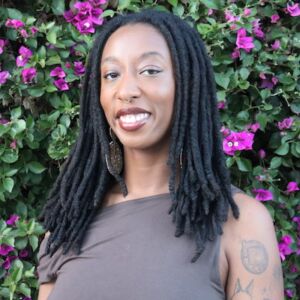
As some of you know, I was in an intensive Kundalini yoga teacher training from April through August of this year, and it was a wild ride for me. But one of the highlights of my training was a guest teacher named Amanbir, and he's a Kundalini yoga teacher and trainer that's empowered and trained thousands across the planet for the last two years.
He brings in his deep passion experience, helping others to heal, using Chinese medicine and astrology into his teachings. And in this conversation with Amanbir, we get some into what's happening in the world and astrology. Into the value of mantra and mudra and repetitive movement and yoga as a path of compassion.
So I hope you enjoy and he is just a ray of sunshine.
[00:01:00] Welcome Amanbir I'm so glad to have you here.
Charna Cassell: Thank you.
Amanbir: It's great to be here with you.
Charna Cassell: Yes. So we tried so many, like we tried so many countries, so this is great.
That's right, that's right. I know. I was like, maybe the key was [00:02:00] me leaving the United States in order for us to
Charna Cassell: coincide. But we've worked it out back in Cape Town.
And the
first
time I encountered you was in my Kundalini Yoga teacher training and
I was really impressed and appreciated the depth of your knowledge around
astrology, Chinese medicine and, you know, sacred anatomy. And what would say is your,
your primary focus right now in your life in terms of what you're up to?
Amanbir: My primary focus right now is. Well, there's one, I would say there's one driving force, which is the dynamic of being in a space where I can be of service to others and help with my tools. Now, in terms of like which aspects of the tool set I use, it varies throughout the year. And so I get to enjoy like, okay, now is this dynamic where I get to teach a Yoga training.
Okay? Now is a dynamic where I get to [00:03:00] work with someone's ethological chart, give them insights that can help their life. Okay? Now is the point where I can. Work with someone's health and anatomy to prescribe a Chinese script and give them a formula, recommendations to improve their mind body health. So it really just depends on like what comes to me and what stage of the year.
Charna Cassell: And, and for you, how did you come to Kundalini Yoga?
Amanbir: I came to it well, I was studying engineering and I was looking for ways to actually help manage. Stress. And so I knew like I love to volunteer, so I was just like, let me look online. And I went on Craigslist and the first line that popped up in the volunteer section was free Yoga for volunteer service.
And at that point I had done like some popa, but my teacher had moved away. And then I didn't even think of doing another Yoga class, but I was just like, oh, I like Yoga, I like volunteering. That sounds great. Best of both worlds. It just happened to be a Kundalini Yoga [00:04:00] studio.
Charna Cassell: And, and so, you know, before coming to Kundalini many years ago, I was healing from from tendonitis through Iyengar Yoga.
There's a level of precision and it's really great for trauma and for healing, physical injury, and but people really don't know a lot about Kundalini. In terms of what Kundalini is useful for, what would you say?
Amanbir: Well, I would say Kundalini Yoga is useful. There's so many, there's so many branches within Influence Yoga.
So really it depends. Like even I may work with a client who just comes with me for, for acupuncture.
Amanbir: And they may not be open even to the idea of meditation, but I can give them just like one of the breathing practices, the pranayams, including Yoga as a prescription that I know will help them, their, and I'll explain the benefits of that particular pranayama to them.
And they'll, they'll do it without even necessarily the [00:05:00] context of like. You know that they're a kuman yogi to speak. So it can help even on like that, that aspect of like someone's personal health and wellbeing. But wider than that, the practice is great ultimately for self-knowledge, empowering a person to have a greater understanding of themselves.
And then I think from there, that understanding of self is like through the lens of compassion, clarity, patience, and when you can understand yourself. Through a lens of greater compassion, clarity, patience, then it's easier to have that same capacity for other people on the planet.
Charna Cassell: Yeah, it's, it's an, it's, it's an interesting path because, you know, Yoga has gotten so separated from being path and being a holistic path. It's like you can go to a gym and just, you know, take a power Yoga class or something and. For it to actually become more of a, a holistic approach to [00:06:00] self-awareness is not always what it, what it looks like. And then you take something like Kundalini Yoga and people, even though, you know, people will say, oh, that person has good energy. They will, then you could ask that same person something about energy or energy work or meridians, and they know very little about it, but we're actually always attuning to one another in an energetic way.
Yeah, right. Absolutely. so in with Kundalini Yoga, there's, there's some key components, right?
You know, there's, there's mudras, there's mantras, there's chanting, and what would you say the, the benefits of, of mantra are?
Amanbir: Well, man is the word manas, which means the mind, which is like the waves. Really practically, it's a tool to help with the wave of the mind, like where the mind goes to, because the mind is something that [00:07:00] can work for us in terms of having clarity strategy, using our intelligence to navigate through the challenges of life.
But also the mind can be in our way, the mind can be full of anxiety or misperceptions or things that lead us further into division separation. Which, you know, is painful ultimately. And so mantra is a way of working to help lift the mind up, to lift the mind to a greater space of clarity and focus.
And it's like even though you are doing something, like you're creating a sound, you are taking an action. Typically with mantra, there's a certain quality of repetition. And then over a period of time that repetition actually creates a state of a type of focus for the mind. So that type of concentration, that type of focus to then apply that into life, which, you know, our world has pulled so many distractions.
So if you can really strengthen your capacity for greater [00:08:00] focus, you know, so much better.
Charna Cassell: Yeah. I also find it's like what I love through mantra
or even just listening to a song or a chant, that
waking up in the middle of the night to go to the bathroom. That song playing in my head or that mantra occurring so that it, what it tells me is that it's playing in my subconscious rather than all the mucky stuff that could be playing in my subconscious.
Yeah. Right. Yeah. And there's like even a physical component of it, because I've tested, I, like I, I still have the science mind in engineering school, so I, I remember like, just especially in the beginning, testing everything out. And so I never forget, I was in Mexico City and I never experienced that, that type of traffic before.
And I was with a group of friends, we were headed to a course and we're like, oh, we're gonna be late with this amount of traffic. And I was like, oh, let's put on the mantra for blockages. And so I start playing in the car. We start chanting it, [00:09:00] and then all of a sudden it's just like somehow things started lifting through the traffic.
And it wasn't only just that experience, it was like, I've used it
several.
Right? Even when I lived in New York, like in the subway, I'm like, okay, the, the train has been moving for 20 minutes. Let me just. Put on this mantra. Let's see what happens. And they're like, oh, the train starts moving.
Great. Okay. Yeah. I, I can add to that testimonial. So in 2016 I was gonna have fibroid surgery and
I was doing a handful of things.
One is I, I had a vegan diet to prepare my body for surgery. And I did mantra every morning. I used a rife machine, which is, do you know rife machines? No. So the same way that I can never say this word, right?
Sgio frequencies. Okay. Yeah. It's like that, but you don't, there's no sound. And, and, but it's, it's sending, it's ener, it's energy
medicine.
Yeah, you put a piece of DNA in the machine and it, [00:10:00] so it's connected to you. And so I don't totally understand how it works, but
it's definitely something
for you to look into.
But I had four orange size fibroids before
the surgery,
and they were anticipating it was gonna be this very long, arduous surgery. And they o when they cut me open and they went inside, they only found two. So, wow. The however many months that I was in this
Regular daily practice, and I could even
feel,
I remember this visceral experience of chanting and feeling the kind of like a g ripping is too strong a word, but like a
gentle separating,
Amanbir: like a, a stretching,
Charna Cassell: almost like
Amanbir: a fascial separation that was occurring Yeah.
In my uterus from the fibroid separating. Wow.
So I've definitely, you know.
Charna Cassell: Experience
that, and then also even even non like, nod
of this lineage. Do you know Ojo puno? Yes. Yeah, right. So I had a, a, an [00:11:00] ongoing bladder infection that like, there was supposedly no infection, but I was feeling this like electrical pain that would not subside.
And I did that mantra.
I drank nine times roasted bamboo sea salt, and that was the only thing that made it stop. And it was like ongoing intensity. So
I, I'm a deep believer in, in
uh, mantra.
Amanbir: yeah. It's just the power, the power of sound that is Well, sound is vibration. And
And
also the power of sound.
The power of our words spoke one way of just really uplifting ourselves. And of course it helps to know the meaning of it. Like, because then you can drop the resistance. Because sometimes if you don't know what you're chanting, like, wait, what am I chanting? And I've learned, like I learned pretty on like early on when I first started teaching, like, I remember we were chanting once and then this woman raises her hand, she comes to the [00:12:00] back and it was a chanting workshop, interestingly enough.
And I just like go over to her like, is everything okay? She's just like, oh, I'm pregnant. Will chanting hurt my baby? And I'm like, no, no, no. Chanting is great. Great for the baby. Baby will love it.
Charna Cassell: Right? Wow. You're like,
Amanbir: So it can be you like, no. Yeah. What you're chanting. So that way you're not just like questioning like, wait, who? What am I chanting? Am I chanting to someone like, what is going on? Am I calling something in? And so just to give that intentionality into the practice, but ultimately it just works through the actual vibration of it, the actual style.
Right. It works, you know, if someone has an open mind to it, it'll work without them even knowing what it
means
or what it's for.
Charna Cassell: Yeah, yeah. And you know, it's a, it's a, it can be tricky thing because there's, of course, there's, there's appropriation from different cultures
and it's like people wanna be sensitive and aware of that, and. There's also just, there's an inherent healing in making [00:13:00] sounds right. Yeah.
Given
we're so much water. I've had singing bowls and put water in the bowl and played it, and then you
see all these patterns and you, you know, see
how impacted the water is by vibration. It's like, you know, when you're hearing, listening to a song and suddenly your whole body is shivers like
a, of course, mantra impacts us.
Amanbir: Yeah. Yeah.
Charna Cassell: Well, you're also a musician, right?
Amanbir: Yeah, I still sing. I'm still working on
albums. I have four mantra albums out.
Amanbir: And like each one was just like a, for me it was just like, each one was just a, a opportunity for me to chant and somehow I create a product that can help others with it.
Charna Cassell: Well, and how cool, like through the, you know, as you're practicing and rehearsing and wanting to record
something
that, like nailing it, every
is, is beneficial to you, right?
Amanbir: Very just can't hours just with the microphone on my face, it's [00:14:00] just...
Charna Cassell: Well
, and I'm curious about the people recording, like the, the sound engineers, if you're, if you're recording with other people, if they've reported an impact, how it's affected them, or if you're just doing it alone.
Amanbir: Well, two, I, I've only, I've worked with two different producers. Or like one producer for the first two, another producer for the second two, and the first producer. He was already like very long and dedicated Yoga practice.
Amanbir: And so for him, he is already like, tapped into the energy of practice, but for the for the second producer who's not so much experience with Yoga, with chanting, he just enjoyed the experience.
It wasn't so much that he was just like, oh, I'm feeling the energy. It was so much like he was just really just enjoying the vibe, so to speak.
Charna Cassell: Yeah. And Yeah. And so the other, the other component of Kundalini Yoga, there's, I mean, well there's more than this, but, but mudra and [00:15:00] often, sometimes seemingly silly, like, I don't understand why we're
flapping or what we're doing, like some kind of physical, that was first experience like 20 years ago of Kundalini Yoga.
I was like, I don't know what's happening, but I'm getting really hot. The value of repetitive movement. As well
as, yeah, in a still way holding a mudra. If you could speak to that as it relates to meridians and what you know regarding Chinese medicine.
Amanbir: Yeah. Well it's, there's, there's aspects of lum Yoga or Yoga in general that you also find some similarity dynamics with, like Qigong or Tai chi.
And the practice is that from this understanding, both from the yogic. Sense as well as from Chinese Eastern Dao medicine is that our body is more than what we see with our eyes, or even what we can see with an autopsy. That we have lines of energy that flow through our body, that connect to the various organs of our body.
And these meridians or these lines of energy [00:16:00] correspond to the health of certain tissues, the health of certain organs, our emotions, our physical strength, and qualities of our mind, even. So the idea of working our body is a way, different ways of working with various and particular meridians. And so that element, because you can just do any type of exercise, of course you're moving your meridian, but the idea within Yoga, within Qigong, within Tai Chi is these repetitive, and especially community notice that there's a lot of repetition.
And within those repetitive exercises. It's a way of activating and working through possible any stagnation in Particular meridians or to strengthen the, like, the flow, the connection through a various meridian, like through the armpit is the heart meridian, for example.
Amanbir: A lot of like flapping exercises, there's some stimulation of a heart meridian.
Charna Cassell: I wanna share a story and I don't wanna [00:17:00] scare anybody
off of Kundalini Yoga 'cause I think it's actually a really powerful technology. Since I, since I spoke to you last my kundalini Yoga teacher training completed and it was, it was a very intense completion for me. We did the long kar, which for anyone listening, we, we chanted a particular chant for
two and a half hours on several occasions, and.
What it did for me was, and I, it didn't seem like other people were having this experience, but I tend to burn through karma on a physical level. So it was intense. I had some physical fallout, some neuropathy and tendonitis that got reactivated through practice, but also dislodging of, of pre-verbal trauma.
Ancestral trauma in the form of a what until i, I was working with the right acupuncturist, what he named as a qi surge.
Like I tend to get from intensive Qigong practices like headaches. I once [00:18:00] had a two month long headache after a week long Qigong retreat. So there's something in my system that that's particular.
So other people you may not. Definitely may not have this experience, but it's like the up energy versus like the downward, being able to ground it downward is not as strong and developed in me. So I was dealing, I was like, it was very effective in terms of dislodging and moving things, but it was, it was almost like I, I picture old metal, plumbing, like the pipes, dislodging sediment from the, the, the insides and then like clogging. So I was having a lot of intense physical it felt like someone was choking me and standing on my chest. It was like very intense for a while. I'm on the other side of it now. Wow.
Amanbir: Um,
Charna Cassell: But if you could talk to some of that of like the, the.
It's not necessarily the shadow, but it's like, yes, you can feel euphoric and, and love and totally energized [00:19:00] after, but you can also have some intense experiences along the way.
Amanbir: Yeah, yeah. It's definitely a potential that someone's experienced doing Kundalini Yoga, even Yoga, just meditation, that they can sometimes have very strong experiences and within that is.
Ties into sacred anatomy and also the meridians as well, is that another function of the meridians is that why is there stagnation in the meridian? Why can there be stagnation in particular tissues? And it's seen as like that the body is a bridge. And what is the bridge to is between this our earth, our earthly existence, and the idea of our mind and our soul.
If there is something unresolved or a very intense traumatic experience that a person goes through, or sometimes, like again now there's a lot more studies with epigenetics. It can even be a trauma that's held like in the
bloodline.
And [00:20:00] can even be activated by world events. Yeah. And. Then it's like, let's say that trauma is like being carried in the collarbone, and then someone just does one simple stretch.
It could be cobra pose. All of a sudden it could be an intense wave of energy and emotion and it can feel very, it can feel kind of, you know, uncomfortable beyond, you know, to the extreme. And in those situations, like when those types of things can, which can come up, then it's just like if they're in the class and I just tell people like, okay, you don't have to.
If you feel like you don't wanna push past it, you don't have to like, just allow yourself to relax, go into child's pose or just relax, go, you know, just stabilize yourself. Secure yourself. Because practice ultimately is like, it doesn't have to be so intense, although definitely people can have intense experiences.
Charna Cassell: Yeah.
Amanbir: and then for some people, like if they feel like, no, no, no, I can go through it, but it's just really uncomfortable. It's like, okay, yeah. Go through it. You know? If it gets to the point where the [00:21:00] person's like screaming plus, but Okay, not everyone else. Yeah, yeah.
Privately, you know, in a soundproof room.
But yeah, that definitely is, is possibility. So the part of the role of the teacher is navigating the student's experience and you're really watching. So that's one of the things that people are not used to, is just like the teacher just sitting there and watching them.
For the most part, instead of doing the practice with them. And that's the reason why is just like what I find is, you know, cobra pose is in Hatha Yoga as well, and even in Hatha, people can have really intense experiences.
Amanbir: Because of that dynamic of our body, our fascia, and what it can hold onto. But what I found, especially in Kundalini Yoga, like you already set the intention of being a class with this monka unga namo, which is the mantra of self initiation, tuning into your creative energy.
Tuning into your own inner wisdom. [00:22:00] So it's like already saying to the universe, it's already saying to yourself, okay, I'm here to do this deep inner work. So that already is just like, okay, you think you're ready?
Here we go.
And so I think that already sets the tone that it can lead to more intense experiences.
But ultimately even those experiences that can be uncomfortable, they come up really because the person is ready.
Amanbir: What I find typically is that whether someone is aware of it or not, if they already come to the practice and Yoga and they're open to it, they're already ready to work on themselves. Yeah. Yeah. You know, I've had, I've also had friends that are like, you know, no, I don't only do the practice because, you know, I have so much trauma and I just don't wanna unpack it, you know?
It's fine. I, I keep it buried.
Charna Cassell: Yeah. Yeah. That was, you know, that's a, I've definitely, I've heard that from my own mom actually.
And then there's this interesting thing, I'm curious, well, yeah, she's like, I've got 20 good years left. I don't wanna go to therapy or I don't wanna, you know, and I can totally respect that, and I wish that I could [00:23:00] choose that path, and that's just not who I am in this timeline.
I'm, I'm curious about that though. Yeah. Though, like. Especially this piece of, because I, I do feel very tied to my mom and have definitely, I feel like I see and physically feel and process things for her through my own system. And I'm curious about what you've experienced personally or for other people in terms of the processing of ancestral trauma, what you, what's been reported to you or what you've experienced.
Amanbir: Well, my own experience and then also just what I've, you know, seen and, and heard from friends and community and students who've done this practice is that really, it's like the practice that you do on yourself is not just for you, it's working on everyone. It's like working, especially, it's a lot more potent on those that you've immediate connections to.
So those you have intimacy with. [00:24:00] It can be your children, it can be your parents, it can be, you know, siblings. It's just because those immediate connections, it's like that's what you're working on as well within the practice, because we are not truly, even though we have this body and we can say I'm an eye, we're truly not separate.
And so the practice works no more than just ourselves. And there's a dynamic, like even just practically. So, as an example, I used to work in law. So after engineering school, I was figuring it out, like, okay, how can I help the world? And I was very much into protesting in my college days, but I realized, I was like, okay, I can, I wanna support others in protest, but it protestings not for me.
And I was like, okay, maybe I can be like, you know, civil rights lawyer, let me, let me pursue law for a few years. Let me see if that's my path. Which I realized it wasn't, but, but I was still glad I did. So at that time, I was still learning from new Yoga. And there was one
part
where I had to [00:25:00] start working with this one partner in the firm who has a, you know, an intense reputation and can be quite belligerent.
And so my first reaction, of course, was I, it was actually fear. I was like apprehensive, like, oh no. But then I realized, I was like, you know what? Let me just work on my energy. Yeah. That's, that's what I can, I, you know, not responsible for his energy, but I can be responsible for my own. And so I was practicing various pranayama exercises and I did it in the mirror so I could be with him.
And not look obvious. Not look like I'm *Zen Activates* At the
deposition.
And what I found is by just whenever I was with him, it was like, kind of like he was. He was my like gift because whenever I had to be with him, I was doing some heavy pranayam. Mm mm. Which feels good. So, but what I noticed was that despite what I've noticed was his belligerence towards other [00:26:00] people in the office.
He was always very kind Mm. Very gentle, very warm with me, and he would just call me buddy. Whenever I was I was around him, like he never, in person, he never screamed at me. He only screamed once at me by accident. And I was with the lawyer and we're in like the hotel room at a deposition and the, and I pick up the, I was in the lawyer's room and I pick up the phone and start screaming and I'm like, sorry.
And he's like, oh, it's you buddy. Sorry. Put, you know, put him on the phone.
Charna Cassell: You're, you're well, and, and some would say your heart rate variability or like the morphic field around you. Yeah. Right. Like in the process of doing that breathing, you were shifting your own heart rate and it probably impacted and he could feel his own heart rate.
Amanbir: Yeah.
Charna Cassell: That's one theory I have.
Amanbir: Yeah. Yeah. So I take that into now in a situation where there is, you know, a abuse of any kind, I wouldn't advocate that someone then goes [00:27:00] into a meditative state like get, get yourself into safety. But in those situations where we can find people within our lives annoying or, you know, challenging to some degree.
What I find is great within the practice is like those people, if you work with the practice, it can really help you to kind of shift your relationship, your dynamic to those people. And he's not the only one. Like, there's, there's many people that I'm like, you know, find myself like, oh my gosh, this person's so mean.
Oh my gosh, this person. Then I'm like, wait, let me go into my practice.
And really shifted the relationship and that dynamic. So it really shows me within those experiences how our practice works on those around us. And, and it's, and the thing that I really advocate when I talk to students about that is like, don't feel like, why do I have to the work?
Like, why me? It's like, instead shift it to who else?
Charna Cassell: Well, and I think that one of the things you said, which is really [00:28:00] important, you know, I took on before I had a regular Kundalini Yoga practice the first round when, when Trump was elected. And not connected to him. This was more about what I had a an astrologer that I worked with who gave me this mantra was sata nama.
But during that time to regulate myself and my own anxiety around Trump, I would do that mantra all the way to work and all the way home. And so for at least 30 minutes a, you know, like an hour a day, like 30 minutes there, 30 minutes back, I was doing that. And, and it was a really good time, a good period of time for me.
Like I actually felt it, you know, and I didn't even realize the impact it was necessarily having.
I knew that instead of listening to the news, instead of listening to nPR, that's what I was doing. Right? Yeah. I, I think while we [00:29:00] may
not be having an impact on or, or be aware at least of the impact we're having on source of our anxiety, we do get a say and we get to have
a choice over our internal state. Right? Yeah. Even when things around us feel the external world feels out of control, we can choose to be in a practice.
It's like, I feel essentials of the time. Well, and that's, again, I, you know, it's
funny when you're like, oh, well he, he, the gift inside of this grumpy lawyer was that you got to be in that practice. And the same thing, like, I was pretty terrified in january and feeling myself slipping into
a hole of, of reading and consuming too much media.
And I was like, I need control over my mind. Just because you've been in a rigorous practice at some point in your life
doesn't mean if you don't need to. Yeah. It's like it needs to be consistent. It's like, pick it again. So [00:30:00] I I, that's why I chose to, to do that training was
Amanbir: Yeah, yeah, it can, it can help to, like a training is great because what I find with the teacher trainings is that I, I would say like.
I don't know. I actually don't know what the percentage, and I think it rarely varies from training, but what I find is more people in the last few years have come to the training, not to be teachers per se, but just to help give them a container. And motivation and tools and, and help refine things.
So like, give them the motivation for practice, because one thing is in our modern world with so much separation, their community is something that. Can really help to sustain us. Yes. And, and then there's even choices of community because something that's very primal in the human state. Look at the Salem witch trials.
Like even just think about something like that, that we can look [00:31:00] back at and be like, you know, whether a horrible event, but for those people, it was something that brought a lot of joy and unity and communion over hatred. Well, Maga. Yeah. Yeah. And this is something primal of the human nature that
Community, you know, yin and yang. So on the, the challenging side, a community can really bond and be exhilarated over hatred. Yep. Over destruction. But also the idea, like in a teacher training ideally, is that you have a community coming together to actually elevate, to support union, to support unity actually gives like a higher state of that energy of what community can provide us. So that's what I find in teachering. So many people come for really that sense of community, that uplifts not community. That's like, okay, let's, you know, kill them. Let's judge them. Let's, you know. Yeah. Yeah. I think that there's definitely playing in the polarities.
Charna Cassell: Yeah. And there, and there's a lot [00:32:00] of that and there's, yeah, there's so much polarization in the world. And how do you. How do you use astrology? I'm curious if, if, you know, people come to you seeking solace through readings and understanding patterns in history.
Amanbir: Yeah. Well, through in terms of like, looking at our times, it's the same thing as like if I were just, if someone came to me with their birth chart and I, if I were to look at it and I'm looking, I'm go like, woo, okay, this is a heavy one.
I just with honesty, but with kindness.
Amanbir: With compassion is, is the way that I will discuss it Now, it's also, it could be somewhat my upbringing. You know, I was raised by my mother who's a double Virgo. She, she didn't believe in creating fairytales for me. Like she always is just very honest about the world.
Charna Cassell: Yes. That's what my mom was too. My mom's also a Virgo.
What's that about? It's called, it's, it's called [00:33:00] Reality Based Parenting. Yeah. Yeah. And you, it's like, am I, you ask your mom, am I gonna die? Well, yeah. I mean, we don't know. You could get hit by a bus tomorrow, like that level.
Amanbir: So I, I find it's more empowering for people. Now, there, there, there have been times where people come to me in a state of hysteria, and that's where I'm like can we please do a meditation first? Can we please do some breath work first? Because I was just like, I can read a chart for you and we can talk about it, but I, you're not in a space right now where you're going to even take in even 10% of what I say.
And so that, so it's really depending on what state the person is, I guess one is like full on anxiety attack. I'm not gonna start talking, okay, here's the chart, here's the 12 houses. Okay. No, let's, let's get you grounded first.
Charna Cassell: Well, what you're referring to is also in, in terms of how I work with clients, system regulation, you have a window of capacity to be [00:34:00] with emotions and sensations, and when you're in your window.
You're a wise resourced adult and you can have perspective and you're 40 years old and when you're out of your window, you're in a dysregulated state and you're in a, in a traumatized state and you're, that is not the time to try to teach anybody anything or to take in new information. It's like regulate first.
Amanbir: Yeah, yeah. Yeah. It's like going up to someone having a full anxiety attack and just being like, just calm down.
Charna Cassell: Yeah. nuckle sandwich. Come on, you calm down. Yeah. Yeah. Famous last words.
Well, and, and so I'm, I'm, I'm curious though, in terms of historical patterns. What, and, and I think of like, you know, we, an individual has a birth chart.
It's like, this is when you came into the world. Even if you were due in two months and you came early,
this is when you actually came into the world. And what about a
planet? Does a [00:35:00] planet have a birth chart? I mean, how does that even, how does that work?
Like if you're looking at his, you can look at historical cycles of what has repeated in history and the constellations that were present
during those repetitions.
Amanbir: Well, in, in western astrology, it's not so much that we look at like the, the birth chart of a particular planet, but more so, when certain planets are discovered or even, because it's, it's very much astrology is about like the planets telling our lived experience, our stories here on earth.
Amanbir: And so, for example, like Pluto. Pluto when Pluto is demoted from a planet to a planetoid, even that was reflective of something in the collective consciousness. So what does Pluto represent? It represents the things that we don't wanna look at. It represents the shadow, represents the underworld power, and now we're demoting it.
We're like making it more hidden.
Charna Cassell: What was happening in [00:36:00] the world then? I'm so curious.
Amanbir: Well, it was a lot of, a lot of structures were being put into place that have modeled these last when did that happen? Because I'm thinking my first day of college was September 11th, 2000.
Was it then? I think it was around that time. Yeah. So since then, it's like the world has really transformed and there's a lot more things that are, you know, in the underbelly, so to speak, that, that have now, you know, been bubbling up.
Charna Cassell: So that was, it was demoted and it was like, let's deny the shadow. Let's put it over here.
And so then what's happening now? Is there something happening with Pluto that's suddenly like the shadow is coming?
Amanbir: Well, now, yeah. Now especially, 'cause it's just like now over these next, I think it's approximately 30 years. Pluto is going what's called out of bound. So out of bounds is this concept within astrology that think of a planet going outside the scope of the sun.
So think of the, as like the. Know the parental figure, the authority [00:37:00] figure. And then everyone in the sun's light, you know, it, it sounds somewhat good behavior. And then when it's like this, it's out of bounds of the sun. It's in its full expression, positive and challenging.
And so pluto's out bounds for the next 30 years and specifically it started, what about two and a half weeks ago. And this period will go until November 23rd, then it will go back inbounds. But then August of next year, they'll go out of bounds again for even longer period of time. And then each year it's going for bigger and bigger and bigger window over the next 30 years, and then it won't happen again for another 3000 years.
Charna Cassell: So when Pluto goes out of bound, what are some, what kinds of things can we look to? Like things that are happening in the news that that might occur?
Amanbir: Well, Pluto is about intense revelations. It's also like in terms of challenging, it's also like it gives power to [00:38:00] I was actually just thinking about this.
I was like, I was steaming today and I was just thinking, I was like meditating on this, but I was thinking about Saturn and Pluto. And Saturn, I always tell people kind of jokingly, but as honest is, you know, Saturn doesn't want to kill you, but if you avoid things. Saturn will just take you by the back of the head and push you right into the subject that you're trying to avoid.
And then if you continue trying to avoid, it puts on even more pressure. Whereas Pluto will kill you and Pluto or Pluto will take you into a deep and dark journey as well. It doesn't mind completely twisting and corrupting consciousness to give a different experience of like the underworld. So with this dynamic of Pluto is people can really start, and this when pluto's out of bounds, like going into very dark and heavy spaces off of really corrupt ideas. So that's like the, the, that's the challenging side. Positive side of [00:39:00] Pluto, out of bounds is that, especially in this time period, is that it could rule power.
So ultimately it gives over these next 30 years more power to the people. Now we're seeing already, like just from some of the global events happening, we're seeing both aspects of what that can mean power to the
people.
We're seeing like power to the people in terms of like mass protests against immigration.
You know, that's one side of power of the people. The other side of power of the people is more power of people to recognize their self autonomy. To recognize the role that they can play within their local government, within their communities, with helping to shape and transform this planet.
Charna Cassell: Yeah, yeah.
May it be so, yeah. Yeah. We really need that.
Amanbir: So, especially for those of us on the Yoga path, it's like understanding this is the time of actually like, [00:40:00] of not avoidance. It's just like, now avoidance. I, I say like there's times where in terms of our personal safety, we may have to be in delusion.
We may have to be in denial, you know, if we're in an intense situation. So of course safety is paramount, root chakra paramount for the rest of our practice. But within this time period, this is like, this is a dive into the underworld.
So for us yogis, it's about really cultivating. Safety, security, nourishment for our nervous system, especially now as we're going through these 30 years of Pluto out of bounds. Yeah, because this is like deep transformation. So if we can already do that work of going through the shadow and looking at it through compassion within ourselves, then we can have that power to face the shadow of our external world, of the what's happening in the world around us.
Charna Cassell: Yeah. I think that this is. [00:41:00] It can be very tricky for people, even if you've been on a path for, for decades. My system tends to push towards challenge, right? It's known as being counterphobic. Hmm. And
so I've learned, and I took this, I took the ironically kundalini Yoga training on going, okay, I cannot push myself, I need to do this in a gentle way.
And yet, of course I learned about pushing, like I developed tendonitis from straighter arms, you know? And, so these, these listening for ourselves and being our own teachers, because people outside of us don't always know. They might just tell you to push through when you need to actually navigate in a gentler way and attend to your nervous system, right?
It's like knowing when to turn into the challenge and when to back off and then to step back towards. And so the pace at which we each address the underworld.
We need to learn how to regulate that. And that [00:42:00] that in itself is a process.
Yeah.
And I think it's really hard when there's ex the external fervor how to know when to engage and when to,
it's like how can we each on our own paths be
the most effective at serving?
And that means we really need to learn how to listen internally. How to regulate ourselves so that we can
serve in an effective way.
Amanbir: Yeah. There's also this dynamic, what the old saying, like knowledge is power. So there's also like, that's also dynamic, that's characteristic of this whole time period that we're in now, the age of Aquarius, the age of technology, and with Pluto out of bounds, it's like the access to information is incredible.
what's important for us to consider with that is there's lots of information out there, there's lots of misinformation out there as well. And there's a lot of strange perspectives as well on information. [00:43:00] So what really helps is like fine tuning our antenna. I have a friend in New york always talks about this.
He even created a business at some point called Signal Over Noise, and it's really that we have to refine our signal because there's so much noise, there's so much information. That we can be overwhelmed by that information.
We can be destroyed by that information. Yeah. As well. But if we refine our signal, then it's, we allow ourselves to know how to tune in.
Charna Cassell: Totally. So is there a particular, maybe it's a breath practice, maybe it's a, a refining signal practice that you like, a, a, a short five minute practice that you could guide us through?
Amanbir: Yeah, absolutely. That'd be great. Okay. Okay.
Great. So just this is a nice gentle one. You just bring the fingertips together. And you just elbows relaxed and you hold this in front of the center of your chest. So the palms are separate. It looks like a [00:44:00] pyramid. The shoulders relaxed, spine tall, the neck relaxed, and then exhale all the breath out just to begin.
And then regulating your breath so slowly inhaling for 5, 4, 3, 2, 1, and hold the breath in gently. Five. 4, 3, 2, 1, and slowly exhale with control. 5, 4,
3, 2, 1. Inhale. Five.
Hold for five.
Exhale, five.
Inhale. Five.
[00:45:00] Hold. Five.
Exhale five.
Inhale,
hold.
Exhale.
Inhale.
Hold.
Exhale.
Inhale.
Hold.
Exhale. [00:46:00]
Inhale.
Hold.
Exhale.
Inhale.
Inhale. Hold.
Exhale
Inhale. Relax your breath. Take a deep inhale, deeply exhale. They relax the hands and just take a moment, just in silence. Just a few seconds with the eyes closed. Breath, relax, observe how you feel.[00:47:00]
Great.
Charna Cassell: I feel watery and soft. Yeah. Thank you.
Amanbir: You're welcome.
Charna Cassell: And how can people find you?
Amanbir: They can find me. I have a website, authenticharmony.com, where you can just find me on my travels.
Charna Cassell: Beautiful.
Amanbir: What are you teaching there or what are you doing? I'm doing, I'm teaching a level one teacher training.
I would've love to do that with you. That's awesome. Lovely.
Charna Cassell: Those lucky students.
Amanbir: Yeah, it's, it's a, it's, it's a beautiful experience.
Charna Cassell: Anything else that you would like to share with listeners before we say goodbye for now?
Amanbir: Yeah. Man, I'm happy to just be a resource to reach out. And just in these times in general, it's just find yourself [00:48:00] that, like, that lens to give yourself the space wherever you need it, that gives you a greater space, the compassion for yourself. And if you find yourself.
In a space of like duality or conflict. Just know that it's not just you, it's the times that we're in. And then if you find yourself going into a mental space of separation, that that's the opposite of compassion. So see what you can do with checking in with yourself first and foremost, that allows you to change.
So there are may be times where we do have to take action. Like there may be times where we do have to protest. There may be times where you have to. You know, go to court or whatever it may be for justice, for, for equality, for kindness, for ultimate compassion, but within yourself, it's like keep checking in with yourself.
That you can lead all from a space of a heart lead, all from a space of compassion, because that is like the radical work and opportunity of these times. Yeah. A a, [00:49:00] a
Charna Cassell: A a,
deep heart-centered embodiment is totally radical. So like reclaim your body and your heart and your mind in that way, I do believe is a radical act.
Yeah. Thank
you. Thank
Amanbir: you so much. Thank you.
Charna Cassell: I hope you enjoyed this episode. If you did, please like rate, and review and share with your friends, and if you're interested in finding out more about my work, you can go to passionatelife.org and you can read my blog and look at my course that I offer, as well as a workbook that I've written at charnacassell.com.
If you're curious to learn more about Kundalini yoga and dip one little toe, you might wanna consider joining my embodied relating group, which is going to involve somatic practices.
And I'm gonna be bringing in Kundalini yoga practices into it as well. It's gonna be a 12 week group [00:50:00] that starts in January. You can keep your eyes peeled. So thank you again for joining us.