Show Notes
Evelyn Levenson: Human Design
[00:00:00] Charna Cassell: Welcome back to Late Open Podcast. During my hiatus from recording , I've been building an online course on how to live the passionate, pleasure filled, peaceful life you want, reduce self sabotaging behavior, and gain control over your nervous system.
[00:00:14] Charna Cassell: Creating courses for people around the world to understand the impact of trauma on their nervous system and relationships, and how they can heal is something I've wanted to do for over a decade. I'm thrilled it's finally happening. I'll keep you posted as to when it's launching. For now, you can also sign up for my newsletter, read my blog, or send questions to be answered at charnacassell.
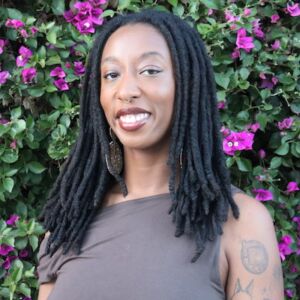
[00:00:38] Charna Cassell: com. Today's guest is Evelyn Levinson, a certified human design specialist who also holds multiple master's degrees, including an international MBA. Welcome, Evelyn.
[00:00:49] Evelyn Levenson: Thank you. Delighted to be here.
[00:00:51] Charna Cassell: I'm thrilled to have you.
[00:00:53] Charna Cassell: To give a little context, I have a dear friend who is a powerhouse when it comes to business Tara, who introduced me to you and had a profound experience at, I think it was at Esalen. She did a workshop with you. And she felt very seen, like you were very direct and encouraged her to make a certain change.
[00:01:21] Evelyn Levenson: We did a reading.
[00:01:22] Charna Cassell: oh, it was a reading. Okay. So I thought her experience with you was it was so profound for her that she then chose to do multiple readings with you. And then she just, she incorporated all this human design stuff into her work with her clients. And I've been a friend as well as a client to her. And so I'm curious, you were in your 50s and you were working in business and government when you discovered human design, and so what was it that struck you so profoundly that it became the focal point of your work and inspired you to write your book, Becoming an Empowered Projector?
[00:02:03] Evelyn Levenson: I was outwardly successful. And inwardly lost.
[00:02:10] Evelyn Levenson: I, you know, I was doing all the right things. I had a great job. I was making good money. I was well respected in my industry. I was traveling, you know, everything was good. There was something missing and I was feeling burned out and I couldn't figure out how to be engaged with my career and engaged with life.
[00:02:32] Evelyn Levenson: In a way that I didn't burn out, and I thought what, you know, there's something wrong here that you know there's something that is not working. And I also felt kind of an emptiness like there was more that I could do more that I could give more that I could share more of a difference I could make, but I didn't know how I didn't have a clue.
[00:02:50] Evelyn Levenson: So I actually had quit my corporate jobs and I was. drifting. I Was doing a little of this. I was doing some bookkeeping. I was doing some QuickBooks work for people. I was just trying to figure out who I was and what I wanted to be when I grew up, even though I was in my fifties already. And I ended up taking a course for health coaching, because I'd always been really interested in health.
[00:03:13] Evelyn Levenson: And one of the teleclasses that I had access to was about EFT, the emotional freedom techniques, which are very interesting. And there were two people leading that teleclass. This was decades ago, long before Zoom and all the wonderful technology we have today. anD one of the two people leading that her name was Karen Curry.
[00:03:32] Evelyn Levenson: And there was something about the way she spoke about people, about life, about what's possible, about just her, she just had a deep understanding and positive energy about things. I've never heard anyone speak quite that way and I was really quite intrigued. So I went to her website, which was very easy at the time, Karen Curry, and I'm reading through her website and there was a whole section on something called human design, and that had not been mentioned at all.
[00:04:00] Evelyn Levenson: In the teleclass. It was about EFT. So I'm reading this stuff about human design thing. Wow. That's really interesting. Wow. Wow. That is really cool. Wow. I need to know more about this. So I got chart, but I was busy at the time my mom had cancer and I was taking care of her and it was, you know, finally she passed and then I came back to it and looked at it again and thought, okay, I'm a projector type.
[00:04:20] Evelyn Levenson: What does that mean? And so I started looking at it. There was not much available then, but I got a little bit of information about it with my free chart and I read it and I went, Ooh, this explains so, I mean, it was like two paragraphs and it explained my life. And I thought, this is really strange.
[00:04:37] Evelyn Levenson: So I had my partner's chart run and turns out he's a projector. anD I read that paragraph to him and I thought, Oh, this is not going to resonate with him because we're so different in so many ways. And it resonated with him. He said, yeah, that makes a lot of sense. That really explains things. I went, Oh, that's interesting.
[00:04:55] Evelyn Levenson: And so I had another chart read for a friend of mine. Turns out she was a projector
[00:04:59] Charna Cassell: Oh, my God.
[00:05:01] Evelyn Levenson: And I read that to her and it resonated with her. And I'm thinking there may be something to this. I really need to look into this more. And I was really curious about myself. So I started, I found what I could, and I ended up signing up for Karen's 10 month training course because I wanted to know about me.
[00:05:19] Evelyn Levenson: And within, I don't know, a month or two of starting to learn the system, I realized that there wasn't anything in the world I wanted to do more than to help people with this system, because it made such a profound difference in me understanding myself and the people around me. And I thought, this is useful.
[00:05:35] Evelyn Levenson: I really want to help people with this.
[00:05:38] Charna Cassell: And so it's really fascinating that the same, so it's like the same paragraph, same words, and it really, it's almost like I was thinking about it as art. Right, like you look at a painting, and three different people are going to feel and see and get very different interpretations or experiences of the exact same
[00:05:57] Evelyn Levenson: Right.
[00:05:57] Charna Cassell: image or set of words and because we interpret things differently.
[00:06:02] Charna Cassell: And so when you say, you know, you really wanted to help people understand themselves, or it helped you in this profound way, like, can you give me some concrete examples of ways that you changed your life or things that you discovered about yourself When you first embraced this system that had you go this is it, like there was a click for you.
[00:06:23] Evelyn Levenson: Oh gosh, so many. As a projector type, and just for those who are new to human design, there are five different types in the human design system, and a projector is one of the types around 20 percent of the population and 70 percent of the population is designed to take action. They have this sacral energy.
[00:06:41] Evelyn Levenson: It's like they wake up in the morning with a full tank of gas and their job is to burn that gas off over the course of the day and go to bed with an empty tank and they wake up in the morning with a full tank of gas and off they go. That's 70 percent of the population. 20 percent of projectors, we don't have that. Consistent sacral energy that what we call sustainable energy, we have energy, it just doesn't work that way. And so when I understood that it's like, Oh, no wonder I had trouble keeping up. No wonder when I was moving from one job to another, I always wanted to take time off.
[00:07:16] Evelyn Levenson: It's like, you know, I can I have to, could I have a month?
[00:07:18] Evelyn Levenson: I mean, a month off would be like, Oh, could I have a month off, please? And most of my colleagues all went. right into their next job. They were eager to start, hit the ground running. And I'm thinking, what's wrong with me? You know, that doesn't make sense. And so this explained it. It's like, I don't have that kind of energy.
[00:07:35] Evelyn Levenson: And my partner who was also a projector used to say to me, he'd have great ideas. He has brilliant ideas. And he'd have these ideas and he'd kind of expect me to pick up the ball and run with it. Like, you know, go make it happen. Like, you know, go take care of this and make it happen. And I realized no wonder I couldn't, and he'd get really frustrated.
[00:07:53] Evelyn Levenson: That I wasn't doing that. And then I learned, we both learned, it's like, oh, neither one of us are designed to do that. And it took this whole layer of stress and pressure and judgment and criticism and unfulfilled expectations, took all of that off of the relationship, which made a huge difference.
[00:08:13] Charna Cassell: That's so, it it's so useful and important. You know, I often, when I'm working with couples, I'll say to them, like, cause one person will get so frustrated with their partner. And I'm like, look, you think that you're both. porcupines but you're a giraffe and you're a porcupine or like you're a fish and you're an otter you know it's like you're just you're relating from a totally different place and different perspective and you're assuming that this person thinks and perceives and experiences the same way you do and even your illustration of two of three projectors being so different.
[00:08:53] Evelyn Levenson: right.
[00:08:54] Charna Cassell: You know, but also have the similar piece around how do you run your energy and I'm also just for the listeners and Evelyn knows because she's done readings with me that I'm also a projector and a huge part of my path has been about learning how to run my energy differently because I also I experienced burnout in my twenties.
[00:09:14] Charna Cassell: It didn't wait until my forties, which I don't even know how much I shared with you about any of that. Yeah.
[00:09:20] Evelyn Levenson: No, not much.
[00:09:21] Charna Cassell: we can talk more about that. But yeah, so, so there are these different types. And that may be the first piece. If someone was curious about human design, they're, you know, they're free charts, even on your website, you offer a free chart and extensive information that goes along with that free chart. And it's not just creating understanding for yourself, but it's also creating more compassion, patience and understanding for the people around you, like your clients, your loved ones and so that you realize. , oh, I do it this way, but it doesn't mean that everyone's gonna do it this way.
[00:09:56] Evelyn Levenson: Right. Right. Exactly. Sometimes the human design system is referred to as the science of differentiation.
[00:10:03] Evelyn Levenson: Meaning it helps us to understand how we are different and the ways in which we are different. And also, how we're similar. You know, it's beautiful to feel the unity of the human beings and how similar we are.
[00:10:17] Evelyn Levenson: And it's just human nature to assume that other people are like us.
[00:10:22] Evelyn Levenson: And when we learn through human design how specifically different we are, it does give us a lot more patience, a lot more compassion, a lot more understanding of other people and how they function differently. I'll give you an example.
[00:10:35] Evelyn Levenson: That's actually not from my relationship, but that there are different decision making processes. And some people are designed to make decisions on the spot immediately, instantly. And some people need to take their time to make decisions correctly for themselves. And if that's not understood in a relationship, it can cause a lot of conflict and a lot of frustration.
[00:10:58] Evelyn Levenson: Because the fast one's going, why can't you make decisions fast? And the other one's going, why are you keep pushing me to make a decision? I'm not ready yet. And when they understand and can respect and honor and support. Each other's process, everything goes so much more smoothly.
[00:11:15] Charna Cassell: right, right. You know, what's interesting, so, so I'm, I've had a private practice for 20 years, and I've learned all these different systems, right? And so I'm very interested in, I appreciate different systems, and I see the imperfections or the holes in different systems, but you take them and you lay them on top of one another, and then there's these ways that they illuminate Each other.
[00:11:38] Charna Cassell: So one of those systems, so I have a somatic background. Somatics looks at the mind, body, spirit and emotions and how they're interconnected. And one of my primary teachers was a martial arts and Aikido master.
[00:11:51] Charna Cassell: And then in that training, we also worked with horses. And so these are all energy systems.
[00:11:56] Charna Cassell: And so that's also, I think my interest in human design is again, it's an energy system. And it's looking at what is, what was cool about working with the horses. And I won't tell a whole big long story, so Richard Strozzi book, Anatomy of Change, he talks about the rhythm of excitement, which is we awaken, increase, contain, and complete. Right. So that's like a full range and each person, depending on their history may be particularly good at one and, but it doesn't mean they can't be in practices to develop other capacities, right?
[00:12:33] Charna Cassell: So I'm naturally an awakener. So when you talk about projectors with their ideas, it's snap, like all of these ideas. But had to be in a meditation practice to develop the containing capacity, right? While someone else can't start things or end things, but they're really good at holding things.
[00:12:53] Charna Cassell: And being in that relationship for 15 years or that job for 15 years, loyal, solid,
[00:13:00] Charna Cassell: Keep the horse running perfectly in a trot versus like, can't get the horse to stop moving, can't get the horse to start, you know, like that was what my best friend who is a container. Showed. And so I it has me.
[00:13:13] Charna Cassell: That's the background of one of the ways I'm thinking. That's one system. And then also homie. Has these different character types. Are you familiar with somatic
[00:13:22] Charna Cassell: Hokomi
[00:13:23] Charna Cassell: strategies?
[00:13:24] Evelyn Levenson: No, I'm not.
[00:13:26] Charna Cassell: you know, one might be burdened, enduring, which is kind of like a hunker down. I think of an armadillo in the middle of a road during a storm.
[00:13:35] Charna Cassell: Like that's the image I get,
[00:13:37] Charna Cassell: you know, during stress. Versus, yes, like just like pull all in and then they get kind of paralyzed until the stress is passed. While someone else mobilizes into action during stress.
[00:13:49] Evelyn Levenson: Right. Yes. Yes.
[00:13:51] Charna Cassell: And so these different ways that we may not see each other, and the more tools we have, like, and for me, it developed through my work path, but also age.
[00:14:03] Charna Cassell: And so what you're offering is a tool that people don't have to wait till they're 50 to develop this ability and compassion. They can like, look at it now.
[00:14:12] Evelyn Levenson: Exactly. And understanding oneself is so profound and projectors in particular, we're actually not designed to know ourselves easily. Other types can know themselves more easily and so it's harder for us and I think that's why projectors tend to be a little disproportionately attracted to things like human design.
[00:14:31] Evelyn Levenson: You know, systems that give them some answers. But having information, being seen, feeling seen, feeling heard is so profound because so many people don't feel truly seen for who they are. And sometimes in doing a reading with someone, they feel so seen that they're in tears, that, you know, just they've, they feel like The whole of them and the beauty of them is being seen, maybe for the first time.
[00:15:00] Evelyn Levenson: And that, and understanding our energetic wiring gives us a level of confidence. and a level of clarity that we rarely find anywhere else in life. And it helps us to make decisions. Coming back to your question to me about how this changed my life, you know, now I know I'm not designed to do hard labor, you know, physical labor.
[00:15:23] Evelyn Levenson: I would not. Make a living if I had to do physical labor. That's not how I'm wired. And so it helped me to understand that I need the flexibility. I need my own timing. I like actually to be my own boss and have my own business. And, you know, I learned so many of these things from. My from my chart and from readings.
[00:15:42] Evelyn Levenson: One of the examples is I am an investigator like you are. I'm a conscious investigator. You're an unconscious investigator, but understanding that helps us to recognize. Wow. And I'm first learning something. I'm like a maniac about it. It's like I can't learn it fast enough and I need a threshold.
[00:15:59] Evelyn Levenson: of information about things. And once I've reached that threshold, I can breathe finally. It's like, okay, I can breathe now. I don't know everything I want to know yet, but I have enough that I know what I don't know, I know what I do know, and I know that's interesting, and then I can breathe. But until that point, a first line, an investigator can feel insecure.
[00:16:21] Charna Cassell: Right.
[00:16:22] Evelyn Levenson: without knowing enough about something or for example, if I'm going on vacation or I'm moving somewhere, you know, I want to know the lay of the land. I want to know where the grocery store is. I want to know what the gas station is. I, you know, I just, I want to do my research. I don't like surprises.
[00:16:36] Evelyn Levenson: I like stability. I like predictability. Now that's just one piece. of me and my chart and of you. There are other pieces that have other aspects, but just understanding these various pieces and how they interact. For example, I have a gate called 48, which is the gate of depth, meaning I like to go deep into things.
[00:16:55] Evelyn Levenson: I don't have width, I have depth. My friends laugh at me and say I'm an inch wide and a mile deep. You know, I just, I can't go deep. I was doing a reading for someone recently who also had that gate. But she also had another gate that is the kind of the sort of jack of all trades gate that likes to sample a little this a little that try this try that master everything and get kind of bored with it.
[00:17:18] Evelyn Levenson: And I was able to explain to her that it's you can perhaps. So you can not just think that those would be conflicting, but you can also allow them to peacefully coexist and flow between them. And it gave her comfort because she knows that she likes to dabble, she likes to go deep sometimes, but she likes to dabble and she was never sure where she was with all of that.
[00:17:39] Evelyn Levenson: And I helped her to understand that's exactly correct for her. She can dabble and dabble when she finds something she likes she can go deep for a little while when she's had enough of that she can go back to dabbling and that's exactly correct. For her. And for her, I was like, Oh, thank goodness.
[00:17:54] Evelyn Levenson: Because she would beat herself up that she couldn't stay with one thing for very long. And, but then sometimes she'd go too deep and she was just really confused about all of that. Right.
[00:18:05] Charna Cassell: One of the things that I see for folks is that the source of so much suffering, maybe all suffering you could even say, is a lack of self acceptance. anD that these particularities about ourselves, I think I shared with you that discovering that I was a one. So, so one of the parts of a human design chart, you have this funny figure with all these geometric shapes, and then you have these numbers and so I'm a five one, and so someone else could be a.
[00:18:33] Charna Cassell: Three, five or a four, six or a yeah. So anyway, so one of my numbers is is a one and that was what you're referring to around this love of research and going into wormholes. aNd. You could either pathologize yourself and go, Oh, is that desire to read 30 books to write one research paper in college?
[00:18:56] Charna Cassell: Is that about not trusting yourself and feeling you're not enough because of trauma? But instead discovering, Oh, this is in my chart. This is who I came into the world as. I don't have to pathologize. That is, I think, really valuable.
[00:19:10] Evelyn Levenson: Right. It's a gift. Yes.
[00:19:11] Charna Cassell: Right. And then the other thing that I appreciate that you said, which is that we are made of.
[00:19:19] Charna Cassell: complex contradictions at times. And so I'm a projector and, you know, projectors are not supposed to like work really hard. And my podcast producer would say to me, Charna, you don't have to read the whole book. Just go listen to another podcast where the person's interviewed. And I'm like, no, you do not understand.
[00:19:38] Charna Cassell: I do have to read the whole book. then being able to hold that line from a place of like, it's in my, it's a, I'm a one, instead of like, like, don't pressure me to do less work, but also understanding that I'm not falling into that habit that I'm conditioned into, which is overworking, which our culture supports, right?
[00:20:00] Evelyn Levenson: Right. But you also know with clarity that it's correct for you
[00:20:04] Charna Cassell: Yeah.
[00:20:05] Evelyn Levenson: to do that. You go, okay, yeah. And you can manage your energy in addition to that correctness. So you don't have to overwork, but you can correctly investigate, because that feels good to you. That feels correct.
[00:20:19] Charna Cassell: Yeah. I love I love the process of even preparing for my podcast, like deeply getting to know someone through the art they create, through their book, through their whatever material, what they're about. I like the, I like having that, that wide understanding and I really appreciate the process of other people being seen and acknowledged for what they've contributed.
[00:20:44] Charna Cassell: Right? So that, that's a, it's a very strong value I hold, and I think that's part of it. It's like, oh, how can I work less, but also still maintain the quality of depth of seeing other people?
[00:20:57] Evelyn Levenson: Yes. It helps so much to understand the role that we're here to play. Each of the five types has its own specific role. And the role for us as projectors is to guide.
[00:21:07] Evelyn Levenson: Guide others, not to do, but to guide, and that alone is profound for so many projectors because we are conditioned, we are influenced, we are taught that we need to work hard, that we need to do, that we need to pull ourselves up by our bootstraps and go manifest our destiny and make stuff happen, and some of the world is designed for that.
[00:21:26] Evelyn Levenson: But not all of us. And when we are, when we're trying to fit our square selves into these round holes that are created by the other types that we don't fit, it's very frustrating. And then we think there's something wrong with us. And I have a lot of wounded people coming for readings because they feel like they can't trust themselves, like they're not good enough.
[00:21:46] Evelyn Levenson: They haven't figured out how to make life work. And I was that way too. You know, I was, I felt very lost. And I was luckier than many that I had been reasonably successful. But a lot of people really struggle and a lot of people are so taught to deny themselves and be what they think they should be, or what people tell them that they should be, that it takes a while to dismantle.
[00:22:11] Evelyn Levenson: All of that, and to be able to have them step fully into themselves, and a reading helps with that. And, you know, people often say to me, Oh, thank goodness, you know, I, I've known that about myself all my life, but I haven't been able to express it, or I did a reading just this past week for a 16 year old.
[00:22:29] Evelyn Levenson: Who was just extraordinary and delightful and I was saying things to her from her chart and she was saying things like, wow, I've done that my whole life or I've always been that way. I, you know, but in, she kind of knew things about herself, but it helped to have them confirmed. It helped them to have them pointed out and go, yeah, that really is a part of you and a beautiful part of you.
[00:22:49] Evelyn Levenson: And it gave her a new level of confidence moving forward. I mean, imagine that, having that at 16, you know.
[00:22:55] Charna Cassell: Well, what's also really funny in contrast, and I'd love for you to say a little bit about the difference between even though we use our birth time, our place, and our, you know, our date, that it's not astrology, it's different than astrology. And I remember getting my first reading because my mom's friend was learning how to do that when I was 19.
[00:23:14] Charna Cassell: And I have, so I have a cassette tape of this reading
[00:23:17] Charna Cassell: And I've listened to it a couple of times over the, you know, over the last however many, 30 years. And one of the things that she said was that dancing and gardening were going to be huge resources for me. And I remember at the time laughing hysterically, who I was at 19 is so different.
[00:23:37] Charna Cassell: And that both of those things have been, are huge in my life. Right. Like I, I used, I danced six days a week for eight years before I started dealing with a health issue that stopped that, right. That became central for me as a survival strategy or like a resourcing, you know? So, so, so that's what's interesting.
[00:23:56] Charna Cassell: It's like, Oh, huh. Things that really were not true for me then did come to be, I'm curious how human design would then show up differently in a reading for, you know, like a kid versus an adult.
[00:24:10] Evelyn Levenson: First of all, let's talk about astrology versus human design
[00:24:13] Charna Cassell: Yeah.
[00:24:14] Evelyn Levenson: In astrology there are 12 signs and the sun moves through all 12 signs over the course of a year. We call it a mandala, kind of a circular thing. Like when you get an astrology chart, it, there's a circle to it. In human design, instead of 12 signs, we have 64 gates.
[00:24:31] Evelyn Levenson: But it's the same concept. So the sun is moving through all 64 gates over the course of a year. And like with astrology, at any point in time, the various planetary bodies are wherever they are with regard to the different planets and, I mean, to the different gates in particular for human design. So the human design chart is a snapshot.
[00:24:52] Evelyn Levenson: Of where all of the pieces were where all the planetary bodies were and which gates they were activating at the moment of your birth.
[00:25:00] Evelyn Levenson: So this shows you the energies that you carry the energies that were imprinted on you at the moment of your birth. So your chart shows you the energetic structure.
[00:25:10] Evelyn Levenson: that you were born with. But human design is not predictive in the way that, that astrology tends to be. This is more structural. It's like this is the framework of who you are and who you're designed to be. Now what you do within that framework matters. So every energy in the chart is like a theme and there's a high expression and the low expression of each theme and then sort of a continuum between those.
[00:25:36] Evelyn Levenson: And human design helps us to see. How we're doing, you know, once you understand the gate energies and the channels and the other aspects of your chart, then you can begin to look into your own life for yourself and say, well, on this one over here, I'm doing pretty well on this one. I need a little work on that.
[00:25:52] Evelyn Levenson: Let me raise the vibration of that expression of that energy. So it lets us be specific and intentional in working on ourselves. And what doesn't change over time is the structure we're born with, but what does change is how we express those energies. And what we learn is possible through human design is the highest expression of all of the energies that we carry.
[00:26:15] Evelyn Levenson: And it's possible to achieve that.
[00:26:18] Charna Cassell: So you have these different gates, which look like shapes and, you know, colored or not colored in. So they're either defined gates or they're undefined in the chart. And of course, please correct me if I'm
[00:26:30] Evelyn Levenson: So you're talking about centers,
[00:26:32] Charna Cassell: centers. Yes, the centers and then the lines that go between the centers.
[00:26:39] Evelyn Levenson: Those are gates and channels.
[00:26:40] Charna Cassell: Gates and channels. Okay. And so then, you know, you may have an undefined or defined center, which it's colored in or it's white. And then how to work with, right? So sometimes people have to work with it. So how do you approach having an open center versus a defined center? And one of the things I was listening to something that you recorded, and you were talking about , for instance, discharging sacral energy.
[00:27:09] Charna Cassell: Right? So let's say there's. There's the sacral center or how to how to calm a sacral center or, you know, and so I'm curious, that's one of those things you're saying. It's not necessarily predictive, but it's like, how do you work with what you've got and what are the kinds of practices you can be in to support that?
[00:27:31] Evelyn Levenson: Yes. Yes. Good. So let me talk a little bit about centers. So on the human design chart, there are nine geometric shapes called centers and each one is a different energy that we process as human beings. So there's communication energy, there's life force energy, there's emotional energy, there's survival energy, various different kinds of energies.
[00:27:50] Evelyn Levenson: And when they are colored in, we call them defined, which means that you have consistent access to those energies and those energies are broadcasting out 24 seven. Okay, so each defined centers like a little broadcasting tower sending that energy out, and it's like you have your finger plugged into the socket of each of those energies and that energy flows through you and broadcasts out so you have consistent access to experiencing and expressing those energies.
[00:28:18] Evelyn Levenson: So we often consider are defined centers to be our strengths, because that's where we are consistent and reliable in the flow and expression of those energies. The what these centers on your chart that are white, we call open or undefined, and they operate very differently. They take in and amplify. The energy that's being broadcast by the defined centers around you, so you're taking it in and amplifying it and feeling it more intensely than the other person does.
[00:28:48] Evelyn Levenson: So this is potentially, sometimes these are called our vulnerabilities. This is where we get conditioned by the people around us, we get influenced. Conditioned by other people around us by the society at large expectations and things like that. aNd it's also where I say we get hijacked away from our correct decision making and I'll say more about that in a few moments.
[00:29:11] Evelyn Levenson: But the good news about the open centers is that they're where our wisdom. lives. Wisdom lives in our openness. So people who have a lot of openness in their chart, they can feel very vulnerable to being influenced by other people's energies, but they also , have the potential for deep, profound, and wide wisdom.
[00:29:30] Evelyn Levenson: And it's because in the open centers, we are literally Unlimited in our capacity to experience those energies, because we experience it from this person and that person and it's the breadth of our experience with those energies that allows us to develop wisdom about them, where we're plugged into the sockets where we're defined we don't have wisdom about those energies we have only one source, so it's consistent but it's also kind of Narrow. It's kind of we're limited. We only have one way to experience it where we're open. We are unlimited in our capacity to experience it, but we experience it inconsistently because we're experiencing it through other people, which brings me to a really important thing to explain about human design is that we all have all of the chart.
[00:30:18] Evelyn Levenson: We all experience all of the chart. And it's easy sometimes to refer in shorthand to, well, I have this, I don't have that, I'm not this, I am that. We all have all of the chart where we're defined, it's consistent, where we're undefined or open, it's inconsistent, but we still get to experience all of it. And that's what really unifies us as human beings.
[00:30:38] Evelyn Levenson: But it's the specifics within our chart that differentiates us in the way we express and experience those energies. So I wanted to give the example of the emotional solar plexus. So this is one of the nine centers. It is emotional energy and emotional energy here is, it's what differentiates us from the animals.
[00:30:57] Evelyn Levenson: Okay. This is passion. This is pathos. This is romance. This is , beautiful pieces of art and soaring works of music. This is what gives life a rich texture for human beings. So it's beautiful energy. About half of the people on the planet have it defined. The ones who are defined have emotional waves, up and down.
[00:31:20] Evelyn Levenson: Some are up, some, you know, and there are three different kinds of ways. Some have the high highs and the low lows, the drama queens, you know, and there, and some have the small undulating waves. So there are a few different kinds of waves. But they experience emotional energy all the time. They're up, they're down, they're somewhere in between, but they're always sort of swimming in this emotional energy.
[00:31:38] Evelyn Levenson: That's how they live. The other half of us, and I say us, you and me, we have an open solar plexus. So we're taking in and amplifying other people's emotional energy, which can be really intense at times. And each open center has a predictable behavior pattern associated with it, which is a pattern that we develop as humans in our effort to make sense of and cope with energies coming in, but in the absence of understanding that's actually what's happening.
[00:32:07] Evelyn Levenson: So we're kind of flying blind and doing the best we can to cope. But those are not necessarily healthy behavior patterns. So as we go through the chart. Someone specific chart. We go through those centers and talk about the open centers in those patterns and with awareness about the patterns, you can begin to make healthier choices.
[00:32:26] Evelyn Levenson: So the pattern for the open solar plexus is to try to keep everybody happy. Be a people pleaser. Keep everybody happy. Don't rock the boat. Don't make waves. Don't upset anybody. And understanding the energetic dynamics here, it makes perfect sense. If you're going to feel someone else's upset more intensely than they feel it, of course you don't want to upset them.
[00:32:46] Evelyn Levenson: Like, I'm just going to keep you, you know, calm and copacetic and just make sure that I don't upset you so I don't have to deal with your intense emotional energy. But that's not a healthy behavior pattern. Right. It means you're not standing in your power. You're not speaking your truth, probably not dealing with conflict in a healthy way.
[00:33:06] Evelyn Levenson: So there's a mantra that we use in human design that's for these open centers and it says to be a screen, not a sponge screen, not a sponge. What that means is you can let. Other people's emotional energy flow through you like a breeze goes through a screen door, leaving nothing behind. You'll be aware of it as it's going through, but you don't have to let it affect you.
[00:33:30] Evelyn Levenson: It's when we turn into a sponge and we hold on to those energies, that's when we kind of get into trouble with those energies. I'll give you an example. Let's say you're in a great mood. You're open solar plexus. In a great mood. Go to the grocery store, come back from the store. You're in a terrible mood.
[00:33:44] Evelyn Levenson: Think what happened Then you remember, oh yeah, the checkout girl at the grocery store looked like she was having a really bad day. She was probably emotionally defined. She was low on her wave and you could feel it, and you got up to the counter and you paid, and you brought home her energy with you.
[00:33:59] Evelyn Levenson: You turned into a sponge, you absorbed it, and you carried it home with you. The moment you recognize that. You can say, that's not mine. I can let that go. That is not my energy. And when you practice being a screen, not a sponge, and it's like a muscle, you have to, you know, get stronger at it over time. You have to practice it.
[00:34:19] Evelyn Levenson: You're shifting a lifetime behavior pattern here. So it takes some intention and some patience and some time to work on it. But you can get to the point where you don't take it in at all.
[00:34:30] Evelyn Levenson: You're standing in line. At the counter, and you're not even up there, and you can feel her energy in the distance.
[00:34:35] Evelyn Levenson: It's like, okay nope, nope, nope screen, screen. Don't want any of that. I choose not to. And you can actually get to the point where you can pick and choose what you do want to experience from other people's energies. For example, let's say you're with someone who's a friend, and she's high on her emotional wave.
[00:34:52] Evelyn Levenson: She's emotionally defined. She's high on her wave. And you think, ooh, that looks like fun. I want some of that. You know, it's like, yeah. It's like, I think of it catching a wave with a surfboard. You're just borrowing that energy temporarily to experience it on purpose, intentionally. But if you're with that same friend a few days later and she's low on her wave, you're like nope screen, I choose not to take that in at all.
[00:35:14] Evelyn Levenson: And we can do that with all of our open centers. So you were mentioning about the sacral center. This is life force energy, powerful motor energy. Which those of us who have it open, we're taking it and amplifying it. We can feel like the Energizer Bunny on steroids when we are taking in this powerful energy, which is when we overwork and when we overdo it because we don't know when enough is enough.
[00:35:36] Evelyn Levenson: We don't know when to say enough, but we need time to discharge that at the end of the day and say, okay, that's not my energy. It was useful when I borrowed it. And you can do the same with the emotional energy in any areas in your chart where you're open. And at the end of the day, or even during the day, even between clients, release any energy that you've picked up from other people, which allows your open centers to function correctly and normally within your own aura so that you're not being influenced by other people.
[00:36:06] Evelyn Levenson: And it's also an important way to make good decisions for yourself usually is to be in your own aura. So you're not being Influenced by other people through their energy.
[00:36:15] Charna Cassell: Yeah. What? There's so much in what you said, and one of the things that I want listeners to get. So what you're pointing to is energy follows intention and attention,
[00:36:27] Evelyn Levenson: Mm
[00:36:27] Charna Cassell: So
[00:36:28] Charna Cassell: you're saying something out loud. It may for some people involve a visual, visualizing a screen versus sponge. Some of these habits, like for me, I believe I was you know, my tissue was absorbing my mother's experience in utero.
[00:36:42] Charna Cassell: Like I started to be the holder of her experience. That through in my creation, right
[00:36:49] Charna Cassell: now that when I was just a blob and and so on learning that kind of habit, right? It takes a lot of it takes a certain kind of vigilance diligence. You know, there's so many different what you're also pointed to as people with an open emotional center are what people conventionally call empaths. It's like you're feeling a visceral experience moment to moment of other people's experience
[00:37:16] Evelyn Levenson: Exactly.
[00:37:17] Charna Cassell: and how to energetically protect yourself, but not brace against it, because then that can be its own problem.
[00:37:25] Evelyn Levenson: Right. Yes, you don't want to build walls, but you do want to build screens. The screens are useful. The walls, you don't want to keep because openness is how we interact with each other. Conditioning is part of the human condition. It's how we get to know each other. It's how we go out and explore and learn and grow and how people get in, how they, how we interact with each other.
[00:37:46] Evelyn Levenson: So it's normal and natural and correct. You just don't want to have that. Input from other people's energy confuse you about who you are and hijack you so let me give you an example of hijacking from the emotional center we were just talking about, let's say you get invited to do something and as projector.
[00:38:05] Evelyn Levenson: The correct decision making process to be invited and then apply your authority. So let's say that that you get invited to do something and your inner authority says no, I don't want to do that. That doesn't feel correct for me. But your open solar plexus says, Ah, but that person will be so upset if we say no, we have to say yes.
[00:38:24] Evelyn Levenson: To keep that person happy, that's what I call hijacking. It's like,
[00:38:27] Evelyn Levenson: Kind of yanked off of your path and go down a path and spend energy on something that is not ultimately correct for you energetically. So that's in each open center has this potential hijacking. So it's really useful to understand how those centers function.
[00:38:43] Evelyn Levenson: And which are open for you so that you know what to look out for, and you can ask yourself questions when you're making a decision to catch yourself in the hijacking process, and be able to refocus on the correct decision making process for you, rather than getting pulled away by your open centers, and ultimately moving away from the confusion and the hijacking and moving towards the wisdom of your open centers in
[00:39:07] . . Yeah. One of the things, I don't know, do you have this, I have splenic authority,
[00:39:12] Evelyn Levenson: Yes, I'm
[00:39:12] Charna Cassell: You, so I think that actually I, in the process of preparing for this interview, I asked a handful of people I know who are into human design and one person who's also a projector, I do believe she has splenic authority as well but the, but just for listeners the, What I found very interesting is the immediate, intuitive guidance that the spleen offers, right, so that it's like, you better listen, you got to listen to that tiny voice because it's not going to repeat itself, you know, because you know how we argue, we'll like get, we have all these internal conflicting parts as well as centers, right, maybe the, I'm very curious how parts of us, young parts of us may live in different centers or maybe stuck in different centers, which is a whole other,
[00:40:02] Charna Cassell: But, you know, and then how you're talking about earlier, some people make decisions quite quickly and other people need time. And it seems like if you have splenic authority, it's like a. That information is immediately available to you.
[00:40:18] Evelyn Levenson: Yes
[00:40:18] Charna Cassell: but then it's the process of how do you energetically clear, protect, diffuse other people's stuff that's in your space enough to be able to hear and differentiate between what's mine and what's theirs.
[00:40:30] Evelyn Levenson: And that's getting to know yourself and getting to, to trust yourself. And ultimately, and I think you alluded to this earlier, it loving yourself. You know, self love I, I'm discovering is I think the most missing thing on the planet, you know, and we're so not taught to love ourselves.
[00:40:49] Evelyn Levenson: And we often have very few healthy role models of people who actually love themselves in a healthy way. And yet it's so important to love yourself and feel good about yourself. How can you love others? If you don't accept and love yourself first and human design, I found. Is such a phenomenal tool for helping us to know ourselves, accept ourselves, respect ourselves, and ultimately love ourselves.
[00:41:15] Charna Cassell: Yeah. And one thing that you pointed to that's important, I think, for projectors and is this how do you work with your particular style of needing to wait for an invitation versus take action, especially if you've been conditioned to be a motor to be like to overwork, overwork ?
[00:41:33] Charna Cassell: Four projectors who are supposed to wait for invitations what are the best ways to make themselves visible to get asked and invited was a question that a projector friend had for you.
[00:41:46] Evelyn Levenson: That's a great question, because as projectors, we're not here to be pushy. It doesn't work for us to be brash in our marketing or in our selling ourselves. We need to be a little more subtle, a little more careful about how we present ourselves. The most important things. thing is to be authentic in how you do present yourself.
[00:42:08] Evelyn Levenson: So that when you are attracting people, you're attracting the right people who want you specifically and your guidance as a projector. So you have to be as authentic as possible and be visible. enough to let people know who you are and what you're up to. That means you know, have a website cause that can speak for you when you're asleep or doing other things, you know, resting and enjoying yourself.
[00:42:31] Evelyn Levenson: You know, any way that you can and feel good about putting yourself out there is fine, just not. Pushy in a pushy way in my book, Becoming an Empowered Projector, I talk a lot about being invited, findable and invitable
[00:42:44] Evelyn Levenson: Is to make sure that people know who you are and what you're up to and what you're looking for so that they can invite you.
[00:42:50] Evelyn Levenson: They can't invite you if they can't find you. If they don't know who you are, what you're doing. So, you know, making yourself reasonably visible in whatever ways feel good to you, and you don't have to do all the ways you know you don't have to do all the social media and all this. Do what feels correct for you.
[00:43:05] Evelyn Levenson: Do what feels authentic and true for you. And start, you know, start in one area and see how that goes. You know, I'm a big fan of saying, figure out what works and what doesn't work. And, you know, don't be afraid to experiment.
[00:43:18] Charna Cassell: I have another projector question. So one of the things you talk about with projectors is burnout. Right. And I was referring to that, that in my 20s, I went through a physical crisis. And so I was curious if you have seen that there's a high, there's a high rate of chronic fatigue.
[00:43:39] Charna Cassell: Or autoimmune conditions that projectors experience because there's different kinds of burnout, right? There's emotional burnout, but then it can also land in the physical body. And I got curious about undefined centers. And if you have more undefined centers, are your, is it more likely to manifest more physical symptoms because your body is screaming for you to pay attention to those ways of working with energy?
[00:44:05] Evelyn Levenson: That's a really good question and I'm not sure that's that you can lay it out in those lines
[00:44:12] Evelyn Levenson: Even people with a lot of definition in their chart even projectors with a lot of definition in their chart, you know, they can overdo things and burn out. Of the ones who are open can overdo things and burn out.
[00:44:24] Evelyn Levenson: So I'm not sure that it's directly related to different, you know,
[00:44:28] Charna Cassell: Mm hmm.
[00:44:29] Evelyn Levenson: and open centers. It's more how you function, what you expect of yourself, what other people are expecting of you and how you respond to that and how you know and trust and understand your own energy and manage that energy and manage the expectations of people around you.
[00:44:45] Charna Cassell: Yeah, I guess because I was thinking that so much of my learning and growth have been through my open centers
[00:44:52] Charna Cassell: and in my 20s, I started studying energy medicine, and that literally works with energy centers right your chakras.
[00:45:00] Evelyn Levenson: hmm.
[00:45:00] Charna Cassell: And so I literally learned how to run my energy differently, how to. You know, use it from the universe and from the earth instead of just relying on my physical body and my energy. And so I that's where that question came from was this curiosity of like, okay, so the, I guess what makes more sense is depending on if you're able to take this information and put it into practice and start to learn more balance then. Yeah.
[00:45:33] Evelyn Levenson: And learn where your pain points are because they're different for each person. And they're different for each type, you know, depends on what you're doing. In my book, I go through five steps to help projectors specifically. Learn to become empowered, self empowered, but these steps can really apply to any type.
[00:45:54] Evelyn Levenson: I just, you know, I just shaped them, you know, and explained them in a way that's specific to projectors. But the first step is to know who you are and why you're here. You know, you have to start there. Know who you are and why you're here. The second step is to know how to function optimally. In the world, that's one thing to know who you are.
[00:46:13] Evelyn Levenson: But okay, now what do I do with that? How do I make my life work and my make my life work in a way that I love, you know, that really works for me. The third step is acknowledge your pain. You know, we can't fix and heal what we can't see. or identify. So you have to get clear about where is it that's, that is, you know, where are your pain points?
[00:46:33] Evelyn Levenson: Where are people getting to you? Where is the, where's the judgment or the criticism getting to you? Where, you know, where is that for you specifically? And then the fourth step is to heal those wounds and restore your wholeness. And there are, you know, a lot of different techniques for helping do that.
[00:46:48] Evelyn Levenson: And you, I'm sure, help do that with your clients as well. And then the fifth step is to finally step into your power. And your magnificence, you know, having healed the wounds, having gotten clarity and confidence about who you are and where you're going now. Now you can really function optimally.
[00:47:08] Charna Cassell: And I think that last piece, you know, just how much a deep level of self acceptance contributes to your ability to step into your power, and that if you're in a chronic, contracted shame response, you're not allowing the energy to flow through your system to then be expressed and felt and, you know, by other people.
[00:47:31] Evelyn Levenson: Right, and any kind of trauma, it disempowers us it, we end up feeling like we have no control, we have guilt, we stop trusting ourselves, which is huge. And trauma can also distort how we view ourselves. And so healing that trauma and healing our self, Awareness and our self value. You know, what I've learned is, you know, for us, particularly for projectors, recognition and invitations from outside of us are useful and important.
[00:48:01] Evelyn Levenson: We need those.
[00:48:02] Evelyn Levenson: They do not determine our self value. Self value is an inside. Job. And we need to keep those separate. So even if you're not being recognized or invited, you still feel good about yourself. You still know that you have value and it's not dependent on anything outside of you.
[00:48:23] Charna Cassell: That piece around self trust is so significant, right, because It's you may have heard somebody say this, but if someone's judging you if, if you have that judgment, you're going to feel the impact of the judgment, but if you know yourself,
[00:48:37] Evelyn Levenson: Right.
[00:48:38] Charna Cassell: that judgment isn't going to impact you, right?
[00:48:40] Charna Cassell: It doesn't land in the same way. Cause you're like, look at that person over there judging something, whatever they're in their fear response.
[00:48:48] Evelyn Levenson: Right. And
[00:48:48] Evelyn Levenson: Often it's more about them than it is about you anyway.
[00:48:51] Charna Cassell: Yeah. Well, one of the things that I really appreciated from. A reading with you was you got into the specifics of the channels and gates. So that's for people looking at their charts, it's like all those little numbers they mean different things and they're so remarkably specific and fascinating, the conscious and unconscious and that you said that what I had in my chart was.
[00:49:15] Charna Cassell: Freak versus genius. If I don't wait for an invitation and I share something that I'm intuiting or sensing or seeing the person is going to perceive me as a freak versus if the person has invited it and is open to receiving, then they'll experience me as a genius and that really resonated.
[00:49:40] Evelyn Levenson: Well, you know, you have brilliant ideas and then when they don't land, you go, why not? What happened? Oh, yeah, they actually weren't really listening. They weren't really interested. You know, the old phrase, do not cast your pearls before swine really applies. You know, we all have pearls of wisdom and you don't want to share them with people who won't value them.
[00:50:00] Evelyn Levenson: So it's really worth it to wait. For those people who will recognize you and value what you have to say, and that reinforces that shift in behavior. You were asking about waiting for an invitation, you know, and yes, that's not easy in today's world. We're expected to just take action. But when you recognize the power.
[00:50:22] Evelyn Levenson: Of waiting for the right timing, and you can use the waiting time productively in your own way, as long as you're not stressing over waiting and sometimes projectors do stress over waiting, but when you can relax into it and follow your bliss, you know, rest, take a nap, you know, go do something that you enjoy hone your skills, read research, you know, just.
[00:50:45] Evelyn Levenson: Just hone, so that you're ready when the invitation comes, you can actually use the waiting time in a very positive, productive way, which then makes you more energetically attractive to the invitations. If you're waiting in anxiety and frustration and anger and bitterness, you're not going to attract the invitations you want anyway.
[00:51:07] Evelyn Levenson: Nobody wants to attract a bitter person. It just doesn't work that way.
[00:51:11] Charna Cassell: Yeah. And inside of that, I hear not just, it's like people think of in terms of career, but also in terms of partnership.
[00:51:18] Charna Cassell: And the other thing that came up when I'm thinking about, like, people may not see not only your pearls of wisdom, but your magnificence. And if you're a queer person growing up in a very religious community or household, like you are not going to be seen for your magic and beauty and to then wait.
[00:51:38] Charna Cassell: And find your people. And find the, you know, step out of that and into a new community and then share more of who you are. Like, sometimes it's actually really important protection to not reveal, like, to modulate and be discerning about how much of yourself you reveal and who you reveal yourself to.
[00:51:55] Evelyn Levenson: Right. Right.
[00:51:57] Charna Cassell: Yeah.
[00:51:58] Charna Cassell: And so I'm curious, is there any particular practice or exercise that you would like to guide our listeners through around becoming more aligned and connecting with themselves as it relates to human design?
[00:52:14] Evelyn Levenson: I actually do, and it's really not from human design specifically. It's something that I've learned relatively recently. And it's from originally a book written by Gay Hendricks many decades ago about self love. And it's a very simple phrase that you can add to your day. And you want to put it in front of every thought that you have about yourself and your actions.
[00:52:37] Evelyn Levenson: And that phrase says, I love the part of me that
[00:52:43] Evelyn Levenson: The part of me that gives good readings. I love the part of me that wants to escape. I want the, I love the part of me that wants to just sit in front of the TV and eat sugar. I love the part of me that wants to be snarky to that person. I love the, you know, the good and the bad.
[00:53:01] Evelyn Levenson: I love the part of me that feels good. angry right now. I, you know, whatever it is, and I've been using this myself for a few weeks now, and I've discovered that it's giving me a more comprehensive, complete sense of wholeness because often, and myself included, we're all, you know, works in progress.
[00:53:25] Evelyn Levenson: That we sometimes don't like parts of ourselves and it's hard to love ourselves when there are pieces in there that we don't like and this phrase helps us to call those pieces out and and name them. I find that I am articulating things that I'm thinking that I wouldn't normally articulate. It's like they're just be kind of under the radar, you know, and then it's like, oh, I'm actually putting words to them and getting some clarity and bringing them into my consciousness and saying, oh, that is part of me or that is what I'm thinking.
[00:53:58] Evelyn Levenson: That is what I'm feeling. Ah, okay. And then, wow, can I actually love that part of me? Yeah, maybe
[00:54:04] Charna Cassell: Mm hmm. Yeah,
[00:54:05] Evelyn Levenson: Yeah, you know, I can. You know, I don't completely like it, but I can love that's part of me. And, you know, so it's beginning to fill in this wholeness, this completeness. And And, yeah, just articulating those parts that are usually unspoken, and yeah, so I'm finding it very powerful and I invite everyone to really play with that and and do it as often as, I'll find it popping up at the oddest times and I'll think, Oh, I love the part of me that, you know, is doing this or not doing that or whatever.
[00:54:39] Evelyn Levenson: It's like, Oh, it yeah. So I hope that's useful.
[00:54:43] Charna Cassell: What's beautiful about that is it feels like it's turning towards the part that something that you might have shame or frustration with.
[00:54:53] Charna Cassell: And what I witness is. Often people come to me with that particular, with a part that they feel shame or frustration with, and they're like, I want this to change.
[00:55:02] Charna Cassell: And instead, what happens, if we can actually see the value and how that part has taken care of us or served us in some particular way, then it can actually, has freedom to soften and transform. But until we hold it that way, it won't.
[00:55:19] Evelyn Levenson: Right.
[00:55:19] Charna Cassell: And it's like, takes, it like digs its feet into the mud. So it's it feels like a little antidote, especially if you're dealing with a lot of shame to turn towards the thing just, if you're, if you seem to be in a shame spiral or a daily self criticism, like you have a very strong self critic, like to turn towards each of those moments, I love the part of me that stays up till five in the morning.
[00:55:43] Charna Cassell: I love the part of me that,
[00:55:45] Evelyn Levenson: It criticizes myself. I love the part of me that, yes, huh,
[00:55:48] Charna Cassell: Yeah.
[00:55:49] Evelyn Levenson: exactly. And sometimes there's some nuance in there that's useful. You mentioned to me when we first started working together that you were obsessing about something in your life. And in your chart, you have the gate nine activated, which is the gate of focus,
[00:56:04] Evelyn Levenson: High expression is being extremely focused, which can be really useful.
[00:56:07] Evelyn Levenson: The low expression of it is obsessing, being hyper focused to the point where you're obsessing about things. So just understanding that obsession is a part of who you are, but it's kind of the lower expression and there's a higher expression of that energy. And what I say to clients like you who have that.
[00:56:26] Evelyn Levenson: Activated is if you're fine, you're obsessing about something, know that you can't turn that energy flow off, but you can redirect it. So whatever you're hyper focused on to shift that focus to something else and focus there, and that will ease the obsessiveness about what was going on over here and just shift your focus because you can't turn these energies off but you can learn to raise the expression of them to a higher vibration and a higher potential.
[00:57:02] Charna Cassell: Beautiful. Yeah. And so, what would you say what's your definition of living a vital existence?
[00:57:12] Evelyn Levenson: Feeling like not only are you firing on all cylinders but you're at peace in your soul because you know who you are. And why you're here and you know your value and you are willing to be in the world in a way that is a full expression of you without obligation, without pressure, without a sense of duty, just a sense of joy.
[00:57:39] Evelyn Levenson: And giving to the world. I came across a beautiful quote many years ago that I've used and I actually put it in my book because I love it so much. And that is when you're giving to others. Give from your saucer, not from your cup.
[00:57:57] Charna Cassell: Yes.
[00:57:57] Evelyn Levenson: I heard it from Lisa Nichols.
[00:57:59] Evelyn Levenson: I heard, I saw her speak live many years ago. And it just speaks to the value of keeping our cup full. And whatever that is for you, each person is going to be different for how you keep your own cup full. But that's like, that's our job. It's like, what a great job to have. My job is to keep my cup full, you know, whatever that means, whatever that looks like for me.
[00:58:19] Evelyn Levenson: And when it's so full that it's overflowing, then you have plenty of extra to give to the world around you at no cost to you. But when you start giving from your cup, you're depleting your resources. So you need to keep your cup full. So never give from your cup. Always give from your saucer and have, and if you want to give, have enough extra to give away from your saucer.
[00:58:44] Evelyn Levenson: I think that's a beautiful way to frame how important it is that we take care of ourselves and that we live in a space of joy and and of self expression.
[00:58:56] Charna Cassell: Beautiful. Thank you so much. I, of course, would love to keep talking to you. I have endless questions.
[00:59:04] Evelyn Levenson: Of course you do. I've seen your chart. I know you do.
[00:59:07] Charna Cassell: And how can people reach you, get in touch with you, find out more if they're curious?
[00:59:14] Evelyn Levenson: I have a website. It is human design for success. com human design for success. com. And I have lots of free information there. I have a blog page where I have hundreds of blog posts for free that explain a lot of. information about human design. You can look at courses I have, and of course I do give readings.
[00:59:34] Evelyn Levenson: There's nothing quite as powerful as getting a personalized reading that helps you to understand the nuances of your chart. You can do a lot of research, and you know, human design can be very complex and very deep, and there are very big, thick, heavy books that give all the details, and you can research all of those and still not really put the pieces together in a way that's useful
[00:59:54] Evelyn Levenson: To you.
[00:59:55] Evelyn Levenson: And that's what a reading does, is it puts the pieces together and them into an understanding of yourself that is practical and useful and helpful for you in moving forward.
[01:00:07] Charna Cassell: I concur.
[01:00:13] Evelyn Levenson: I know that you've got some powerful understanding about yourself and awareness that some of the things you thought were sort of from trauma pathologies were actually beautiful parts of you.
[01:00:25] Charna Cassell: Yeah, you know, I definitely over the years I've had Chinese astrology readings, Vedic astrology readings, like all these different things and each time that, that is a particular piece for me is I think that the systems create perspective and I'm very fascinated. I've always been interested in nature versus nurture. who do we come into this world as? What exactly? The word resilience doesn't feel perfect. It's like, but it's like, what are the, what are our resources that we enter this life with that sometimes get covered over that we can uncover again? And and sometimes an astrology reading or some kind of reading is a way to reveal that more quickly for you.
[01:01:12] Evelyn Levenson: I think all that all of these different modalities are like we're all looking at the same room. We're just looking through different windows into the same information. We just see it from a slightly different angle. So each of them has their own perspective that they bring that can really bring value.
[01:01:27] Charna Cassell: Right. And I often feel like, there isn't a tremendous amount of new information revealed, but it's so validating. It's like, Oh I'm totally on my path.
[01:01:37] Charna Cassell: Like the choices I've made or, you know, Oh, it's all here.
[01:01:41] Evelyn Levenson: Yes. Most people discover that to their great delight and surprise. Like, oh, I've been on my path all along, but I wasn't confident about it. And now they have added confidence and clarity and it makes a world of difference.
[01:01:54] Charna Cassell: Self trust right there. Yeah. Yeah. Yeah. Yeah. Beautiful. Thanks again, Evelyn.
[01:02:02] Evelyn Levenson: Very welcome. It's been my pleasure.
[01:02:03] Charna Cassell: Was that as good for you as it was for me? If it was, we'd love it if you'd please rate and review it and share it with your friends so others can find us. If you have additional questions about living a vibrant life after trauma, we'd You can submit them at charnacacell.
[01:02:20] Charna Cassell: com. Follow me at Laid Open Podcast on Instagram and Facebook and read more about my work at passionatelife. org. You can also sign up for my newsletter to stay informed. This has been Laid Open Podcast with your host, Charna Cassell. Until next time, keep coming.