Show Notes
Avgi Saketopoulou Episode
[00:00:00] Charna Cassell: Welcome back to Late Open Podcast. During my hiatus from recording , I've been building an online course on how to live the passionate, pleasure filled, peaceful life you want, reduce self sabotaging behavior, and gain control over your nervous system.
[00:00:14] Charna Cassell: Creating courses for people around the world to understand the impact of trauma on their nervous system and relationships, and how they can heal is something I've wanted to do for over a decade. I'm thrilled it's finally happening. I'll keep you posted as to when it's launching. For now, you can also sign up for my newsletter, read my blog, or send questions to be answered at charnacassell.
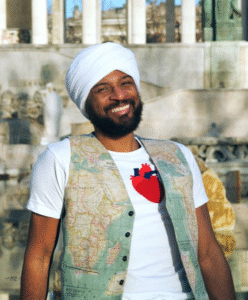
[00:00:38] Charna Cassell: com. Today's guest is Avgi Sakatopoulou, and she's a psychoanalyst in private practice in New York City and a member of the faculty of New York University's postdoctoral program in psychotherapy and psychoanalysis. Welcome Avgi.
[00:00:56]
[00:01:40] Avgi Saketopoulou: Thank you, China.
[00:01:41] Charna Cassell: Thank you so much for being here. I really look forward to talking about the book that you've written, which is Sexuality Beyond Consent, Risk, Race, and Traumatophilia. And. I think a good place to start would be to even understand and explain what is traumatophilia.
[00:02:04] Avgi Saketopoulou: Traumatophilia is really one of the ideas at the core of sexuality beyond consent. It starts with the premise that we oftentimes think about trauma as something that, thing that can be healed or something that can be, if you pay attention to yourself, if you take care of yourself, if you have resources to seek the right treatment, if you're patient there, you stand a chance of like healing your trauma or repairing your trauma.
[00:02:31] Avgi Saketopoulou: And these are all words that circulate quite a bit right now in our culture. But as a, as a practicing psychoanalyst, I would say that trauma is never healed and nobody ever gets repaired out of their trauma. We live in the aftermath of our traumatic experience. And yet we notice that whereas culturally the effort is to move away from trauma that is to kind of like heal it or repair it or kind of like distance oneself from one's traumatic experience.
[00:02:59] Avgi Saketopoulou: We, we noticed time and again in the clinic, but also in overall culture, that there is a way in which people are drawn to their wounds and that they're drawn to touching the sore parts in them and making contact with them. And we have no way of thinking about that other than pathologizing it. Like the usual framework is, Oh, you're really stuck in your past or you can't get over it.
[00:03:23] Avgi Saketopoulou: And in my field, we call it repetition compulsion.
[00:03:26] Charna Cassell: Mm hmm.
[00:03:26] Avgi Saketopoulou: But but that doesn't doesn't accord with what I see in the clinic or what kind of like happens in some of the cultural phenomena like theater and art that I talk about in sexuality beyond consent. And I wanted to give us a way to think about what it means to have experiences where one is But it's attracted back to the side of the traumatic and how we might understand what experiences can arise in that encounter.
[00:03:56] Charna Cassell: Mm hmm. Gosh, you said so much in that, with that. And so I want to come back to multiple points. And one that I think is really important is this idea that, you know, you can't, you obviously can never go back to who you were or imagine, like, who would you have been, especially if the trauma occurred. at birth, for instance, or when you were very little.
[00:04:20] Charna Cassell: So you're, you're never gonna be that person pre trauma. It has impacted how you've grown and it's shaped you. And in my mind's eye, as you were saying that, I was picturing this tree that I saw while I was hiking and I, I was like going, what happened here? Because what it looked like was there had been a board that had been nailed to the tree and the wood, the bark of the tree grew into this perfect kind of shape around the board and extended out to a board that no longer existed. Right. Right. So, and you know, and I think that humans are, are similar in that way.
[00:05:04] Avgi Saketopoulou: That's such a beautiful metaphor for the ways in which trauma actually gets folded into the self.
[00:05:12] Charna Cassell: Mm hmm.
[00:05:13] Avgi Saketopoulou: Let's imagine this tree that you were just so like poignantly describing to us if, if it had not developed so beautifully, but the, the object around which the tree was trying to coil itself.
[00:05:29] Charna Cassell: Mm hmm.
[00:05:30] Avgi Saketopoulou: If it was standing out, if it was producing a shape that didn't feel harmonious to the eye, if it didn't feel like it had engulfed it, perhaps we would be thinking differently.
[00:05:39] Avgi Saketopoulou: We would be thinking of kind of like, here is this tree that is in some way interrupted by this external object, which is how we think of trauma, right? We think of trauma as interrupting something about the self. And I'm saying this not to diminish the fact that trauma is of course painful. That it disrupts the, the path that we thought we were on or the way in which the self was developing.
[00:06:02] Avgi Saketopoulou: But we need space to also think about how trauma can also be a resource psychically for certain kinds of energetic transformations. So in the book part of what I want to do and try to do in sexuality beyond consent is try to speak to how Racial trauma. What what else other than misery or unhappiness
[00:06:25] Charna Cassell: Mm-Hmm.
[00:06:26] Avgi Saketopoulou: produce?
[00:06:27] Avgi Saketopoulou: This is not to diminish again of like violence or the atrocities that have been perpetrated against black people and that are continuing to our day through racism. Both structural and kind of like Individual expressions of it, but but to argue that other kinds of possibilities. Also in here and what one might do with their trauma.
[00:06:52] Avgi Saketopoulou: And I give several examples in the book of. Both clinical cases and also because I am a practicing psychoanalyst. I work with patients. So with my patient's permissions, I've used some aspects of their experience to talk about these kinds of possibilities. And I've also used some art to make those points.
[00:07:11] Charna Cassell: Absolutely. The, the piece around well, and it's, it's a tricky, it's really, it's tricky, right? 'cause 'cause you don't want to, I don't think the gifts is exactly the, the right word. It's like, but what are the things, you know, that. That support the evolution of self and the direction that we will grow.
[00:07:32] Charna Cassell: And as you said, like there can be this, like a psychic opening I in, when I was in grad school, I wrote a paper on trauma as a gateway to spiritual awakening.
[00:07:43] Avgi Saketopoulou: Hmm. Interesting.
[00:07:44] Charna Cassell: And, you know, clearly like I specifically work around sexuality and trauma as a result of my own trauma. Right. So there's a way that I wouldn't have the resources And the knowledge that you can move through a path and come out the other side whole in a different way, right?
[00:08:06] Charna Cassell: Perhaps a totally different shape if I hadn't had that experience, right? aNd then you're specifically taking it and , you're addressing very specific things and
[00:08:18] Avgi Saketopoulou: Yes. Yeah. Hmm.
[00:08:19] Charna Cassell: so go ahead. What, what were you just thinking? I could
[00:08:22] Avgi Saketopoulou: Well, I was thinking about how, kind of like already your, kind of like what you were suggesting, that kind trauma can kind of like cause a spiritual awakening that already begins to deviate from the way we usually think about trauma. Right. And then you were talking about how one can kind of like come out of their trauma and take a different direction, but part of what really preoccupies me in this book is what happens with.
[00:08:48] Avgi Saketopoulou: Or who don't kind of like, and I'm going to put this in quotes, come out of their trauma, but actually linger in their
[00:08:54] Charna Cassell: hmm. Mm
[00:08:55] Avgi Saketopoulou: They start kind of like circling their wounds and they want to touch the experience of injury. They want to touch the source. They want to be in contact with it and the kinds of intensity of experience that can arise on that site.
[00:09:09] Charna Cassell: Mm
[00:09:10] Avgi Saketopoulou: So in the book I speak about experiences that are mostly erotic, and I'm very preoccupied with eroticism and sexuality in the book, that appear in domains that, where people have been really traumatized, like racial violence. I work with the film The Night Porter, which is about Holocaust and it's a really, really controversial movie, a film from the 70s called The Night Porter, which tracks the accidental re encounter between between a Nazi officer and somebody who had been in the camps.
[00:09:49] Avgi Saketopoulou: And one would expect that in the circumstances of freedom, In which they re encounter each other, kind of like some reversal of their previous roles might happen, where kind of like, you know, this woman is now free, she's not in the camps, she will avoid him, she will kind of like turn him in, that something else will happen, but instead something really surprising happens, they start a really torrid love affair, and a really incredibly, love affair doesn't even capture it, because it's incredibly, it's erotic in the darkest of ways,
[00:10:26] Charna Cassell: Mm hmm.
[00:10:27] Avgi Saketopoulou: And that film, for anyone listening to this who has not seen the movie, you can begin to hear kind of like the many access along which somebody might feel nervous about this kinds of pairings between.
[00:10:42] Avgi Saketopoulou: Holocaust trauma and eroticism. It can feel like it is like diminishing and very much diminishing the Holocaust and diminishing the violence of the Holocaust. In fact, Primo Levi himself protested this movie saying is Incredibly problematic because of its pairing of the erotic with with genocide, genocidal level violence.
[00:11:05] Avgi Saketopoulou: So my so this is not an example of somebody went into a trauma and came out of it the other way, enlarged and improved and being able with something different, right? This is kind of like, so this book is preoccupied with experiences that people have where they go right towards them, kind of like the deep water of trauma and, and swim there and linger there and stay there and tries to understand.
[00:11:34] Avgi Saketopoulou: a little bit about what kinds of intensities live in those places.
[00:11:40] Charna Cassell: Right.
[00:11:41] Avgi Saketopoulou: What might attract somebody in these places? If we're not going to say as the book really tries to pull us away from it, we're not going to say, Oh, this is pathology. Why would somebody in the right mind do that? What else might happen in those spaces?
[00:11:57] Avgi Saketopoulou: So kind of like
[00:11:58] Charna Cassell: oh, go ahead.
[00:12:00] Avgi Saketopoulou: Yeah, yeah, go ahead.
[00:12:01] Charna Cassell: And you know, the other piece that you, you talk a lot about is kink. And I think that that's a common thing that certain people, if they're not trained with a certain awareness. May pathologize and go like, Oh, you wouldn't want to be beaten by somebody. If you hadn't been beaten by your mother, for instance, it's over way over simplification.
[00:12:20] Charna Cassell: Right. I noticed as you were talking and I, I actually started to rewatch the night Porter, I didn't get to watch the whole thing, but just I've seen it as a teenager, I remember. And so I was watching parts of it to remind myself of what it was about. But as you're talking and noticing I started to feel more awake.
[00:12:39] Charna Cassell: And just like a little bit of, there's a little bit of anxiety and a little bit of heat in my system. And, and that's where, you know, hyper arousals where turn on lips, right. It's like turn on anxiety, all like in a more intense flush of
[00:12:55] Avgi Saketopoulou: Mm
[00:12:57] Charna Cassell: And, and yeah, it's a, it's a definitely an edgy film as is a slave play.
[00:13:03] Charna Cassell: What you write about and speak about in your book. And I think that it's. One of the things that I felt was really, well, I don't want to, I'll let you speak about it and then I'll comment on it if you don't get to it, but, and do you want to speak a little bit about
[00:13:20] Avgi Saketopoulou: Yeah,
[00:13:21] Charna Cassell: it relates?
[00:13:22] Avgi Saketopoulou: a little bit about Sleafly, but let me look
[00:13:25] Charna Cassell: go ahead.
[00:13:25] Avgi Saketopoulou: on something else you said when you said that you were rewatching The Night Porter and you felt the heat. And you know, one of kind of like one of the difficulty with this kind of work, and certainly the night porter has been accused of it, slave play, Jeremy O'Hara's slave play has been charged with it, is that it's porno trauma, that it's a pornographic exploitation of traumatic experience at the expense of those who suffer.
[00:13:51] Avgi Saketopoulou: Or did all the classes of people who suffered it Jewish people or black people respectively or at the individual who suffered it. I mean, we see different versions of that in respect to work that represents experiences of rape for women. But the argument that, that I try to make is that more happens in that site than just people getting turned on by something twisted.
[00:14:16] Avgi Saketopoulou: I don't for a moment say that it's not twisted. Actually, a lot of the work that the book does is to become curious about kind of like this engagement with perversion. And I use the word perversion a lot in the book, not as a As a pathologizing term or a pejorative term, but in the way that it is used also in some kink communities to actually kind of like resignify it the way that queerness has been resignified to take ownership of something that is indeed deviant, statistically deviant, and less usual and less common, and which derives its excitement and it's precisely from the strangeness of it.
[00:15:00] Avgi Saketopoulou: And by strangeness, I don't mean this in a, in a critical way, but strangeness in the sense of it is strange in, in the context of being unfamiliar or it defamiliarizes us with ourselves. So work of the, an artwork of the sort that preoccupies main sexuality beyond consent is art that. Tries to defamiliarize the viewer from what she thought she understood about what she's engaging with.
[00:15:29] Avgi Saketopoulou: Like, this is not like to hear about the Holocaust, certainly slave play about which I'll speak in a moment.
[00:15:34] Charna Cassell: Yeah.
[00:15:35] Avgi Saketopoulou: Like you walk into a play called slave play, you may expect to get kind of like some critique of slavery or some kind of like historical accounting of the antebellum South. And that's not what you get.
[00:15:48] Avgi Saketopoulou: So the question is. What happens when you are met with something to which you did not necessarily consent? We do not consent to art. We are exposed to art, especially difficult art, at the borders of our consent. And that, that's a big preoccupation in the book, the question of consent and the fact that we cannot consent ahead of time to certain experiences.
[00:16:14] Avgi Saketopoulou: We, we enter them both kind of like in a way giving ourselves over to the experience that's to come. And oftentimes we have experiences that we may or may have not expected. So in this context, maybe I should say a little bit about Slave Flame.
[00:16:31] Charna Cassell: Yeah, and then I, because I do, I definitely want to talk about consent and the distinctions you, you make there, but let's, go ahead.
[00:16:38] Avgi Saketopoulou: Well, then I'll, I'll, I'll make this relatively quick to say that Slave Flame was a play that was written by a really gifted queer black playwright, Jeremy O'Harris. In fact the New Yorker just did a long article on him really very talented, kind of like arrived on the scene with, with I would say with a bang.
[00:16:56] Avgi Saketopoulou: And I would say this like in all meanings of the word, both because his work is very sexual and because he's not timid around issues of sexuality. So he did this play that called Slave Play, which went on Broadway. He it got nominated for 12 Tonys and received none, which is very telling in terms of how much division it caused to the audiences that were, I would say, experienced it.
[00:17:21] Avgi Saketopoulou: I wouldn't say watched it because it's not a play that you Watch. You don't consume it like either. It rather consumes you. So, the play is and I say this in a good way. For those who like to be consumed by experience. The play depicts a really unusual unusual. Contact between racial trauma and erotic life modeled on a kinky fetish that is acknowledged in the Biddy Sim community and which is even they're quite controversial called race play. Where race and racial trauma, racial humiliation, racial objection, racial humiliation becomes the material about.
[00:18:07] Avgi Saketopoulou: Through which eroticism is played up. And in this particular play the, the race play at in question concerns specifically black partners and white partners, or white passing partners who engage in scenes of really intense kind of like racial tropes and repetitions of racial violences in films.
[00:18:32] Avgi Saketopoulou: And you only come to learn in the course of the play that that was actually a negotiated and I put this in air quotes a negotiated scene where Everybody had consented to participate but then what you come to realize is that it doesn't matter that these are negotiated It doesn't matter that Consent has been secured.
[00:18:52] Charna Cassell: Mm hmm.
[00:18:53] Avgi Saketopoulou: But things begin to happen in the play that actually You see things blistering through that,
[00:19:00] Charna Cassell: Yeah.
[00:19:01] Avgi Saketopoulou: that membrane of consent that we have placed so much weight on and so much trust on. And that shows that actually psychic life does not follow agreements or negotiations because psychic time and the time of trauma is not linear time.
[00:19:17] Charna Cassell: Mm hmm.
[00:19:18] Avgi Saketopoulou: It just bursts on the scene and you are left to deal with something in its aftermath rather than being able always to anticipate it.
[00:19:28] Charna Cassell: And the, something, a point that you made that I thought was really important is, let's say there's a Black man and they have a white partner who is, uncomfortable providing that kind of pleasure or playing out that scene or being in that role. And then the complexity that plays out there. It's like, what, what is consent and, you know, who is consenting,
[00:20:01] Avgi Saketopoulou: Mm hmm.
[00:20:02] Charna Cassell: who has the power typically in, in a white supremacist culture. And then if you're stepping outside of like what's political and all of that, and you're stepping into the bedroom in terms of what's private and, you know, just like all the complexity inside of consent in that situation is really interesting
[00:20:18] Avgi Saketopoulou: Yeah, absolutely. Mm hmm. Especially when you say kind of like this, what you're pointing to around this imaginary stepping out of the political into the bedroom when in fact the political follows us everywhere.
[00:20:32] Charna Cassell: exactly.
[00:20:33] Avgi Saketopoulou: A moment that is kind of like outside of the political, especially in the bedroom.
[00:20:38] Charna Cassell: But it the, but the complexity of that, because some people will be like, well, you know, I don't wanna, obviously I don't wanna be raped in real life, but it's a fantasy, and I wanna, I want that to occur in the, in private or in the bedroom where I have
[00:20:50] Avgi Saketopoulou: absolutely.
[00:20:51] Charna Cassell: But as, as you pointed out, trauma, you can't control it and reign it in and plant it neatly like anything.
[00:20:58] Charna Cassell: Like, you know, the reality is that, as you said, it pushes through the seams and can suddenly appear. If it's provoked in just the right way, and you don't know, and at that same time that may be part of the value.
[00:21:12] Avgi Saketopoulou: Yeah. Yeah. Yeah. I mean, it's it's quite interesting because one could say, and this is a very, so let me rewind for a second and say that in kind of like most conversations about sexuality, the idea is you don't go near trauma. If you go near trauma, it's a problem. You need treatment. So that why would, if you have been raped as a woman, why would you want to play act a rape?
[00:21:40] Avgi Saketopoulou: We probably because there's some residue from that terrible experience and you're putting yourself in this masochistic position again and
[00:21:47] Charna Cassell: Mm hmm.
[00:21:48] Avgi Saketopoulou: In BDSM culture, the idea is actually quite inverse that here actually, specifically because you have consent, because you get to negotiate the limits, because you get to say, I want this questions of agency of having a certain degree of like, Mastery over the situation like you get to call the limit and the other person assuming the other person is ethical and respects you and respects the boundaries of what you have negotiated and the limits.
[00:22:17] Avgi Saketopoulou: Then what you have is an experience that could be quite healing because now you revisit that. But now you revisit it with control, with pleasure, and therefore you can or so the logic goes. Kind of like rewrite the experience in a way that positive. But I actually, even though I am, this book is very like not just friendly to kink practices, but actually quite supportive of people's of the diversity of people's experiences around kink around, um, all kinds of different sexual expression and experience.
[00:22:51] Avgi Saketopoulou: I actually take a position that says that even there Even in kink, even assuming two ethical, responsible people who communicate well, who are able to share their past and able to share what might be triggers in the presence of people who are very respectful of boundaries, still playing with these forces around trauma and the erotic is like playing with fire, Much like and I'll go back to slave play for a moment.
[00:23:19] Avgi Saketopoulou: You can negotiate a slave play scene where kind of like a white woman as happens in the play dominates a black man. But the question of kind of like, is it role play or not begins to fray when in fact the white woman is a white woman who has grown up with the privileges of whiteness and all the privileges of white femininity.
[00:23:44] Avgi Saketopoulou: And the innocence of white femininity, and I put innocence in quotes,
[00:23:48] Charna Cassell: Mm hmm.
[00:23:50] Avgi Saketopoulou: who's engaged with a black man who is kind of like taught that beauty standards kind of like interracial relations have a certain kind of purchase because of how they might reposition his own status in society. And of course, like I'm saying all of these not because I, not because I endorse them or because I agree with them, but because kind of like these are the materials.
[00:24:12] Avgi Saketopoulou: This is the syntax by which our life is conjugated, our racial life, especially here in the States. So the question of to what degree can you actually. perform being a white woman or perform being a black person when in fact you're also a white woman who is in this world and lives in this racial culture and you are a black man who lives in this racial culture to what degree this can be performances that are delineated by consent and by the lines withdrawal.
[00:24:41] Avgi Saketopoulou: It's a fantasy. So the question becomes how, how can we talk about sexualities that lie beyond consent, which is not the same thing as talking about sexualities that are about violation. I'm not talking about saying, I don't want to do that. And the other person saying, no, let's do it. You'll like it and pushing, right?
[00:24:57] Avgi Saketopoulou: That's not what the book is about. The book is about the kinds of experiences that can actually not be negotiated with what we imagine is the reason of one's conscious willed determination. But half are, are conjugated through desires and traumatize that are not fully in our possession
[00:25:18] Charna Cassell: I would love to have you talk about the distinction you make in your book between affirmative consent and limit consent.
[00:25:30] Avgi Saketopoulou: Yeah. So I have a lot of bad things to say about affirmative consent in the book. And certainly it's a concept that has been very much criticized. So I should start with clarifying Affirmative consent, which really rose to the surface of our thinking with the MeToo movement, is a big win for the feminist movement. And feminisms have worked very hard to have the rights of women recognized, to set limits on how they're touched, how they're talked to, how their bodies are. engaged with in public space, in workplaces and in romantic relationships.
[00:26:10] Avgi Saketopoulou: at The same time, affirmative consent has over promised and has not delivered on the fantasy that that it will protect us from violation. Certainly it has not done that. And on the fantasy that it could, or the hope that it would guarantor of good erotic experience. So in one of the things, there's many reasons why affirmative consent is problematic because psychic time is kind of like scrambled and it's not linear because it presumes that we're unconflicted about our desires,
[00:26:48] Charna Cassell: Mm.
[00:26:49] Avgi Saketopoulou: a tricky thing to say, given that oftentimes.
[00:26:52] Avgi Saketopoulou: Women have been blamed for their own violations, but being charged with being conflicted about their desire. So to say that is to be on ground. But of course, I don't mean it in that way. But, but it's also important for, especially for. for women and queer people to not settle for oversimplified narratives and understandings of our sexual lives, just because these are also weaponized against us now to kind of like claim that we are responsible for the trespasses against us.
[00:27:24] Avgi Saketopoulou: But that said, affirmative consent also assumes it is premised on the idea that we are conscious of, of, of what we are. Want of what might upset us of what has been difficult for us. So the whole idea of having an unconscious or having parts of oneself that are inaccessible. None of that falls under the purview of affirmative consent, but there's also another class of experiences.
[00:27:52] Avgi Saketopoulou: That I have observed in the consulting room, both in my clinical encounters with patients and in what patients tell me about their own experiences that has led me to the, to the conclusion, or rather the hypothesis, I should say that consent is not just an interpersonal affair. It's also an internal affair that consent.
[00:28:13] Avgi Saketopoulou: oftentimes involves, in addition to many other things the question of what one does with the distance between the experience one thought they would have and the experience they're getting.
[00:28:23] Charna Cassell: Mm hmm.
[00:28:24] Avgi Saketopoulou: So, no, one of the things that comes up very often when Jeremy O'Hara talks about slave play is that people will When they are very upset, they'll talk about how violated they felt by the player, how traumatic, and certainly people got up and left.
[00:28:39] Avgi Saketopoulou: And Jeremy O'Harris asks a really interesting question. He says, um, I don't know what else to tell you. Like, the play says slave play on the marquee. Like, if you walked into a play that's called slave play, Things bring you there. And it's not just what you think that plays about your own curiosity, perhaps your own excitement, I would add.
[00:29:04] Avgi Saketopoulou: So we begin to get into this territory of like, you know, people who say, but that's not what I signed up for are basically arguing for an affirmative consent model. And when Jeremy O'Hara says, what did you think you were doing? What did you think you were walking into? He's basically pointing to the limitations of that affirmative consent.
[00:29:23] Avgi Saketopoulou: And what I would say when I start talking about limit consent is that you walk into the play, whatever has brought you there about your cognitive misunderstanding or your psychic life has landed you on the seat. And then you see things and experience things, including the place that the audience's reactions.
[00:29:43] Avgi Saketopoulou: And there's a question of what are you going to do with the distance between what you thought you were walking into and what you're getting. And I start, I start the book with a really, I think, very fascinating vignette that comes from the treatment of a patient who tells me this very interesting story.
[00:30:00] Avgi Saketopoulou: She tells me she and her lover, they're in a, in a, in a BDSM relationship and they have negotiated a scene of a slap. They have talked about how it's going to happen, what cannot happen. Her partner. Slaps her without violating any of the agreements they have made ahead of time and my patient says to me that she Was so blown away by the slap not because it was problematic or because it Went over the contours of what they had agreed upon, but because she said I was really prepared for a mediocre slab I was not prepared for one that was so exquisite She said it was the right amount of force the right side of my face.
[00:30:42] Avgi Saketopoulou: It was the right look on her face She said it was so intense that I safe worded Basically, so she withdraws her consent,
[00:30:52] Charna Cassell: Mm hmm.
[00:30:52] Avgi Saketopoulou: not because something wrong was done to her, but because what happened was so good and so exciting. And that excitement was so foreign to her.
[00:31:02] Charna Cassell: hmm. Mm
[00:31:03] Avgi Saketopoulou: She could not process the distance between the mediocre slab that she thought she was negotiating and the exquisiteness with which it landed on her.
[00:31:11] Charna Cassell: hmm. Mm hmm.
[00:31:12] Avgi Saketopoulou: So this is, this is a really interesting example to think about consent as also having to do with how you negotiate this internal gap, which I think to some degree is always there between signing up for something and receiving something that you signed up for, but it's not what you thought you were going to get.
[00:31:35] Avgi Saketopoulou: And that gap is, I say, in the book, in a variety of different ways, is the space of eroticism or the space where one might feel violated, which is not the same thing as being, as somebody saying, don't slap me in the face, and the lover saying, you're going to like it anyway, and they slap you, and that, of course, is not limit consent.
[00:31:53] Charna Cassell: Right. I love that example. I think it's so interesting because there's the surprise. It's like, almost like her wires suddenly, you know, get tangled and she can't process. There's an overwhelm of delight. Like the fact that she said exquisite, such a particular word, you know, but it's, such an unfamiliar experience of pleasure and delight that that was even overwhelming versus you think of overwhelming is automatically negative like so overwhelmed and then like you're thrown
[00:32:26] Avgi Saketopoulou: Yeah. Mm
[00:32:29] Charna Cassell: So it then opens the question for me of like, if someone, because there are clients who can't tolerate pleasure, that can't tolerate joy, right? That's so uncomfortable in their nervous system because they didn't grow up with permission to feel those things. And so then it's like, oh. How, how, how micro doses or, you know, of, of exquisite experiences can then stretch the container for being able to be with
[00:32:56] Avgi Saketopoulou: Yeah, there's certainly experiences. What you're saying is very right that people, not everybody grows up with the capacity to experience pleasure with a tolerance for their pleasure by their parents by their family . But, but I should also say that. I am, you know, this experience of overwhelm that I talk about in the book, which usually we think of as a negative thing.
[00:33:16] Avgi Saketopoulou: And in the book, I wonder about whether overwhelm might not also open us up to states that are other worldly that are out of this world that are otherwise to what we are accustomed to pursue or to, or to refuse. That overwhelm is also about Intense stimulation that becomes too much and oftentimes where we're very worried, especially those of us who are trained as clinicians, we are trained to worry about patients becoming overwhelmed or things becoming too much and sexuality beyond consent really queries.
[00:33:55] Avgi Saketopoulou: The really kind of like asks the question, are there things that we might be missing out on by being so overprotective in this culture where avoiding like this, avoiding danger, avoiding overstimulation has become the dominant paradigm of how to think about pleasure, of how to think about interpersonal encounters. So this patient, I call her,, Carmen in the book Carmen's experience with a slap suggests that other kinds of things may lie beyond. beyond our consent, that may be both incredibly powerful, and which we may turn away from. And, you know, in other places of the book, people, there are other examples of people who don't turn away from it.
[00:34:47] Avgi Saketopoulou: And then I explore then what can happen if you pursue those kinds of experiences. But but that's That's the point about consent that I thought was sort of like really lacking from our conversations about what it means to take risks with yourself.
[00:35:05] Charna Cassell: There's a couple things there. One is this piece of you know, we have, we have our identities, right? We have the sense of self and who we are and what we like and what we can be with. And, you know, this means I'm a good person. And, and so some of what you're talking about, and I think you talked about what was it?
[00:35:29] Charna Cassell: Oh, erotic astonishment. And thinking about how The sense of ego dissolves or reforms in these moments of exquisite pleasure, perhaps, or surprise beyond our preconceived conception of self.
[00:35:48] Avgi Saketopoulou: The example that you're bringing erotic astonishment is a phrase that comes from Tim Dean who's a queer theorist who writes about this strange strange in the sense of unfamiliar and surprising encounter he has with with a man who is a stranger to him in a leather bar. And he talks about You know, having frequented leather bars often, having topped and done piss play as a top.
[00:36:14] Avgi Saketopoulou: But in this particular encounter he follows this strange man into a dark room. He's giving him a blowjob or what he thinks is a blowjob. At, and at some point he realizes that something wet and warm is in his mouth and He kind of like very quickly comes to the realization that this guy is pissing in his mouth.
[00:36:35] Avgi Saketopoulou: And something really interesting happens in this moment because they have, of course, not negotiated a pissing encounter of this sort. So you might say This was not negotiated. There's kind of like, how dare he kind of like make him his piss bottom. But that's not what happens for Tim Dean. Tim Dean says that the moment he realized that he, this guy was pissing in his mouth he had this extraordinary, really powerful orgasm.
[00:37:05] Avgi Saketopoulou: And then he says the phrase that I think really changes everything. He says, I did not consent and I would not have consented. And yet this man that night gave me the gift of erotic astonishment. So there's something really powerful about this example because If team Dean had ended up feeling, had kind of like gotten up indignantly and slapped him and said, how dare you, and then talked about how awful it was to be given a blowjob to all of a sudden be pissed on, nobody would be saying, Oh, that's weird.
[00:37:39] Avgi Saketopoulou: You were in a leather bar. You didn't see that coming. Like, literally nobody would be asking questions about his upset. But the distance between what he thought was going to happen, which was a blowjob, and what actually happened, which was a piss play scene, opens up something in him. And to that distance, instead of safe wording, like Carmen does, he responds with a very different kind of kind of like his body opens up to an experience that actually gives him an extraordinary orgasm.
[00:38:12] Avgi Saketopoulou: And you see here that this is not about some conscious decision making. He's not thinking, you know what? Maybe I'll go with it. Like there's no time for that. It happens almost instantaneously. Just like Carmen is not deciding that she will Stop it. She feels it's too much. I have to stop it. So these are not decisions that come from a centered self that come from our will or our subjectivity.
[00:38:39] Avgi Saketopoulou: They come from forces within us that are ours. They are off the self, but they have to do more with unconscious life. And this is where things begin to get much more complicated in the book than affirmative consent could ever talk about because affirmative consent is only concerned with kind of like what we know about ourselves and what we have control over in ourselves.
[00:39:00] Charna Cassell: Right, absolutely. And you know something that you spoke to very early on our conversation is. That I think relates to that moment and this is this piece around parts like there could be a part that's very that's conscious a part that's like affirmative, you know, affirmatively consent to this thing.
[00:39:18] Avgi Saketopoulou: hmm.
[00:39:19] Charna Cassell: And there could either be an unconscious or subconscious part that that wants to stop what occurred, or that as you said his body just spontaneously open to it. It wasn't like he consciously thought I'm going to open to it wasn't decision. Right. So there is. So if you look at, you know, I imagine you know about internal family systems and parts work and so working with different parts of ourselves that want different things and those might be more conscious parts than our unconscious parts that suddenly appear, but that we are a constellation of beings.
[00:39:55] Charna Cassell: That have different desires and different needs and it does get complex and for the person that we're partnering with in that moment, as well as for us.
[00:40:05] Avgi Saketopoulou: Yes, absolutely. And if you add on top of that, the fact that you were talking about how we have conscious parts and then we have parts we're not aware of. If you add to that, like the second lytic notion of the unconscious, which is that there's also parts that we will never be and have never been aware of.
[00:40:22] Avgi Saketopoulou: So they're not just about things that we forgot or we repressed or we internalize, but we don't have access to them at this moment, but have to do with the, the strangeness. of, of ourselves to ourselves, the ways in which we will always be strangers to ourselves that have to do with how eroticism pulsates on a frequency that we cannot always fully understand or know.
[00:40:47] Avgi Saketopoulou: Then the scene becomes complicated such that a concept like affirmative consent and interpersonal negotiation, important though it is, it's wildly insufficient for these kinds of conversations.
[00:40:57] Charna Cassell: hmm. Something that's really interesting. I listened to some podcast interviews with you and then also in terms of Reading the book. There were some words that I wrote down and it was like tipped off balance dizzyingly intense disorientation surprising experiences, you know, some erotic and traumatic entanglement and that there is I, I got really curious about your relationship to disorientation, right?
[00:41:26] Charna Cassell: And what drew you to this work? And because there was this language that it kind of evoked in my mind, how popular medicine journeys are right now. So that like all altered states of consciousness, whether it's through meditation, whether it's through medicine work, whether it's through kink. But intense.
[00:41:49] Charna Cassell: the intense unexpected. You can consent to the beginning structure of
[00:41:53] Avgi Saketopoulou: Mm hmm.
[00:41:53] Charna Cassell: don't necessarily know what beingness will arise.
[00:41:58] Avgi Saketopoulou: Yeah. Yeah.
[00:41:59] Charna Cassell: So consciousness and in those terms, I was curious about your experience.
[00:42:05] Avgi Saketopoulou: Yeah. To me, a lot of that comes from what it means to be a clinician and what it means to do psychoanalytic work with people sitting with patients, seeing them three, four, five times a week for years. which develops a kind of pace and intensity that acquires its own life in the consulting room. And then things begin to happen that in the light of day outside a therapist's office would feel strange and bizarre and kind of like incomprehensible or socially unacceptable.
[00:42:38] Avgi Saketopoulou: But in the consulting thing, room, things become begin to acquire a different kind of One thing that I say sometimes when I, when I speak with, with people who are in training is that it's, it's like walking into a room where no gravity applies, like different rules apply about how psychic life works.
[00:42:59] Avgi Saketopoulou: And once you step into that room and once you work with a free association, once you work with having a frame around what you do that actually allows disorientation and disorder to pop up, you cannot, as a clinician afford to you. imagine stable grounds and stable coordinates. I mean, you can, but if you do, you bring the patient out of that state.
[00:43:27] Avgi Saketopoulou: And the question is how to stay present in that state. And in that sense, the clinician too is in very different ground working this way. So clinical work has, I wouldn't say prepared me for it because you're never quite prepared. The whole concept is about surprise, but it has given me an appreciation.
[00:43:44] Avgi Saketopoulou: It's a better way of saying for what it's like to be in dizzying states where Trying to hold on to this is what is going on now, or that's how I understand what's happening. It doesn't take you very far. It actually does a disservice to the process.
[00:43:59] Charna Cassell: And, and what had you interested in psychoanalytic work? Like, did you know someone growing up who did it that made you curious? Did you have your own experience directly with it? What intrigued you?
[00:44:13] Avgi Saketopoulou: It's such an interesting question. I I read a book when I was 13 years old, that was on my mother's bookshelf. And it was what I now. can understand was the account of a psychoanalytic treatment. But it started with, I don't remember the entire book from, I've reread it since, but as a, as an adolescent, what impressed me was the first chapter where a woman walks into a psychoanalyst's office with a very serious medical could have like an organically inexplicable medical problem.
[00:44:47] Avgi Saketopoulou: So she has this unexplained bleeding, but nobody can stop it and nobody can explain it. And the analyst after the consultation says some things to her and offers to work with her in a really intensive way. And Promises to stay in her life and to work with the bleeding for as long as it takes. And I was like really blown away with what a promise it is to save to another human being.
[00:45:16] Avgi Saketopoulou: I will take this on and be present for you for something that is inexplicable. That sounds quite dangerous. and scary. I just met you, but I'm going to step into the fray with you. Like that really impressed me. And I thought at the time, I want to be a psychoanalyst. And then when I went into psychoanalysis myself, I realized that part of what I wanted was a psychoanalyst and not to be a psychoanalyst.
[00:45:43] Avgi Saketopoulou: And eventually, The two merged and I, I was very determined to be trained, but that's, that's how it, that's how it came to it
[00:45:53] Charna Cassell: So this, there was the commitment and almost the, the generosity and the dedication of that practitioner really appealed to
[00:46:04] Avgi Saketopoulou: and the risk and the risk, like the idea that somebody would be saying, yes, I'm going to step into this with you, , I don't know you, I don't know what's going to come of this. it's not a kind of commitment that follows a consent protocol.
[00:46:17] Avgi Saketopoulou: Like, what are you really consenting to? You have no idea.
[00:46:20] Charna Cassell: Mm hmm. Right. That's, that's your, your limit consent right there.
[00:46:24] Avgi Saketopoulou: Yeah.
[00:46:25] Charna Cassell: Yeah. Is there anything else that you want to share with the listeners before we begin to shift?
[00:46:35] Avgi Saketopoulou: And I, I am very curious about how people will take up these ideas. So I'm very involved with anybody who writes a review. I'm very open to hearing from people about their experience of the book. I've actually been getting more and more contacts from people writing to me about. Not just the ideas, but also what it was like to read the book.
[00:46:56] Avgi Saketopoulou: So I'm very open to any of that and very interested and receptive. So, if any of our listeners find themselves curious and pick up the book and read it and want to be in contact with me, I'd be, I'd be very open to hearing from people.
[00:47:11] Charna Cassell: That's beautiful because, you know, it sounds like there's, there's a lot of edgy, complex concepts in the book, and so people may not have other people to talk to about them, right? That that may get what they're exploring. So
[00:47:26] Avgi Saketopoulou: Yeah.
[00:47:27] Charna Cassell: it's a, it's a beautiful invitation
[00:47:30] Avgi Saketopoulou: Yeah. And certainly the book is, is very complex, but it is also written for the average reader who's willing to, you know, there's, the book is challenging emotionally. But if somebody wants to read it, you don't need, you don't need to know psychoanalysis to get into it. I explain everything in the book that needs explaining.
[00:47:52] Charna Cassell: and how can people find you?
[00:47:55] Avgi Saketopoulou: I am most active on Instagram. I am at Avgolis98, A V G O L I S 9 8 and I'm also, I'm also on Facebook and Twitter but Instagram is the best place to find me.
[00:48:09] Charna Cassell: Beautiful. Thank you. Thank you so much.
[00:48:13] Avgi Saketopoulou: Thank you. Thank you, Charna.
[00:48:15] Charna Cassell: Was that as good for you as it was for me? If it was, we'd love it if you'd please rate and review it and share it with your friends so others can find us. If you have additional questions about living a vibrant life after trauma, we'd You can submit them at charnacacell.
[00:48:32] Charna Cassell: com. Follow me at Laid Open Podcast on Instagram and Facebook and read more about my work at passionatelife. org. You can also sign up for my newsletter to stay informed. This has been Laid Open Podcast with your host, Charna Cassell. Until next time, keep coming.